Efficient at the Wrong Things: Artificial Intelligence, Healthcare, and the Governance Problem Western Australia Has Not Yet Named
There is a question that tends to go unasked in public debates about technology and government, and the reason it goes unasked is not that it is difficult to formulate. It is that the answer is uncomfortable. The question is this: what happens when a powerful new capability is introduced into a syst
Brian Walker
There is a question that tends to go unasked in public debates about technology and government, and the reason it goes unasked is not that it is difficult to formulate. It is that the answer is uncomfortable. The question is this: what happens when a powerful new capability is introduced into a system whose fundamental design is misaligned with its stated purpose?
Walker Briefing is a reader-supported publication. To receive new posts and support my work, consider becoming a free or paid subscriber.
I have spent four decades practising medicine, and the last several years observing governance from the inside of a legislature. The two experiences converge on the same diagnostic instinct. When a patient presents repeatedly with the same complaint, and each presentation is managed competently on its own terms, but the underlying condition is never addressed, what you are witnessing is not treatment. It is the administered progression of preventable harm. The Western Australian public health system has, for some years now, been exhibiting the clinical presentation of exactly that pattern. The current enthusiasm for artificial intelligence in health service delivery deserves to be understood in that context, because a more capable instrument applied to a misaligned system does not correct the misalignment. It accelerates it.
I. The Presenting Complaint
The surface-level description of the problem is familiar enough to require only brief acknowledgement here. Emergency departments are overcrowded. Ambulance ramping has become a perennial political issue, regularly surfacing at budget time and subsiding into managed language shortly thereafter. Hospital bed capacity is chronically constrained relative to demand. Workforce retention across nursing and the allied health professions is deteriorating in ways that experienced practitioners will tell you, if asked directly, reflect something more than salary dissatisfaction. Chronic disease burden, particularly metabolic disease and mental health disorders, is increasing across the population and is rising sharply in regional and remote communities where primary care infrastructure remains thin.
These are the presenting complaints. The error that recurs in the policy response to them is the same error a physician makes when treating a complaint rather than a patient: each symptom is addressed as though it were the disease itself.
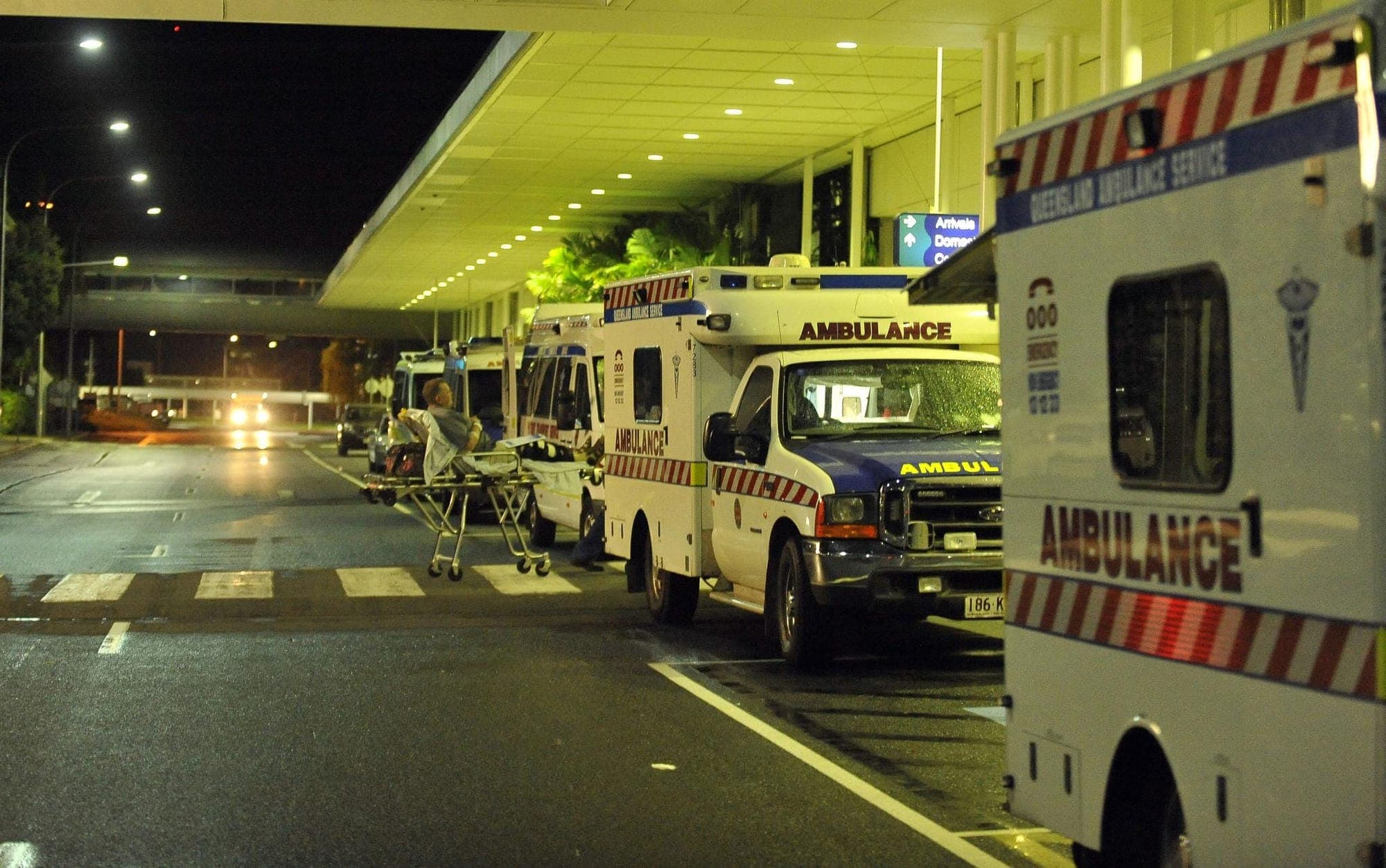
The ramping figures place the severity of the problem beyond reasonable dispute. In September 2025, Western Australian ambulances spent more than 7,200 hours parked outside hospitals waiting to transfer patients, a new state record according to both St John WA data and the Australian Medical Association WA. That record was set not in a period of unusual epidemiological pressure but as the product of a structural trajectory that has been building for years. The AMA WA had, in fact, been raising alarm over what it described as “disastrous” ramping figures as far back as January 2022, when just over 52,000 hours were recorded for the previous year, the equivalent of the preceding six years combined, according to AMA WA public statements at the time. That was not an anomaly. It was a signal.
This February, St John WA confirmed 4,892 ramping hours for the month, a new February record, surpassing the 4,840 hours recorded in February last year, as reported in The West Australian. February is not winter. There is no flu season to absorb the explanation. The government’s customary reference to seasonal pressure, a framing that has done considerable work in managing political accountability over several years, is not available here. These are the figures of a system failing in conditions that are, by the usual terms of reference, mild. The implication for what a difficult winter will look like this year requires no statistical modelling.
The budget numbers provide the wider context. In 2025-26, Western Australia will spend $14.2 billion on the delivery of health services through WA Health alone, a figure the Treasurer’s Budget Speech described as representing an increase of over 61 per cent on 2016-17 expenditure. The Mental Health Commission adds a further $1.6 billion, directed at mental health, alcohol, and other drug services. Of the $1.4 billion “boost” announced in this budget to address system pressures, $110 million is directed at emergency department and emergency access reforms, as stated in Budget Paper No. 2. The initiatives clearly labelled as preventive health in the same document’s spending changes table, covering vaccination programmes, outbreak management, and a public health ICT system, aggregate to approximately $32 million. Against $14.2 billion in total service expenditure, this is less than a quarter of one per cent.
II. The Architecture of the Problem
To understand why the system produces the outcomes it does, one has to understand the incentive structure it operates within, not because anyone is acting in bad faith, but because institutions do what their architecture makes likely regardless of the intentions of the individuals within them.
The dominant funding and organisational logic of Western Australian healthcare remains hospital-centred. The budget papers are explicit about what the system is designed to deliver: an estimated 846,000 inpatient episodes of care, 1.17 million emergency department attendances, and 3.44 million outpatient service events in 2025-26. These are the numbers that define success for the purposes of performance reporting and budget justification. A prevented hospitalisation does not appear in any of them. A family doctor who keeps a patient with early-stage metabolic disease out of the emergency department for three years generates no event that the accounting system can see.
This is not a criticism of the people who designed the reporting framework, or of those who work within it. It is an observation about what the framework makes visible and what it renders invisible. A system organised around counting episodes will, over time, optimise for the production of episodes. The consequence of this accounting asymmetry, sustained over many years, is a system that has become genuinely efficient at the wrong things.
The point is not merely theoretical. The government’s recently released winter strategy cited “almost 1.2 million emergency department visits” as a basis for its planning assumptions, a figure the Health Minister subsequently attributed to WA Health’s annual report figure of 1.175 million. The Australian Institute of Health and Welfare’s own database records 1,027,017 emergency presentations in Western Australia for the same period, a difference of approximately 148,000 attendances. The explanation offered is that the AIHW figure excludes smaller rural hospitals. That is a legitimate methodological distinction. What it illustrates is something more significant than a statistical footnote: the government’s own planning document was constructed on figures that, when examined, required immediate clarification, and the initial explanation offered for the discrepancy was that rounding had occurred. A figure of 1.175 million does not round to “almost 1.2 million” in any sense that would satisfy a secondary school mathematics class.
The bed count in the same strategy document followed a similar trajectory. The announcement that the purchase of St John of God Mt Lawley Hospital would provide an additional 200 beds to the public system required correction within a week: approximately half of the hospital’s 197 beds were already contracted to WA Health, meaning the net addition to public capacity is closer to 100. The minister acknowledged the error. What the episode illustrates is a system whose political management has, at least on this occasion, moved faster than its internal verification processes.
A system that cannot accurately account for its own current performance is in a poor position to reform the structural conditions producing that performance. This is not a point about ministerial competence. It is a point about institutional culture: the pressure to demonstrate momentum and justify investment can, if the governance framework is not robust, produce a relationship with evidence that prioritises narrative coherence over numerical precision.
III. The Pattern of Acknowledgement
There is an instructive arc to how the current government has moved on this question, and it is worth tracing briefly because the arc itself is analytically significant.
In August last year, the Premier was reported as describing the Western Australian health system as “world class.” According to contemporaneous press coverage, the description was met with laughter and tears from frontline clinical staff. By November, the government had announced a $1.5 billion Building Hospitals Fund, confirmed in an official government media statement on 6 November 2025 as comprising $500 million committed in September and an additional $1 billion. The distance between those two positions, traversed in three months, is not primarily a measure of changed circumstances. It is a measure of the point at which the accumulated evidence became impossible to manage narratively.
The confrontation-with-reality model of institutional change is familiar to anyone who has practised medicine. Patients do not, in the main, change their behaviour through argument or information. They change when brought into direct and undeniable contact with consequences they can no longer defer. The Premier’s November reversal has that character. The question that follows is not whether the acknowledgement was welcome, because it was. The question is whether the response it has generated is structurally adequate, or whether it represents the latest in a sequence of reactive investments that address the immediate political problem without touching the design of the system producing it.
The $140 million winter strategy released last week is the most recent data point. It has genuine elements. Free flu vaccinations. Additional “time to think” transitional beds to move patients from hospitals into aged care pathways. A virtual monitoring trial for older people to remain at home. Union endorsement, qualified by the Australian Nursing and Midwifery Federation’s public question about delivery mechanisms, and the AMA’s characterisation of “devil in the detail.” The strategy was welcomed by professional bodies. It has not yet been implemented, and February has already produced a record.
IV. What Artificial Intelligence Will and Will Not Do
The current interest in artificial intelligence within health service delivery is not misplaced. The potential applications are real and, in some cases, substantial. Predictive modelling of population health risk could, in principle, enable genuinely anticipatory resource allocation. Pattern recognition across integrated datasets could identify disease progression earlier and with greater precision than current clinical pathways allow. The State Health Operations Centre, allocated $17.5 million including capital funding in the 2025-26 budget initiative tables, already uses real-time data and analytics to coordinate patient movements across the system. This is a meaningful development.
But the word that carries all the weight is “connected.” Connected to what, and in service of which design? Technology takes the shape of the system it is introduced into. It amplifies existing patterns and capabilities, including existing failures. If the system is organised to manage acute demand, artificial intelligence applied within that system will manage acute demand more efficiently. It will not, of its own logic, reorient the system toward preventing the demand from arising. That reorientation requires a decision, made by people with the authority and the political will to make it, that the current architecture is not adequate for the future the demographic and epidemiological evidence describes.
There is a version of AI adoption in Western Australian healthcare that is essentially a more sophisticated iteration of the existing pattern: better data, faster coordination, more legible reporting, improved management of the presenting problems. That version is available without any structural reform and is considerably more politically tractable than structural reform. It also produces something as a by-product that deserves to be named directly: it allows the appearance of transformation to substitute for the substance of it, and allows the conversation about structural design to be deferred in the comfortable presence of genuine technological progress.
V. The Governance Question
The harder analysis requires asking who benefits from the current arrangement persisting. This is not a question about intent or malice. It is a structural question about which actors within the system gain from things remaining as they are.
Hospital systems operating under activity-based funding models benefit from the volume of presentations. The per-unit price for hospital activity is set in the 2025-26 budget at $7,114 per weighted activity unit. Administrative structures benefit from the legibility and controllability of centralised service planning. Political leadership benefits from a system in which crises are visible and manageable, because visible crises justify emergency spending and emergency spending produces legible political action. The upstream investment that would prevent the crisis from arising is, by contrast, invisible, long-horizon, and difficult to attribute to any particular decision or government.
Population growth is the government’s preferred explanatory frame, and it is not without merit. Western Australia’s population grew at 3.2 per cent in 2022-23 against a budget forecast of 1.2 per cent, a genuine planning shock. But the AMA was already describing a ramping crisis in January 2022, before the surge had fully registered in service demand. And February 2026, with its record figures and a winter still months away, cannot be attributed to population growth alone. Growth is a contributing condition. It is not a sufficient explanation for a system that was already under structural strain before the growth accelerated.
This incentive architecture is not unique to Western Australia. The budget papers acknowledge the challenges as “universal across developed healthcare systems globally,” and that is accurate. What is also accurate is that those systems have diverged in their willingness to address structural drivers rather than simply managing their consequences. The divergence tracks differences in governance framework design and political incentive structure.
The risk specific to the current moment is that the combination of genuine technological investment and a new Preventative Health portfolio provides a credible modernisation narrative that allows the deeper structural question to remain unasked. The Treasurer’s own budget speech records a 61 per cent increase in health expenditure over nine years. The state set a new record for monthly ramping in September. It has set a new February record before winter has begun. The winter strategy was released in the same month as that February record, and its implementation remains, in the assessment of professional bodies with no political stake in the question, uncertain. Read structurally rather than episodically, the pattern points toward a system that is being asked to perform a function its incentive architecture is not designed to serve.
Taken together, what the evidence suggests is something more than a funding problem. It suggests a design problem that additional funding is being deployed to manage rather than resolve. The diagnosis offered here is deliberately structural rather than prescriptive: naming the incentive architecture that produces the outcomes is the necessary prior step to any serious reform conversation, and that step has been resisted long enough that stating it plainly has become the more urgent task. Whether the current moment is the one in which that structural question is finally engaged seriously, or the one in which it is once again administered around, will determine not only this winter’s outcomes but the condition of the system that the next generation of Western Australians will inherit.
Walker Briefing is a reader-supported publication. To receive new posts and support my work, consider becoming a free or paid subscriber.

Written by
Hon Dr Brian Walker MLC
MB ChB · MRCGP · FRACGP · 45+ years as a GP
Brian Walker is a General Practitioner and Member for Western Australia in the WA Legislative Council. He is the Leader of the Legalise Cannabis Party WA and an advocate for evidence-based cannabis reform, healthcare improvement, and progressive policy in WA.
Share this article
Stay Updated
Get the latest news and parliamentary updates delivered to your inbox