Neither the Fright Nor the Shrug
On the sixth of July a Chinese submarine fired a long-range missile into the Pacific. It carried no warhead, only a dummy, and it came down, by the best reckoning available, in the southern reaches of the ocean. Within a day the event had its shape in the headlines, and the shape was fright. Walke
Brian Walker
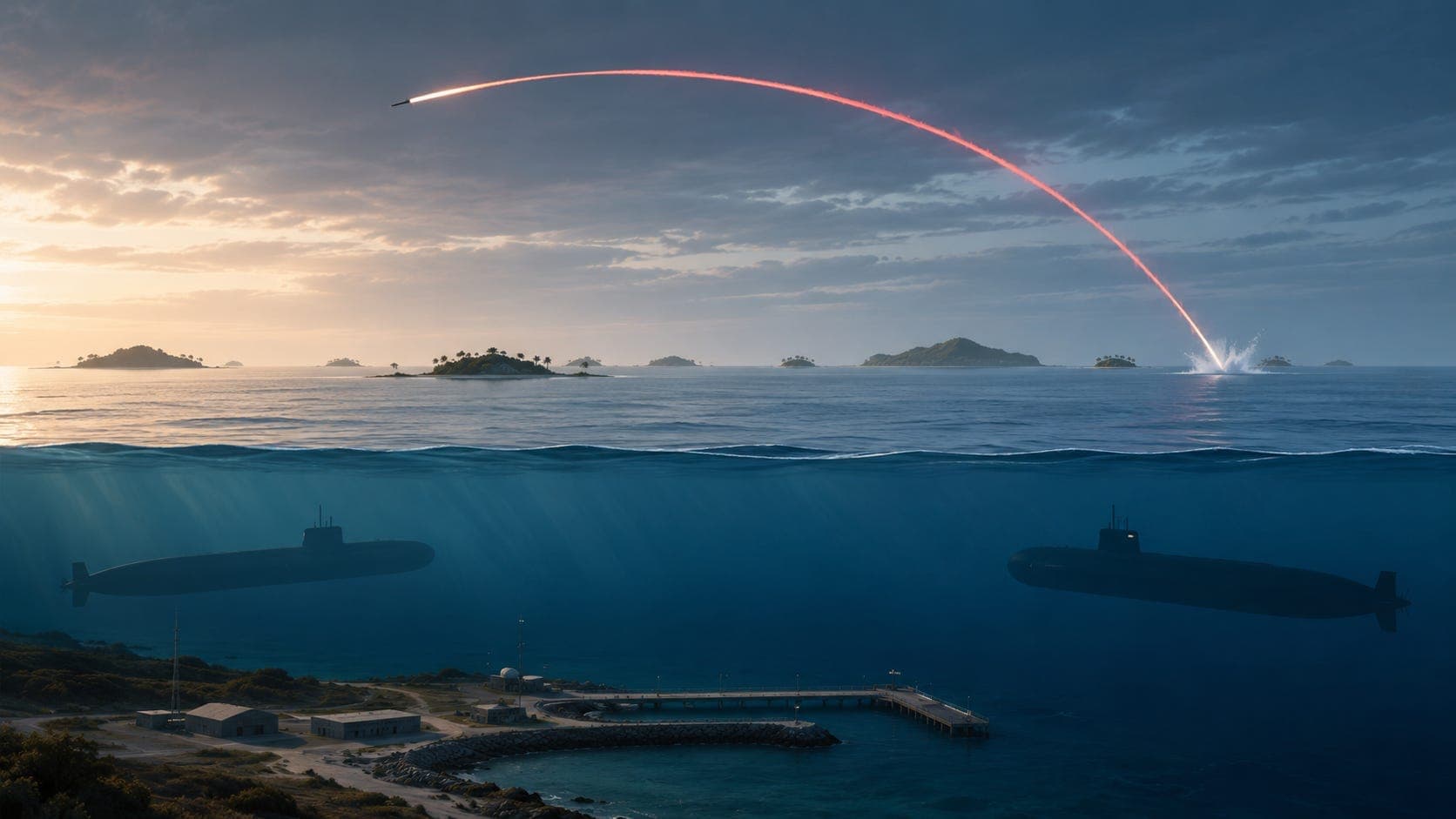
On the sixth of July a Chinese submarine fired a long-range missile into the Pacific. It carried no warhead, only a dummy, and it came down, by the best reckoning available, in the southern reaches of the ocean. Within a day the event had its shape in the headlines, and the shape was fright.
Walker Briefing is a reader-supported publication. To receive new posts and support my work, consider becoming a free or paid subscriber.
Two reactions are close to hand, and both feel like clear thinking. The first is alarm. A nuclear-armed power has reached across our part of the world, so we should be frightened, and we should spend. The second is the weary opposite. Everyone does this, the Americans most of all, so the outrage is theatre and can be waved away. I want to do neither, because both are wrong, and they are wrong for the same reason.
The habit I try to bring to these things runs in a particular order, and the order matters. First, get clear on what can actually be shown. Only then ask who is served by the way those facts are chosen, framed and amplified. Do it the other way around, leading with whose interests are in play, and you have stopped reasoning and started suspecting. I should name my own interest too, because it is real. A crossbencher gains by showing that the two big parties have taken too narrow a frame, and an argument that leaves me looking clearer-eyed than them is one I have reason to want to be true. Hold that against what follows.
With that order in place, here is what can be shown, and it is the part the weary reaction gets wrong. What China did carried a real danger, though not the obvious one. The missile most likely came down inside the South Pacific Nuclear Free Zone, the stretch of ocean the countries of the region set aside from the nuclear shadow in 1986, and whose protocols China signed the year after. I want to be careful there, because those protocols forbid nuclear explosions, and a dummy warhead falling into the sea is not one. On the letter, there was probably no breach. It helps to be plain about the tangle of rules, because they are easy to blur into one. The zone treaty bars nuclear explosions. A separate voluntary code asks states to give notice of missile launches, and China has never joined it. A binding agreement between Washington and Moscow has required a full day’s notice of launches like this since 1988. Ordinary safety notices warn ships and aircraft away. China’s test exposed the gaps between them. What it did not do was come with the warning that the responsible version of this behaviour carries, and the notice it gave was selective. Australia had close to a day. New Zealand and Japan had only hours. The United States, whose early-warning systems are the ones most likely to read a launch as the real thing, also had only hours, and thin detail with it, which on Washington’s account fell well short of what the major powers expect of one another. That unevenness, thinnest for the power most able to mistake a test for an attack, is the exact space in which a miscalculation grows. And the platform matters. This was fired from a ballistic-missile submarine, the kind built to carry nuclear weapons and to hide at sea, so the test was also a demonstration that China’s undersea deterrent is maturing. That is a real strategic fact, and no amount of pointing at others makes it smaller.
Now the part the alarmed reaction leaves out. The United States tests weapons of the same broad kind, and does it routinely. Its land-based intercontinental missiles fly from California out across the Pacific to a range at Kwajalein. Its submarines test the Trident, fired from the same category of platform China used, the ballistic-missile submarine, in a publicly announced test off the coast of Florida last September. Those American tests are scheduled, announced, and ringed with published warnings to shipping and aircraft, and that is precisely the point: it is the notice, not any special restraint, that makes them tolerable. The deeper history sits in the same ocean. The Marshall Islands, where the Kwajalein range lies, is a country still living with the consequences of sixty-seven American nuclear detonations between 1946 and 1958, most of them at Bikini and Enewetak, one of which in 1954 threw fallout across islands where people still lived. When an American missile crosses the Pacific now, it is reported, if at all, as the upkeep of a deterrent. When a Chinese one does, it is a provocation. Some of that difference is earned by the notice the Americans give and the Chinese did not. Not all of it is. Our own newspapers ran a series a few years ago warning of war with China within three years, which Paul Keating called the most egregious and provocative news presentation he had seen in over fifty years of public life. Fear travels faster than the qualifications attached to it, and fear about China travels fastest of all.
Here is where both easy reactions fail. It is tempting, having seen the double standard, to swing across and say China is only doing what America has always done. I will not, because it is not true. The difference is not the treaty letter, which I have granted may be intact. It is that the American tests come with the warning the world expects and the Chinese test did not, and that a maturing sea-based strike capability is a real change in the balance whatever one thinks of who holds it. Both things are true at once, and an honest account holds them together rather than seizing whichever one flatters the side it began on. The Marshall Islanders, who have more reason than anyone alive to resent American testing, condemned the Chinese launch. Condemning China did not require them to forget what was done to them. It does not require it of us either.
Which points to the cause beneath the symptom, and it is not the one the word decay suggests. There was never a settled system that held all the great powers and then came apart. The machinery that warns of nuclear launches was built between Washington and Moscow, for a world with two such powers, and it was never extended to a third as China built a force to match. China is not simply lawless in this. It has had a launch-notification agreement with Russia since 2009, and renewed it, so it accepts the tool where it judges the relationship serious and mutual. There is just no such agreement between China and the United States, and none at all covering the Pacific and the states that live in it. The rules did not rot. They were built for two and never remade for a world of several, and the ocean where that gap shows most plainly is this one, which was one great power’s proving ground last century and is becoming another’s now.
This is not a distant matter for Western Australia, and it is worth being exact about how it reaches us. Under AUKUS our coast is becoming a base that American, British and in time Australian submarines will work from, with a yard south of Fremantle being built up to service them. Those boats are not the kind China fired from. They are nuclear-powered but conventionally armed attack submarines, not carriers of nuclear missiles, and part of what they are built to do is find and shadow the submarines that do carry them. That is how Western Australia is drawn in: not as a launch site for anyone’s deterrent, but as a forward base in the contest beneath the sea. It does not hand the state authority over any of it, because defence and foreign affairs belong to the Commonwealth. It does give the state a direct democratic interest, and real leverage, over what can be seen and settled at home: the land and the harbour, the environmental monitoring, the emergency and radiological planning, the workforce and the housing, and the terms on which all of it is reported to the people who live beside it. A place asked to host the sharp end of a strategic contest has every reason to want a formal say in those things, written down, rather than assurances offered case by case.
There is one thing I will not claim. China’s test fell on the same day Australia signed a defence treaty with Fiji, and I do not know whether the timing was a message. I will not turn a coincidence I cannot see into a plan. What the test asks of us is not fear, which spends our attention and our money on the wrong things, and not the shrug, which excuses a real lapse because the other side has its own. It asks for something narrower and harder, and the right people to lead it are the ones whose ocean this is. The Pacific states, through their own forum, are the natural authors of a plain rule: that any power testing a strategic weapon across their waters gives proper notice of the kind of missile, the window, the direction, the area it will fall, and the risks it carries. Australia’s part is to back that and to hold itself and its allies to it, not to write it for the region as one more outside power deciding what the Pacific needs. Such a rule would not stop the next launch. Nothing short of a change of heart in Beijing or Washington will do that. But it would make the next one less dangerous, less easily mistaken for an attack, and less dismissive of the people over whose sea it passes. That is the work the missile leaves behind, and Western Australia, drawn deeper into the machine than any other part of this country, has as much reason as anyone to take it up.
Walker Briefing is a reader-supported publication. To receive new posts and support my work, consider becoming a free or paid subscriber.

Written by
Hon Dr Brian Walker MLC
MB ChB · MRCGP · FRACGP · 45+ years as a GP
Brian Walker is a General Practitioner and Member for Western Australia in the WA Legislative Council. He is the Leader of the Legalise Cannabis Party WA and an advocate for evidence-based cannabis reform, healthcare improvement, and progressive policy in WA.
Share this article
Stay Updated
Get the latest news and parliamentary updates delivered to your inbox