Signals Without Sanctions
Walker Briefing
Brian Walker
What China’s Iron Ore Shift Really Means
The change that is not being named
There has been neither an announcement nor a press conference. There is no list of retaliatory measures pinned to a noticeboard. Yet over recent months, a pattern has become increasingly difficult to ignore. China is buying less Australian iron ore than it once assumed it would. It is also making arrangements that suggest this pattern is not temporary.
This is not a rupture. It is not a crisis. It is something quieter than either.
In Australian public debate, conflict is usually recognised only when it is explicit. We are accustomed to tariffs, bans, diplomatic disputes, and sharp language. What appears to be occurring here belongs to a different category. It is expressed through investment decisions, supply diversification, and long-term planning rather than confrontation. Changes of this kind tend to pass beneath political attention until they are well advanced.
For decades, the iron ore relationship between Australia and China was treated as an economic constant. Prices fluctuated, volumes shifted, but the underlying assumption held. China required Australian ore. Australia would supply it. Political disagreements might intrude at the margins, but necessity would prevail.
That assumption now warrants closer examination.
What matters is not the scale of any single reduction, but the direction in which behaviour is moving. China has been investing in alternative supply chains and reducing concentration risk. These developments have not been framed as punishment, nor accompanied by public complaint. They have simply occurred.
That, in itself, is instructive.
Walker Briefing is a reader-supported publication. To receive new posts and support my work, consider becoming a free or paid subscriber.
Iron ore as strategic foundation, not mere commodity
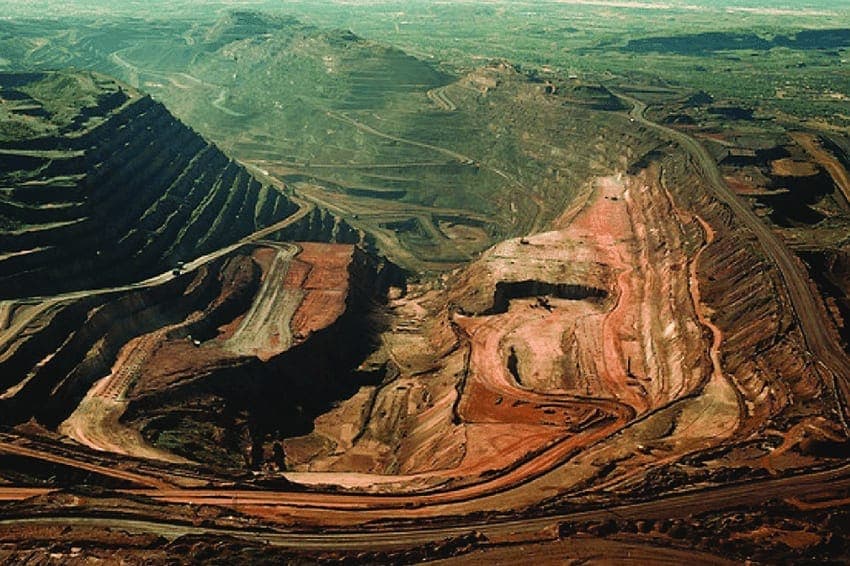
Iron ore is often discussed in Australia as if it were simply another export. In reality, it occupies a far more central position. Revenues from iron ore underpin state budgets, sustain regional employment, and support public services. Entire communities in Western Australia are structured around its extraction and transport. National fiscal settings are indirectly stabilised by the trade.
For China, iron ore plays an even more fundamental role. It feeds steel production that supports urbanisation, infrastructure, manufacturing, and industrial employment at scale. It is not discretionary. It is essential.
When two economies are linked by an input of this importance, it is easy to assume permanence. Yet strategic dependence attracts attention precisely because of its significance. The more essential an input becomes, the more effort is devoted to securing it. Mutual benefit does not preclude strategic calculation. In practice, it often invites it.
Australia benefited for many years from supplying iron ore into a relatively stable strategic environment. That environment has changed, even if the change has not been formally acknowledged.
What the signals suggest
No single data point explains what is occurring. The picture emerges only when multiple signals are considered together.
China has increased investment in Brazilian iron ore supply, including associated logistics infrastructure. It has supported large-scale projects in Africa that are costly and complex, but offer long-term diversification. The Simandou mine in Guinea became operational in late 2025, with shipments reaching China soon after. Such investments are difficult to explain purely in terms of short-term price optimisation.
At the same time, Australian financial institutions have begun to note that geopolitical factors may be influencing future demand assumptions. Commonwealth Bank has projected a significant fall in iron ore prices over the coming years, with corresponding implications for public revenue. These assessments are cautious in tone. They do not allege hostility. They simply note that strategic settings may carry economic consequences.
None of this has required a public statement from Beijing. Markets have adjusted without rhetoric. Behaviour has shifted without escalation. This is one way in which influence can be exercised when a state prefers adjustment to confrontation.
Why retaliation may be the wrong frame
In Australia, there is a tendency to interpret adverse developments in economic relations with China as retaliation. This frame is appealing. It simplifies causation and assigns moral clarity. It is also analytically limited.
Retaliation is reactive. What appears to be unfolding here looks more like anticipatory behaviour. Planning of this kind does not require anger. It requires uncertainty.
Australia has chosen to deepen its strategic alignment with the United States in the Indo-Pacific. That choice has been articulated openly and presented as a response to regional conditions. From the perspective of a Chinese planner, this raises a practical question. In a future crisis, would Australia retain full freedom to act independently in relation to critical industrial inputs, or would alliance expectations shape its choices?
The answer to that question need not be settled for diversification to make sense. It need only be uncertain.
China does not need to assume that Australia would deliberately disrupt supply. It need only recognise that Australia might one day be constrained in its ability to refuse a request. From a planning perspective, reducing exposure to that uncertainty is rational.
Seen this way, diversification is not punishment. It is precaution.
The assumption of indispensability
Australian political debate has often rested on an implicit belief that Australia’s resource endowment makes it indispensable. This belief has encouraged confidence that economic relationships will endure regardless of strategic posture.
History offers little support for such confidence. Capital moves. Technology evolves. Planning horizons extend. What appears indispensable in one period can become merely convenient in the next.
Australia has, at times, treated its resource position as self-justifying. Strategic alignment has proceeded without equal attention to economic hedging. Defence signalling has not always been matched by trade diplomacy. These choices may or may not prove costly. What matters here is that they have altered how Australia is perceived as a supplier.
Western Australia and uneven exposure
Western Australia carries a disproportionate share of the exposure associated with any shift in iron ore demand. All Australian iron ore production is located within the state. Its fiscal position and regional employment are closely tied to the trade.
Yet Western Australia has limited influence over foreign and defence policy decisions that shape external demand conditions. This imbalance has long existed within the federation, but it becomes more significant as strategic considerations intrude more directly into trade.
When national strategy is articulated in aggregate terms, its effects are often felt locally. Markets respond to contracts, not rhetoric. Adjustments register first in investment decisions, employment, and revenue.
There is no formal mechanism through which states most exposed to these shifts can insist that their interests be weighed explicitly in strategic alignment decisions. This is not usually stated. It is simply assumed.
Over time, such assumptions have consequences for trust.
Silence as signal
One of the more notable features of the present moment is the absence of sustained public explanation at the federal level. There has been little discussion of how trade risk is being managed alongside defence policy, and little acknowledgement that strategic choices may alter economic patterns.
Silence is not neutral. It indicates what is considered manageable, or what is not considered urgent.
Australians are capable of understanding trade-offs when they are explained honestly. What tends to unsettle is not complexity, but the sense that explanation is unnecessary.
What now demands closer attention
What is unfolding in the iron ore trade is not dramatic, and it is not complete. It has not taken the form of sanctions, nor has it been accompanied by public accusation. Yet it represents a departure from assumptions that have underpinned Australia’s economic and strategic thinking for decades.
If these changes are not best understood as retaliation, then a different line of inquiry becomes unavoidable. Why would a rational state begin to adjust its most important industrial supply relationships in this way, without provocation and without announcement?
That question matters because it shifts the frame. It moves analysis away from grievance and toward planning. It asks not how Australia has been treated, but how Australia is being assessed.
States do not plan around sentiment. They plan around risk, constraint, and predictability. When behaviour changes quietly, it is often because conclusions have already been drawn.
Whether Australia has understood what conclusions are now being formed about it, and whether those conclusions are justified, is not yet clear.
What is clear is that the assumptions that once governed this relationship no longer suffice. Understanding why requires setting aside moral narratives and examining how power, dependence, and strategic choice actually operate.
That examination must come next.
Walker Briefing is a reader-supported publication. To receive new posts and support my work, consider becoming a free or paid subscriber.

Written by
Hon Dr Brian Walker MLC
MB ChB · MRCGP · FRACGP · 45+ years as a GP
Brian Walker is a General Practitioner and Member for Western Australia in the WA Legislative Council. He is the Leader of the Legalise Cannabis Party WA and an advocate for evidence-based cannabis reform, healthcare improvement, and progressive policy in WA.
Share this article
Stay Updated
Get the latest news and parliamentary updates delivered to your inbox