The Step Down
My father died at fifty. My mother lived to eighty and could have seen ninety-five. Smoking took both of them, and it took my little brother, who grew up watching what it did to them and started anyway. He is dead too. I have detested tobacco since I was five years old, arguing with my parents at th
Brian Walker
My father died at fifty. My mother lived to eighty and could have seen ninety-five. Smoking took both of them, and it took my little brother, who grew up watching what it did to them and started anyway. He is dead too.
I have detested tobacco since I was five years old, arguing with my parents at the kitchen table to put them down. I lost that argument for about forty years. Then I became a doctor and lost it again, at bedsides, watching people drown slowly in front of their families while somebody in the corridor said if only he had stopped.
Walker Briefing is a reader-supported publication. To receive new posts and support my work, consider becoming a free or paid subscriber.
So understand where I am standing when I say the rest of this.
I have spent a working life getting people off cigarettes. There are pills and patches and sprays and lozenges, and I prescribe them, and I tell every patient the same thing as I write it out: these do not really work. Some people they help. Most go back to smoking. That is not pessimism, it is the evidence, and any honest doctor will tell you the same.
One thing worked better than the rest, and it worked in a way that made clinical sense. You take somebody on forty a day and you give them a measured dose of nicotine in a device that does not set fire to anything. You know the strength because you chose it. You bring the strength down. Then you bring it down again. And the object, the whole object, is that in the end they are on nothing at all. That is what a step down is. It is the most ordinary thing in medicine. We do it with opioids, with steroids, with benzodiazepines. Nobody thinks it is radical.
Then the government took the bottom rungs off the ladder.
The shops went first. They were the target of the legislation and they closed the day it commenced. From that morning the only lawful way an Australian could get nicotine other than by setting tobacco on fire was across a pharmacy counter, and the pharmacists had not asked for the job. Many of them said so, out loud, at the time. They were handed a clinical responsibility with no funding, no support and no say.
And they were just told. Do it (or not) it is not government’s problem now that the Bill has been passed into law.
In September 2022 the British government published its evidence review on vaping, written at King’s College London. Four hundred and twenty three thousand words of it. Three weeks later I tabled the whole thing in the Legislative Council, because it said what the evidence said: that vaping carries only a small fraction of the risks of smoking, that this does not make it risk free and never has, especially for anyone who has never smoked, and that on the trial evidence it gets people off cigarettes. It also said, in the section on what all of it means, that surveys measuring smoking and vaping must be properly resourced and kept going, and that where enforcement is cut back the rules will not hold and illegal product will come through.
Nothing came back. Not from the Minister, not from the department. Four years, and not a line.
At the same time the other lever was pulled harder. Federal excise now sits a little over a dollar fifty on one cigarette, lifted twice a year, so a packet of twenty carries more than thirty dollars of tax before the GST and before anyone has made a cent. I have no objection in principle to taxing a poison. But you cannot price a physical addiction out of a country. You can only price it out of the shops. I call it “prohibition by taxation”.
So it went to the criminals, which is exactly what anybody who has treated addiction would tell you it would do. The Tax Office reckons the duty going unpaid has gone from about one dollar in thirteen to closer to one in five, some three point two billion a year, and says its own method probably understates it. In November last year men in overalls put a car through the roller door of a tobacconist on Great Eastern Highway in Midland and set the shopfront alight with petrol out of jerrycans. Not the first time a Midland shop has burned.
And into the space where the regulated product used to be came the containers out of China.
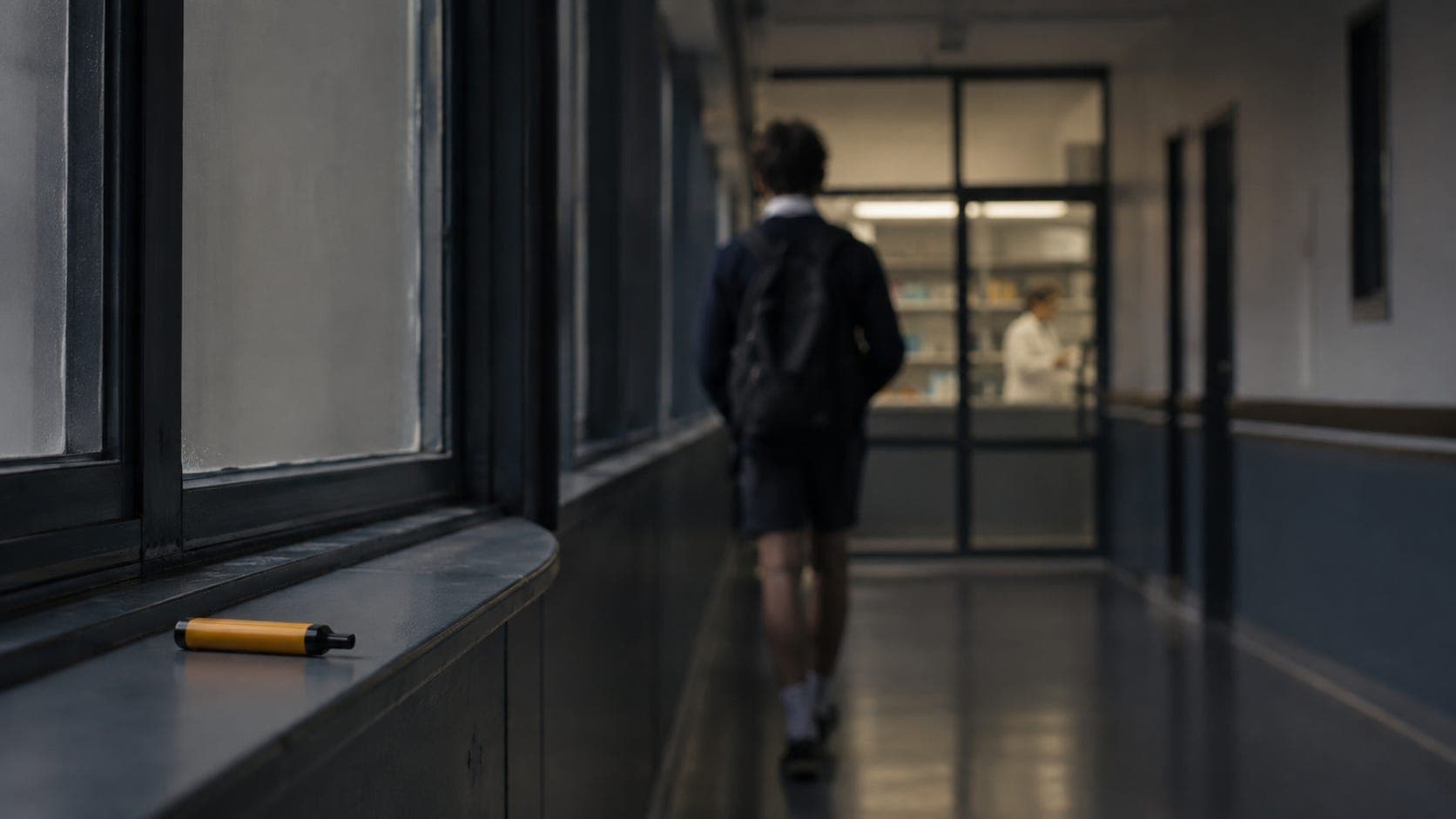
I have handled these things. They are not what I prescribed. The nicotine in them runs at strengths I would not write for anybody, there is nothing on the label worth reading, and nobody in this country is testing what else has gone into the liquid. Bubblegum, cola, watermelon. Designed, and I use the word carefully, to be attractive to somebody who has never smoked in their life.
They are in the schools. Ten of our public schools have had detectors on the walls for two years. Health inspectors have pulled tens of thousands of these devices out of shops. There are children in primary school on them, and the reason that matters more than it would in an adult is not moral, it is biological: a developing brain takes hold of nicotine faster and lets go of it harder. We have known that about tobacco for thirty years. It does not stop being true because the delivery system has a light on the end.
Meanwhile the police seize, and the shops restock, and the police seize again. I do not blame them for a moment. They are working a conveyor belt with a bucket. When our Parliament asked WA Police how many arsons and shootings they had investigated with a motive linked to this trade, eight of the ten questions came back as one sentence: tobacco and vape enforcement is not their responsibility, it belongs to a Commonwealth taskforce. Arson is their responsibility. Arson has always been their responsibility. The question about arson was simply not answered. When our Department of Health was asked how many premises it had closed, it said it had no power to close any, and it declined to say what it spends, in case the answer helped the people it is chasing.
Nothing more can be done. That is the message, arriving in different envelopes from different agencies, all of it perfectly polite. And here is the thing that finished me off when I went looking this week. Nobody knows how big any of it is.
There is a way to find out that does not involve asking anyone. Nicotine leaves a chemical behind in the body, and that chemical ends up in the sewers, and you can measure it. It was done, across fifty five treatment plants and more than half the population, and what it found was that between 2017 and 2023 the total nicotine going through this country did not fall at all. Tobacco sales came down by close to a third. Something else came up to meet it, and the test cannot tell you what that something was, because it was never asked to separate a vape from a patch from a pouch.
Then it stopped. April 2023. Everything I have described above, the border closures, the end of the shops, the pharmacy-only rule, all of it came after that. So the last time anybody actually measured what Australians put into their lungs was ten months before the law changed, and we are two years the other side of it now. Nobody has taken the country’s blood since.
We changed how twenty six million people could get a highly addictive drug, and then we stopped looking.
I got one thing wrong, at least I think I did, and it matters. Standing in that chamber in April 2024, arguing against the bill, I said a prohibition always makes a black market and a black market always makes work for police. That remains true and it indeed happened. I also said people would go back to cigarettes. Did they? Tobacco sales kept falling and something else took its place. What? Was it just nicotine vapes accessed from unregulated sources? Was it illicit tobacco under the table from tobacconists? Was that criminal underbelly perhaps a source for the firebombings? I did not see the rise in children vaping in schools. I just did not see that coming. I was right about the criminals and wrong about the customers, and the real worrisome news is that many customers turned out to be younger than the ones I was worried about.
I should also say that when I moved on this in 2022 I told the House there were vape stores in my electorate and that I wanted to represent them. Why would a medical doctor support a vape store? Because the regulated approach of responsible vendors to assist smokers to quit was being put at risk. I understand that there are 21,000 annual deaths, about one in eight of every death, attributable to the effects of smoking and any move to reduce that toll is fine by me, and I hope by you too. I could now say that none of the consequences rest on me, I told you so, but I cannot. It stings. More, it hurts me to my core as a healer.
What can we do now? It is a small thing.
The samples are already being drawn in this state. Seven treatment plants sat inside the national program when I last asked, and how much nicotine Western Australia gets through is already measured. What is not measured is what kind. Add the tobacco marker to water that is already being collected and analysed, and we would know how much of it is cigarettes and how much is everything else. Put that beside lawful sales and we would know how much is arriving through criminal hands. The first is one more test on a sample already in a jar. The second needs Canberra, because the duty is collected at the border and the factory gate.
When I asked in March 2024 how much of this state’s population those seven plants cover, I was told the program belongs to the federal government and I should ask them. That has been the answer for two years.
I am a doctor who has watched this disease take his own family, and I have spent forty years trying to talk strangers out of it. I was handed something that worked better than anything else in my bag, and I watched it taken away and replaced with a criminal supply chain selling watermelon-flavoured nicotine to children, and when I stood up with four hundred thousand words of the British government’s own evidence in my hands, nobody wrote back.
It hurts.
Ask this Parliament how much nicotine Western Australians get through and it can answer. Ask what kind, and where it came from, and whether anything has changed since we changed the law, and it cannot. Until it can, it is not protecting anybody. It is hoping.
Walker Briefing is a reader-supported publication. To receive new posts and support my work, consider becoming a free or paid subscriber.

Written by
Hon Dr Brian Walker MLC
MB ChB · MRCGP · FRACGP · 45+ years as a GP
Brian Walker is a General Practitioner and Member for Western Australia in the WA Legislative Council. He is the Leader of the Legalise Cannabis Party WA and an advocate for evidence-based cannabis reform, healthcare improvement, and progressive policy in WA.
Share this article
Stay Updated
Get the latest news and parliamentary updates delivered to your inbox