What Sustainable Sovereignty Actually Requires
The question the series has been building toward The preceding pieces in this series have examined, from different angles, the same underlying condition: a political order losing its capacity for proportionate response, and an Australian strategic posture that has failed to reckon honestly with what
Brian Walker
The question the series has been building toward
The preceding pieces in this series have examined, from different angles, the same underlying condition: a political order losing its capacity for proportionate response, and an Australian strategic posture that has failed to reckon honestly with what that loss means for us. The Zhong Yong framework established in the first piece provides the diagnostic discipline. It asks, before any other question, what the situation actually requires. Not what alliance habit prefers nor what institutional inertia produces and not what is politically convenient for those who have built careers on existing arrangements. It asks what the situation, examined without those pressures, actually calls for.
Walker Briefing is a reader-supported publication. To receive new posts and support my work, consider becoming a free or paid subscriber.
This piece attempts to answer that question directly. It is the first piece in this series to do so. The earlier pieces were necessary preparation: establishing the evidential ground, naming the structural failure, and demonstrating that what is happening is not aberration but pattern. That preparation is now complete. The question that remains is not whether Australia’s strategic posture requires fundamental reassessment. It is what that reassessment, conducted honestly, indicates we must do.
I am a Member of the Western Australian Legislative Council and a general practitioner of four decades’ standing. Both disciplines have trained me in the same habit: the willingness to name what the evidence shows, even when the naming is uncomfortable for those who preferred the earlier diagnosis. I intend to exercise that habit here.
The precedent that matters
In 1985, the newly elected Labour government of New Zealand banned nuclear-armed and nuclear-powered vessels from its ports and territorial waters. The decision was not made in a vacuum of risk. New Zealand knew precisely what it stood to lose. The United States responded by suspending its security obligations under ANZUS, withdrawing intelligence-sharing arrangements, and applying sustained diplomatic pressure designed to demonstrate the cost of independent judgement. The pressure was real. The relationship was genuinely damaged for years.
New Zealand held its position.
It did not leave the alliance family. It did not adopt a posture of hostility toward the United States. It did not surrender its participation in Five Eyes intelligence arrangements, which were eventually restored. What it did was define a limit, state it clearly, and absorb the consequences of holding it. Forty years later, New Zealand’s strategic credibility in the region is not diminished by that decision. It is, in significant measure, built upon it. The nations of the Pacific and Southeast Asia have learned that New Zealand’s stated positions reflect genuine commitments rather than reflexive alignment. That reputation is a strategic asset of considerable value.
The differences between New Zealand’s position and Australia’s are real and should be acknowledged plainly. New Zealand had made no financial commitments equivalent to AUKUS. It hosts no foreign military basing arrangements of comparable scale or strategic significance. Its proximity to contested sea lanes is less acute than Australia’s. And its post-1985 defence capability has attracted sustained criticism from alliance partners on grounds of under-investment, criticism that carries its own lessons about the costs of principled independence pursued without adequate strategic preparation. These differences matter. They mean the specific form of Australia’s path cannot simply replicate New Zealand’s.
What the New Zealand precedent establishes, however, is a principle rather than a template. It demonstrates that the space between unconditional alliance integration and dangerous isolation is real, navigable, and survivable. The binary that Australian political debate currently accepts as given, align completely or stand dangerously alone, is not a description of the available options. It is a constructed frame that serves those who profit from the current arrangement. New Zealand’s 1985 decision is the refutation of that frame. A nation of comparable size, comparable cultural and strategic inheritance, and considerably less strategic exposure than Australia demonstrated that defined limits can be held under American pressure, and that the relationship survives the holding of them. The principle is transferable even where the specific circumstances are not.
The model New Zealand demonstrated is not neutrality. Neutrality is the studied absence of position. What New Zealand exercised was principled strategic independence: the capacity to assess each question on its merits, to align where interests and values genuinely coincide, and to hold a defined limit when they do not. That capacity is what Australia must now begin, deliberately and urgently, to build.
What the doctrine demands of us now
The Zhong Yong framework does not permit the luxury of indefinite diagnosis. Its demand is practical: once the situation has been examined clearly, the requirement of proportionate response must be named. This framework was not developed in response to the current conflict. It was introduced in these pages in February 2026 as a standing analytical discipline applicable to any situation in which governance loses its capacity for calibrated response. The events of recent weeks have not created the need for the framework. They have made its application to Australia’s specific position unavoidable.
Those events are now a matter of documented record. Australia’s closest ally launched a military operation against a nation with which it was conducting active negotiations, 48 hours after those negotiations produced an agreed continuation. It did so without consulting its allies. It offered six distinct and mutually inconsistent justifications for the action across the days that followed. Its own intelligence agencies had concluded, in a classified assessment completed weeks before the strikes, that the action was unlikely to produce its stated objective of regime change. That assessment was not acted upon. The decision-makers had access to it. They chose otherwise.
The Strait of Hormuz, through which passes approximately 35 per cent of globally traded fertiliser, is now disrupted during the Northern Hemisphere’s peak spring planting season. The food security consequences of that disruption will fall most heavily on populations in South Asia, Sub-Saharan Africa, and South America who had no representation in the rooms where the decision was made. Australian agricultural exporters, who depend on those same populations as customers, will not be insulated from the downstream effects.
Meanwhile, the structural condition of the AUKUS submarine programme warrants honest examination. The United States is producing Virginia-class submarines at a rate that senior American defence officials have acknowledged, on the record, is insufficient to meet the United States Navy’s own requirements. Independent analysis of the American submarine industrial base, including assessments by the Congressional Research Service, documents a production capacity that cannot be expanded to meet allied commitments without either diverting vessels from American strategic requirements or extending delivery timelines substantially beyond those publicly stated. On the available industrial evidence, delivery of Virginia-class submarines to Australia on the promised schedule is not achievable under current production conditions. Whether that gap can be closed, and over what timeframe, remains genuinely uncertain. What is not uncertain is that the optimistic framing presented to the Australian public has not been reconciled with the production data that the American defence establishment’s own assessments describe.
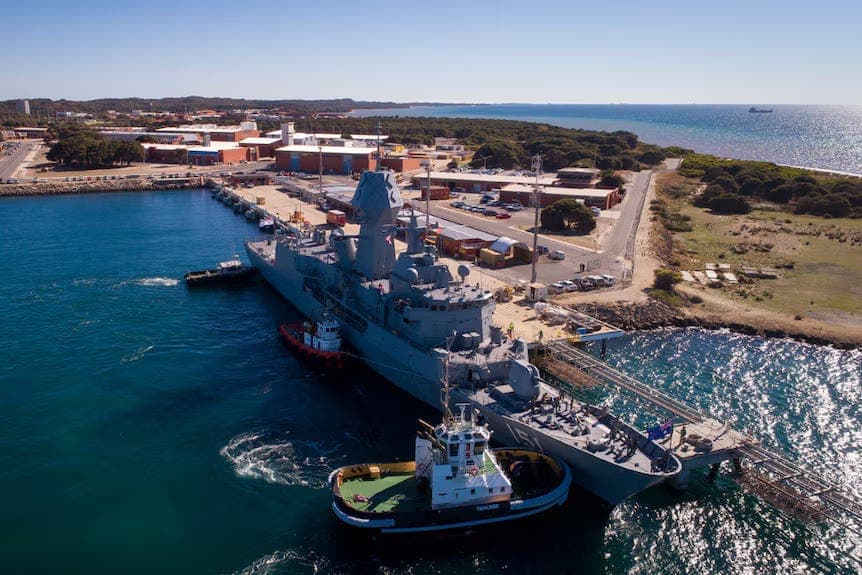
The basing arrangements that AUKUS entails present a related question. The facilities being developed at HMAS Stirling in Western Australia are structured, on the publicly available terms of the arrangement, primarily around the operational requirements of American and British vessels in the Indo-Pacific. The extent to which Australian operational priorities will govern the use of those facilities, in conditions of genuine strategic tension rather than peacetime cooperation, is not established in any publicly available document. An arrangement whose terms give Australia limited governance over facilities on its own territory, serving strategic requirements it did not independently derive, is not a partnership of equals. It is an arrangement whose costs and risks are borne locally while its strategic direction is determined elsewhere.
The Zhong Yong framework asks: what does this situation actually require? The answer that the structural analysis supports is not comfortable, but it is clear. Australia requires a strategic posture it does not currently possess: one derived independently from Australian national interest, oriented toward the regional order in which we actually live, and capable of holding defined limits under external pressure. The term I would use for this is Australian sustainable sovereignty. It is not a slogan. It is a description of what functional, durable, independent governance of a nation in our position requires.
The question that must be answered directly
There is a misreading of this argument that I wish to address before it is made, because it will be made. The argument for principled strategic independence will be characterised, by those whose institutional interests it threatens, as accommodation with China. That characterisation is wrong, and the wrongness is not a matter of degree. It is categorical. To be explicit about what this argument does not claim: it does not claim that American and Chinese strategic behaviour are morally or structurally equivalent. They are not, and the argument does not require that they be.
Chinese assertiveness in the South China Sea is real and documented. The economic coercion applied to Australia between 2020 and 2023, including tariffs on Australian barley and wine, import bans on Australian coal and timber, and restrictions on Australian beef and seafood, demonstrated with considerable clarity that Beijing is willing to use trade as a political instrument against a partner on whom it depends for resources it cannot readily source elsewhere. That willingness has not disappeared because the restrictions were subsequently eased. The pattern of behaviour by which China has sought to reshape the regional order through unilateral action, including the construction of artificial islands in the South China Sea and the systematic disregard of adverse rulings by international tribunals, is not in dispute. None of this is consistent with the principles of sovereignty, proportionality, and the genuine wellbeing of affected populations that the Zhong Yong framework requires of governance. Australia has legitimate concerns about Chinese strategic behaviour that do not disappear because American strategic behaviour has also become a source of legitimate concern.
Principled strategic independence is independence from any external power’s preferences about how Australia should act, including Chinese preferences. An independently derived Australian grand strategy would be more capable of engaging China on genuinely Australian terms, not less, precisely because it would not be legible as an extension of American strategic preferences. The nations of Southeast Asia understand this distinction with considerable clarity. They have spent decades managing relationships with both great powers without surrendering their capacity for independent judgement. Malaysia, Indonesia, Vietnam, and Singapore have each developed the habit of engaging China on economic and diplomatic terms while maintaining positions on sovereignty and maritime law that China has not endorsed. They have done so without either unconditional alignment with the United States or accommodation of Chinese strategic ambitions. Australia, uniquely positioned geographically and economically, has been slower to learn this lesson.
The choice Australia faces is not between American alignment and Chinese accommodation. It is between reflexive dependence on a single external framework and the development of a genuinely Australian strategic identity. Those are different problems, requiring different responses, and conflating them serves no one except those who wish to prevent the second question from being asked.
What sustainable sovereignty actually requires
Australian sustainable sovereignty is not a destination that can be proclaimed. It is a capacity that must be built, deliberately and over time, across at least four dimensions.
The first is an independently derived grand strategy. Australia does not currently possess one. What we have is an alliance posture supplemented by capability procurement decisions and diplomatic positioning that are all, to varying degrees, oriented toward maintaining alignment rather than expressing independent judgement. A genuine grand strategy begins with a clear-eyed assessment of Australian national interests, geographical realities, economic dependencies, and the regional relationships that actually determine our long-term security and prosperity. It then derives strategic settings from those interests, and evaluates alliance commitments against that derivation, rather than treating alliance commitments as the strategy itself. This is not a radical proposition. It is the minimum intellectual discipline that any serious nation owes its own people.
The second is diplomatic and economic reorientation toward the regional order. Australia’s prosperity has always depended on Asia. Our five largest trading partners are all in the Asian region. The communities whose decisions will most directly shape Australian security and economic opportunity over the coming decades are our immediate neighbours, not the Atlantic powers whose strategic frameworks were built for a different geography and a different century. Sustainable sovereignty requires that Australian diplomatic investment, foreign aid, regional institution-building, and economic partnership reflect this reality rather than continuing to treat the region as a secondary consideration in a framework whose primary orientation lies elsewhere.
The third is an honest national reckoning with AUKUS. The industrial evidence regarding submarine delivery timelines has not been stated honestly to the Australian public by either of the major parties, because both are institutionally committed to a framework that neither designed with full information nor can now revise without political cost. That silence is a failure of the duty of honest governance. Australia needs an independent public assessment of what AUKUS will actually deliver, at what cost, on what timeline, and under what operational governance arrangements. It needs that assessment conducted outside the institutional frameworks that have a vested interest in its conclusions. And it needs to be genuinely prepared to act on the findings, even if those findings require decisions that are politically uncomfortable for those who have publicly defended the programme.
The fourth is the political courage to hold an independent position under pressure. New Zealand demonstrated in 1985 that this is possible. It is not cost-free. American displeasure is a genuine thing and its short-term consequences are real. But the alternative, a posture of alignment so unconditional that it cannot be distinguished from strategic dependence, carries costs that are larger and less recoverable. The nations of Southeast Asia, of the Pacific, and of the broader Indo-Pacific region will extend far more genuine strategic partnership to an Australia that can say no when its values and interests require it than to an Australia whose positions can be predicted entirely from Washington’s preferences. Strategic credibility is built by demonstrated independence of judgement. It is eroded by its visible absence.
The view from inside the system
I am aware that arguments of this kind are sometimes dismissed as the province of those who do not bear institutional responsibility. Let me be precise about my position.
I am a sitting Member of the Crossbench in the Western Australian Legislative Council. I have legislative responsibilities across health, law reform, and a range of policy areas directly affecting the people of Western Australia. My parents served in war, I served in a smaller degree, and I have a family member currently serving in Australia’s armed forces. I have lived and worked as a doctor in the Soviet Union, China, Germany, and across the United Kingdom, as well as in Australia, and I have spent four decades in general practice developing the clinical discipline of differential diagnosis: the systematic refusal to accept the first available explanation when the pattern of evidence points elsewhere.
That discipline is what I am applying here. The pattern of evidence does not support the conclusion that deeper integration with a demonstrably less predictable alliance partner, under financial commitments whose delivery is structurally in doubt, through basing arrangements whose operational governance serves requirements Australia did not independently derive, constitutes a credible approach to Australian security. A clinician who continued prescribing a treatment whose risks had materially increased and whose benefits had materially diminished would be failing their patient. The same applies to a legislator who continues to support a strategic posture whose foundational assumptions have been overtaken by events.
The Australian political class is not currently providing the honest reassessment that the evidence requires. Both major parties are institutionally committed to a framework they cannot revise without cost. The voices calling for genuine examination are present but marginalised. The public conversation that a democracy owes its citizens on a question of this magnitude, involving hundreds of billions of dollars, the operational governance of Australian facilities, and the genuine risk that Australian service personnel will be committed to conflicts whose strategic rationale has not been independently assessed, has not taken place.
It needs to.
What the evidence points toward
The preceding analysis has established the following: that Australia’s current strategic posture rests on assumptions that have been materially undermined by events; that the alliance framework through which that posture is expressed has demonstrated, in the Geneva timeline and its consequences, a willingness to act without consultation, without proportionality, and without regard for the interests of those not represented in the decision; that the specific commitments made under AUKUS do not, on the available industrial and governance evidence, serve Australian interests on the terms their proponents claimed; and that the nations of our region and the long-term requirements of Australian prosperity and security point in a direction that the current posture actively impedes.
The doctrine of Zhong Yong requires that governance name what the situation actually demands, rather than what interested parties prefer. I will name it.
Australia requires a staged, deliberate, and publicly honest transition toward principled strategic independence. This means the development of an independently derived grand strategy, conducted outside the existing institutional frameworks that have a vested interest in existing conclusions. It means a fundamental reorientation of Australian diplomatic and economic investment toward the Asian regional order in which we actually live. It means an honest independent assessment of AUKUS, with findings made available to the Australian public and genuine willingness to act on what that assessment finds. And it means the cultivation, in Australian political culture and in Australian institutional life, of the habit that New Zealand demonstrated is possible and that the Confucian tradition identified two and a half thousand years ago as the foundation of durable governance: the willingness to ask what the situation actually requires, and the seriousness to say so when the answer is inconvenient for those already holding power.
Australian sustainable sovereignty is not a comfort. It is a discipline. It is available to us. The question is whether we have the seriousness to choose it.
Brian Walker is a Member of the Western Australian Legislative Council and a general practitioner of four decades’ standing.
Walker Briefing is a reader-supported publication. To receive new posts and support my work, consider becoming a free or paid subscriber.

Written by
Hon Dr Brian Walker MLC
MB ChB · MRCGP · FRACGP · 45+ years as a GP
Brian Walker is a General Practitioner and Member for Western Australia in the WA Legislative Council. He is the Leader of the Legalise Cannabis Party WA and an advocate for evidence-based cannabis reform, healthcare improvement, and progressive policy in WA.
Share this article
Stay Updated
Get the latest news and parliamentary updates delivered to your inbox