Whose Body Is It?
“I have cancer of ... “ is the beginning of many a consultation. What follows appears to be a pattern, perhaps because a self-selecting group have heard of a less rigid approach to wellness. In my view, one’s health belongs to the individual, and my job is to give the best advice I can. It is the jo
Brian Walker
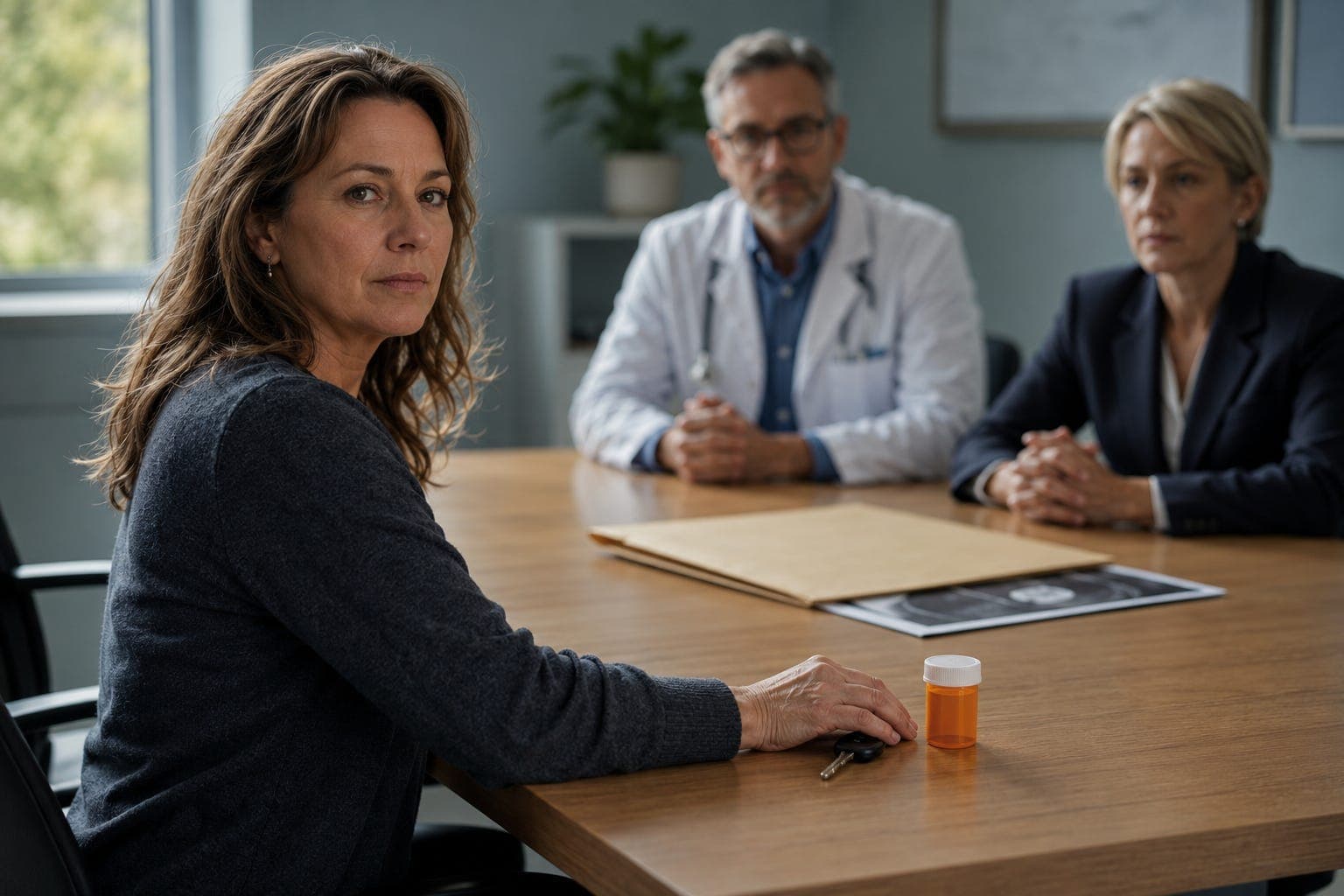
“I have cancer of ... “ is the beginning of many a consultation. What follows appears to be a pattern, perhaps because a self-selecting group have heard of a less rigid approach to wellness. In my view, one’s health belongs to the individual, and my job is to give the best advice I can. It is the job of the patient to choose what they feel best suits their needs. But let us take one example that my colleagues would recognise, someone with rectal cancer. Often they come late because the first signs lead them to be referred to the experts, and rightly so. Once the classical orthodox approach has been tried, and alternative approaches have not been as helpful as promised, then they tend to gravitate towards whoever seems able to promise a more hopeful outcome. Once, one such a patient approached me with a diagnosis of rectal cancer, and coming later in the process the cancer had spread, and he asked how he could best manage the process. He had already been through one course of chemotherapy and it had nearly finished him: the sickness, the nerve pain in his hands and feet, the weeks he could not get off the couch. He told me two things in the same breath. He would not do that again. And he would not have a stoma: a bag that collects faecal matter, opening out on to the abdomen.
Now while I believe that the outcomes with chemotherapy for solid tumours that have metastasised are poor, I also believe that for surgery to succeed there is a chance that chemotherapy and radiotherapy could shrink the tumour to an operable size, following which surgery there are options that could be considered. New therapies, trials, and of course, alternative supportive measures which for the most part are detested by the specialists, but which are almost universally adopted by the patients who choose not to share that with their specialists. With this cancer, preventing the predictable pain and obstruction at an early stage makes sense, but how do you explain that best? I thought he should at least consider a referral back to a specialist, consider shrinking the tumour with chemotherapy and radiotherapy, and surgery might become possible. “Would surgery require a colostomy?” The bald answer is “Likely.” I say so, lay out what I know and where further advice is necessary. Then I asked him what he wanted, and listened to his reply. The answer was no. Not for anything would that path be accepted. What, he asked me, could I do to help?
Walker Briefing is a reader-supported publication. To receive new posts and support my work, consider becoming a free or paid subscriber.
The specialists did not ask what he wanted. They told him. You must have the chemotherapy. You must have the radiotherapy. The surgery will be booked. It is a bit like being put on a conveyor belt, you sign a paper that gives permission to do what is needed, and then you start a journey on the conveyor belt. When he said he did not want a colostomy, the answer came back as if he had not spoken: without it you will die. The statistics were on their side of the desk, and so, in their minds, was the decision. Nobody asked him how he wanted to spend the months he had. Nobody asked what a bag meant to a man who had spent fifty years working with his body and his hands. Nobody asked whether a longer life on their terms was worth more to him than a shorter one on his own. They had a protocol, the protocol had numbers, and the numbers said obey.
Make no mistake. This is not about villains in the medical system, this is about the system that trains us. A surgeon who sees this situation a hundred times knows what happens to the ones who do nothing. The evidence they work from is real. If you are treated, more of you are alive in three years than if you are not treated. I understand the pull of that. I have felt it myself. But the evidence says something else as well, and it is the something else that the protocol never mentions. When researchers ask patients with bowel cancer what they would give up to avoid a permanent stoma, a majority say they would trade a third of their remaining life expectancy. When they ask the surgeons the same question, the surgeons would not trade nearly so much. The doctors and the patients are not measuring the same thing. One is counting months. The other is counting what the months are for.
And the patient usually does not know there is a choice at all. A study of more than a thousand people having chemotherapy for cancer that had already spread found that four in five of those with bowel cancer did not understand that the treatment was not going to cure them. Four in five. The ones who rated their doctors as the best communicators were the most likely to be wrong. Another study asked doctors what their breast cancer patients cared about most. The doctors thought seven in ten women would put keeping the breast first. Fewer than one in ten actually did. The people who were supposed to know what their patients wanted were wrong by an order of magnitude, and nobody had asked.
None of this is a secret in law. Since 1992 the High Court has held that a doctor must tell a patient about any risk a reasonable person in that patient’s shoes would want to know. What the profession considers normal practice is not the measure of it. A Chief Justice of Western Australia, in a case about a man who wanted his feeding stopped, put it as plainly as it can be put: a competent adult may refuse treatment even if refusing will kill him, and he may do so for reasons rational, irrational, unknown or even non-existent. The Medical Board’s own code, the one every doctor in this country is held to, says making decisions about healthcare is a shared responsibility, that we must listen to patients and ask for their views, and that patients have the right to refuse. It is all written down for the last thirty years.
So the failure is not ignorance of the rule. The information stays on the doctor’s side. The statistics, the survival curves, the honest odds of what the treatment will and will not do: they live in the specialist’s head and in the specialist’s file, and what reaches the patient is the conclusion. You must. And once the information stays on one side of the desk, the decision stays there with it. That is the whole mechanism. It is not cruelty. From the inside it feels like care. But its effect is that someone’s body is decided for them by people who never asked what it was for.
Hold that picture.
Three years ago a committee of this Parliament, which I sat on, recommended that the Government look again at a law that punishes drivers for driving while unimpaired but with a measurable trace of THC in their system. The current law makes no distinction between someone who has just used recreational cannabis and been driving impaired, and someone who took their prescribed medication the night before and was driving without any recognisable impairment. Indeed the question was asked if by using medicinal cannabis to reduce chronic pain, treat debilitating anxiety, grant excellent sleep and preventing sleep impaired driving, a person would be driving more safely? And the answer was indeed that one would drive more safely. Science had adequately shown that presence of THC does not equate to impairment. The current law does not care. The Government, to its credit, agreed to examine it. It set up a working group of its own agencies: the Road Safety Commission, the police, the health department, transport, the Mental Health Commission, with medical and scientific experts alongside. In November 2025 the Minister assured parliament it would report by Christmas. It did. The report went to the Minister for Health in December.
Since then the people of Western Australia have been told this much about it: nothing.
I have asked, in the chamber and on notice, more times than I can easily count since May. Has the Minister read it? When did each agency receive it? Has the Minister for Road Safety been given a copy, and in which of his two hats? What, if anything, is delaying an announcement? Every one of those questions came back with the same sentence. The report remains under consideration by the Government. Not a date, not a summary, not so much as a confirmation that anyone had opened it. In June I asked whether the Minister would at least share this taxpayer-funded review with the people of Western Australia before she shared it with her interstate colleagues. The written answer was two words. Not applicable.
I lodged a freedom of information request for it. Months on, they have not even asked me for the fee. The request is not being refused. It is simply not being processed, which is a quieter way of arriving at the same place.
And while the report sits on a desk, the roadside tests go on. People who are not impaired are still losing their licences. In July the Government found time to add cocaine to the same presence-based net, so the machinery that punishes the proxy was expanded in the very months the review of that machinery was being kept from view. New South Wales has a bill through its lower house for a threshold and a warning system. The ACT has tabled a bill. Queensland talked of a review in June and in July went the other way. In Tasmania, the presence of a prescription and the absence of impairment results in no prosecution. Here, the answer is that the matter is under consideration.
I do not know what the report says. That is the point. I do not know because I am not allowed to, and neither are you, and neither, as far as any answer given in Parliament reveals, are the agencies whose job it would be to act on it. What I think is going on, and I give it to you as my opinion and nothing more, is that the report says that the law should be changed, and that the government for whatever reason is determined to hold back the report, prevent the amendment of legislation, and continue perpetrating a manifest injustice on unimpaired drivers who are guilty of taking their prescribed medication as recommended. I may be wrong. There is one document that would prove me wrong, and they will not release it.
A body of experts holds the information. The person whose life is affected is told a conclusion: you must, you may not, it is under consideration. The information stays on one side of the desk, and the decision stays with it. That is the oncologist’s consulting room, with a portfolio instead of a stethoscope. And we have seen it before at even larger scale. The vaccine, you know which one, saves lives; and the mortality benefit is real. Is that the whole story? The institutions around it rushed the timeline, hid the data until a court forced it out, profited enormously, overclaimed what it could do, and stigmatised anyone who asked honest questions about harms. And even if it had all been handled perfectly, the state still had no right to force it into your body. You were asked to sacrifice your own bodily autonomy because it was good for you. The government knows better than you what is good for you. Trust us, they said. They said it was to keep the rest of the population safe, the population that had already taken the vaccine and therefore, according to government facts, were safe from disease, safe from mortality, safe from morbidity.
We doctors can use a similar phrase. This is for your own good. Trust us, we know. Hush now, we are looking after you. The government phrases this differently. It is “under consideration”. Trust us, we are carefully looking into it, even if the working group of experts has already given an expert opinion. Keep on trusting us.
There is one last room to consider.
On Saturday the people of Secret Harbour voted in a by-election. The seat had been Labor’s, under one name or another, since 1989. At the last election the margin was eleven and a half points, which the analysts call very safe. On the count so far it has gone to One Nation by a swing of more than seventeen points. I was at the pre-poll, stood at a polling booth on election day, and spoke with many really wonderful people from all parties. I had an inside view both as a politician and also from the perspective of a member of my own staff who stood in that contest for Legalise Cannabis. I watched closely as an interested observer. What signal are the voters sending us? I will not pretend to know; nobody knows that yet, least of all the winners. Was this a good choice or a poor choice? We will see. What I saw was a political fistfight, promises thrown around, floods of volunteers wrestling with the consciences of a voting public that clearly has told us they are not happy with the status quo. The Premier said on the night that Western Australians are doing it tough, that his Government will get out and listen, and that it will double down. Trust us.
Listen. It is the word the surgeon should have used. It costs nothing to say on the night a safe seat falls, and nothing to forget by Monday.
A patient who is told rather than asked will, in the end, leave the practice. Not leave because the next doctor is better; they may be worse. The patient leaves because in that room they were never a person with a body of their own. This was a case with a protocol attached. The electorate of Secret Harbour is a body too. It was told what was good for it for a very long time, in a very confident voice, without adequate action being taken, and on Saturday it got up and walked out of the consulting room. I do not say it walked into a better one but I do say that if you want to know why it left, then the government had better ask what the patient thinks.
This is where the evidence leads me. The decision about a body belongs to the person living in it. The person in my consulting room is entitled to say no to a bag and no to another round of poison, and to be told the honest odds before a decision is made. The woman on a prescription is entitled to know what her own Government’s experts concluded about the law that can take her licence. An authority that keeps the decision by keeping the information is not protecting anyone. It is protecting its hold on the decision. The remedy in both rooms is the same, and it is not complicated. Put the information on the table. Then ask the person whose body it is.
Release the report. On the eighth of September, when the Council sits again, I will be asking for it. Again.
Walker Briefing is a reader-supported publication. To receive new posts and support my work, consider becoming a free or paid subscriber.
Written by
Hon Dr Brian Walker MLC
MB ChB · MRCGP · FRACGP · 45+ years as a GP
Brian Walker is a General Practitioner and Member for Western Australia in the WA Legislative Council. He is the Leader of the Legalise Cannabis Party WA and an advocate for evidence-based cannabis reform, healthcare improvement, and progressive policy in WA.
Share this article
Stay Updated
Get the latest news and parliamentary updates delivered to your inbox