Why a Doctor Went Into Politics
A man sat down in front of me a few years ago and I have not really stopped thinking about him since. He had served. He came home from that service carrying things the rest of us were spared, and by the time he reached my room the word for it was PTSD, though the word tells you almost nothing about
Brian Walker
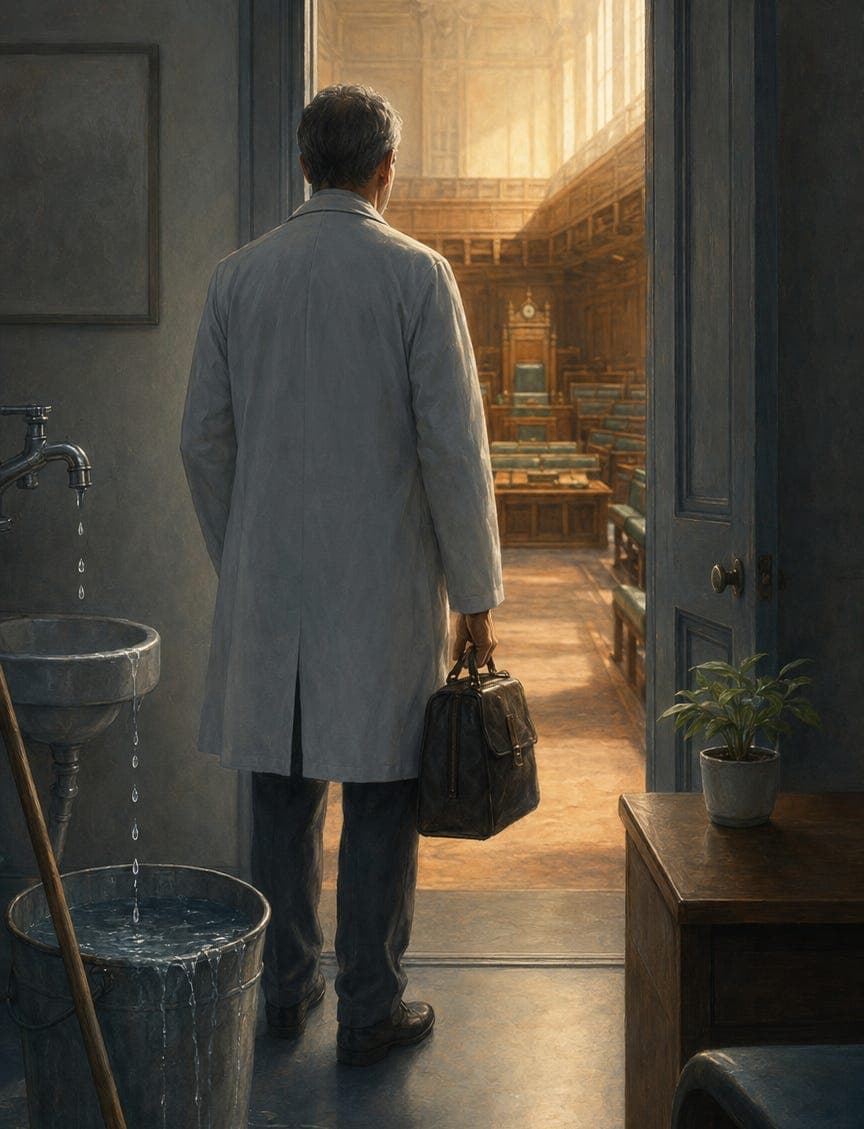
A man sat down in front of me a few years ago and I have not really stopped thinking about him since.
He had served. He came home from that service carrying things the rest of us were spared, and by the time he reached my room the word for it was PTSD, though the word tells you almost nothing about the man. He was in pain, the ordinary physical kind, most of the day. He did not sleep so much as get through the night. And when sleep did come the dreams brought the worst of it back, so a part of him had learned to be afraid of the one thing his body needed most.
Walker Briefing is a reader-supported publication. To receive new posts and support my work, consider becoming a free or paid subscriber.
He was on medication. A great deal of it. The kind meant to quiet the mind, and it does quiet the mind, in the way a heavy coat quiets a fire by smothering it. He was flattened. Not calm. Flattened. He sat across from me at half the volume of a living man, and the drugs that did that to him had been prescribed with real care by people trying to help, which is the part that took me the longest to understand.
He is a real man, though I have changed everything that would point to his face, because he trusted me with it. And he is far from the only one. I have sat with his story so many times over, in so many veterans, that any number of them could read this and think I meant him alone. What I have not changed is the shape of what happened, because that shape is the whole reason I am writing to you at all.
The marriage went first. Not in a fight. It just thinned, the way a marriage does when one person is not really in the room. His wife did not leave him. She simply found, across years, that she was living beside a man she could no longer reach. The children learned to move quietly around their father. He could not hold down work, so the family lived on a pension that never quite stretched to the life he had been promised when he signed up. No holidays. The small ordinary treats gone. A dad the kids loved and could not find. You do not need me to describe what that does to a house, because a good many of you have watched some version of it in your own.
Here is the thing you should know before you weigh a word of this. I lead a political party that argues for lawful access to medicinal cannabis. So when I tell you there was another road for that man, you are right to hold what I say up to the light, and I would rather you did that than take me on trust.
There was another road. Not a miracle. A road. But between the cost of it, the nervousness around it, and the rules that hedged it about, that road was all but closed to him. The department meant to care for our veterans pays without a murmur for the drugs that were hollowing him out. For the wound in his mind it will not pay, and the reason it gives is that the evidence is not yet in. But sit with that reason, because it runs in a circle. The evidence is thin because we spent the better part of a century making the plant almost impossible to study. So the help is refused for want of proof, and the proof was refused by law. Round it goes, and the veteran waits in the middle of it. I sat in that room able to see a door and unable to open it for him.
Let me be careful about the medicine itself, because this is exactly the point where a man in my position is tempted to oversell. The formal evidence that cannabis treats PTSD is thin, and the largest recent reviews have found little to support it. I take that seriously, and so should you, even knowing how that thinness came about. But a thin evidence base is a thin evidence base. Should I dress it up as more? What I can tell you is smaller and truer than a headline. In my own practice I have seen more than a few veterans begin to sleep on it, watched the dreams lose some of their teeth, and watched a number of them, under careful supervision, ease off the heavier drugs that were harming them. And it is no longer only me. Some of the psychiatrists who once wrote those heavier prescriptions have begun asking me about this instead. That is clinical experience, and it is not proof, and I hold the two apart. There are real risks too, and they deserve naming, the clearest being that in high doses, and above all in the young, this is a plant that could push a vulnerable mind towards psychosis. A supervised adult in genuine need is not a teenager buying strength on a street corner, and honest medicine keeps that difference in plain sight.
But the argument was never really about whether the medicine works. That is the ground the fight always gets dragged onto, and it is the wrong ground. There are other real roads for a wounded mind, the talking therapies among them, and I have never claimed this plant is the only one. The real question is who decides. A grown man, and the doctor who actually knew him, were left unable to reach a supervised alternative, while the drugs that had flattened him stayed funded and waved through. Some of those medicines have a real place, and for some people they do good work. For him they had stopped doing any. Someone a long way from that room, who would never meet him and would never carry the cost of being wrong, had already decided for him. Decisions about a person’s care belong as close as possible to the person who has to live with them, and to the people who know that person. Not to someone who will never sit in the room. That is what I could not get past. I had seen the same story too many times, and it left me physically angry.
And once I had seen the same pattern in his case, I could not stop seeing the shape of it. We pay a fortune, in money and in broken families, to manage the wreckage downstream, while the thing that might have prevented it upstream is the very thing we make hardest to reach. The pension. The specialists. The second and third drug for the side effects of the first. The slow cost to those children that the country will go on paying for decades. All of it downstream, all of it after the damage is done. We have become extraordinarily good at mopping the floor and strangely unwilling to turn off the tap.
I did not train as a doctor to mop such floors. I sat with that man and felt something I had to name carefully, because it would have been easy to make it sound noble, and it was not. It was anger. Plain anger, at a system that could watch a man go under and had arranged itself so that no one was permitted to reach for another way. So I rang a small new party that was arguing about precisely this, and I asked whether they could help me. They said that perhaps I could help them, and that is how a GP from the hills ended up in politics.
I will not pretend my helplessness was the same as his, or as yours. It was not, because I had a way out that most people never get, and I took it. But the helplessness underneath was the same, and I think it is the same helplessness a great many people are living with right now, watching governments nod along and promise to look into things while their lives quietly wash away. There are people up the coast at Lancelin watching the sea take the ground their houses stand on, and being told that interim measures are under consideration. They are not imagining it. They are being managed.
What I found, and what I want to spend this series showing you, is that the same shape turns up nearly everywhere once you know to look for it. That shape is not just in who is allowed which medicine, and who is left to pay for it. It is in the treatments we are told to fear when the real danger runs the other way. In housing, and in the education system. You can see it one life at a time, because the shape is always clearer in a single life than in a slogan.
I do not have all of it worked out, and I will show you my working as I go, including the places I have changed my mind. What I know is that I stopped being able to sit and watch. That is where this begins. Pull up a chair.
Nothing here is medical advice for any one person. If you are unwell, or weighing up your own treatment, talk it through with your own doctor.
Walker Briefing is a reader-supported publication. To receive new posts and support my work, consider becoming a free or paid subscriber.
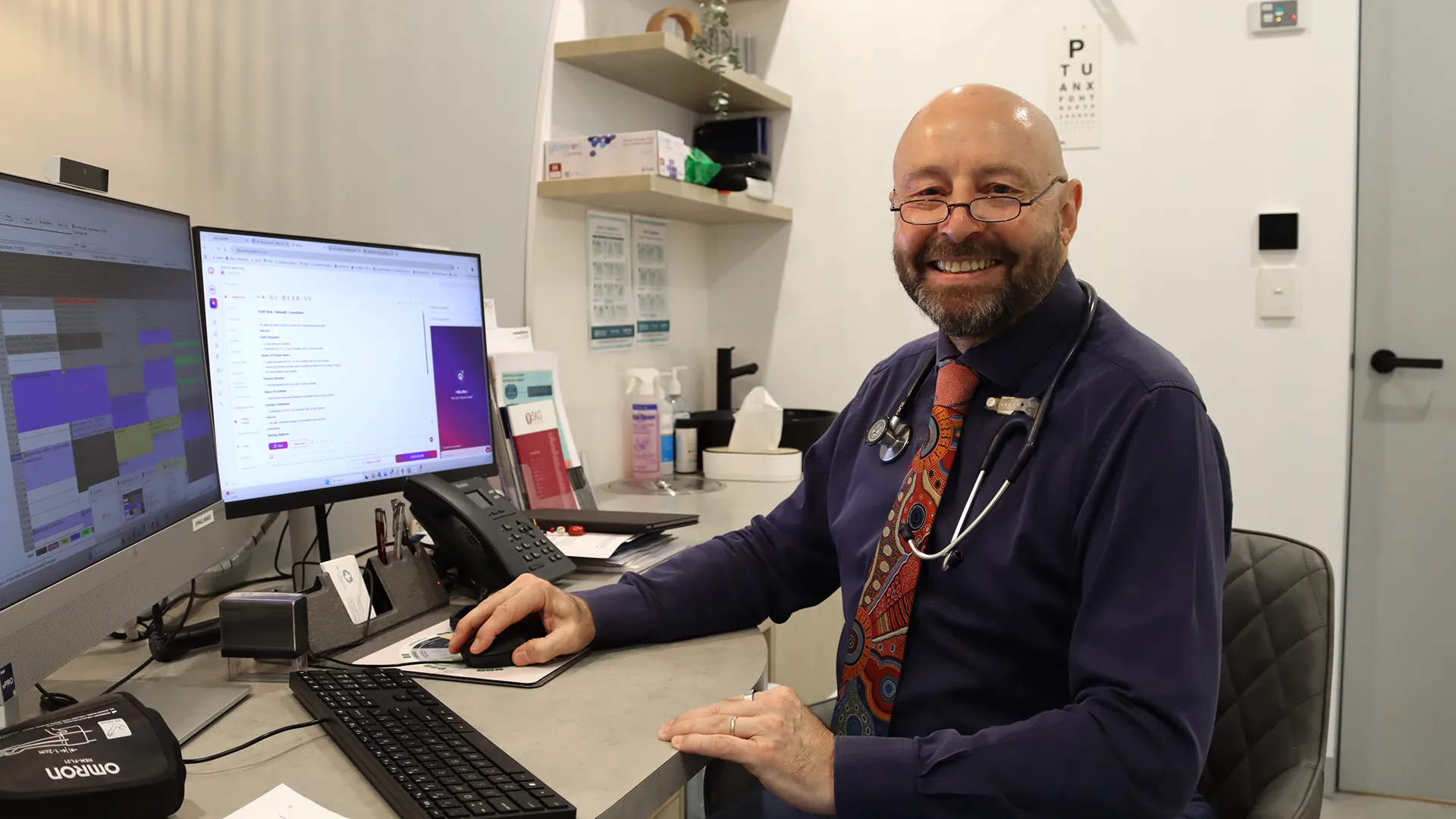
Written by
Hon Dr Brian Walker MLC
MB ChB · MRCGP · FRACGP · 45+ years as a GP
Brian Walker is a General Practitioner and Member for Western Australia in the WA Legislative Council. He is the Leader of the Legalise Cannabis Party WA and an advocate for evidence-based cannabis reform, healthcare improvement, and progressive policy in WA.
Share this article
Stay Updated
Get the latest news and parliamentary updates delivered to your inbox