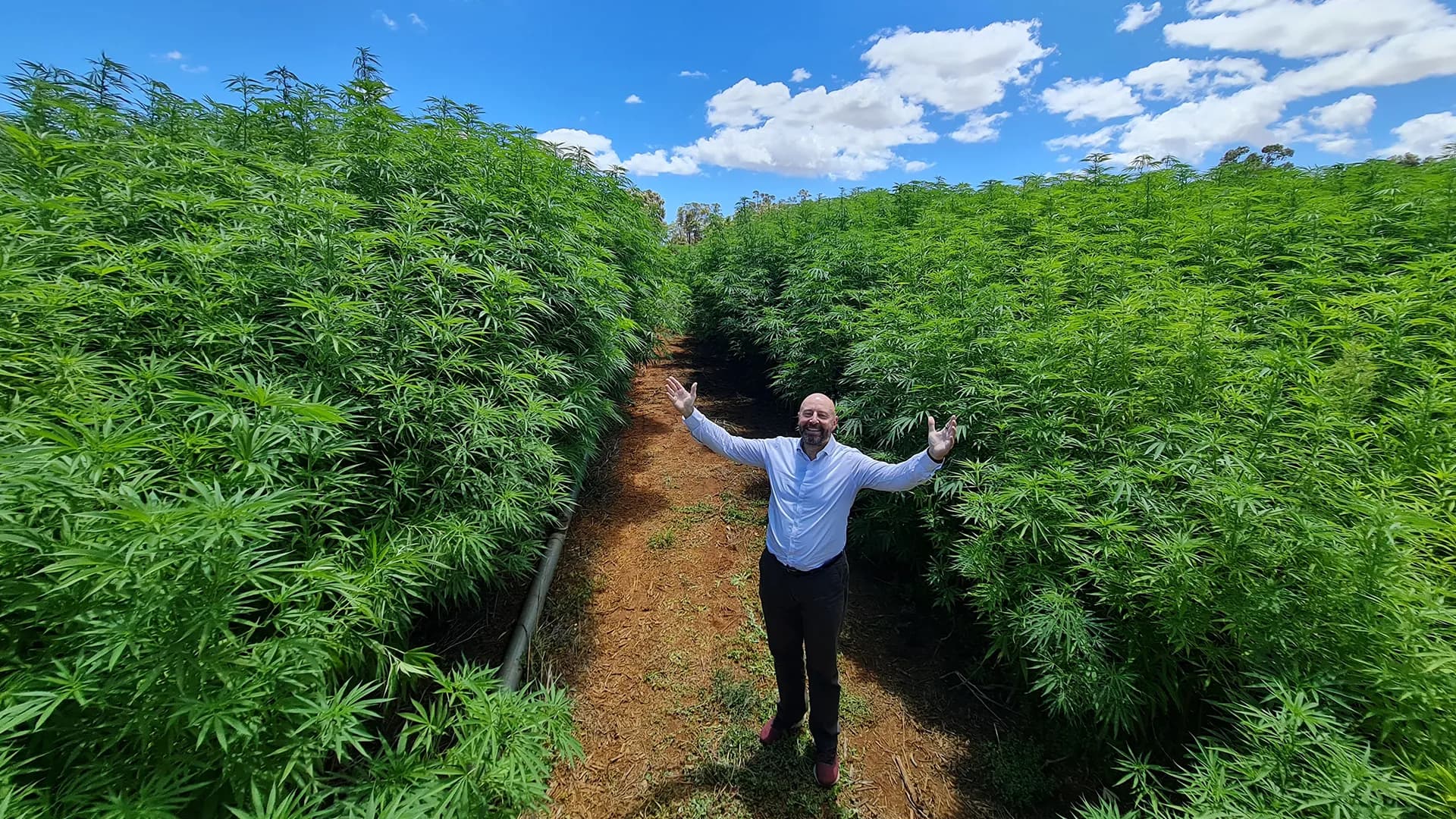
Hemp Can CleanOur Contaminated Land
Two mine sites. Forever chemicals heading for waterways. A proven solution growing in the ground, blocked by politicians afraid of a plant that has never killed anyone.
Last updated: March 2026
The Problem
Western Australia's mining legacy includes some of the most contaminated land in the Southern Hemisphere. Two sites tell the story.
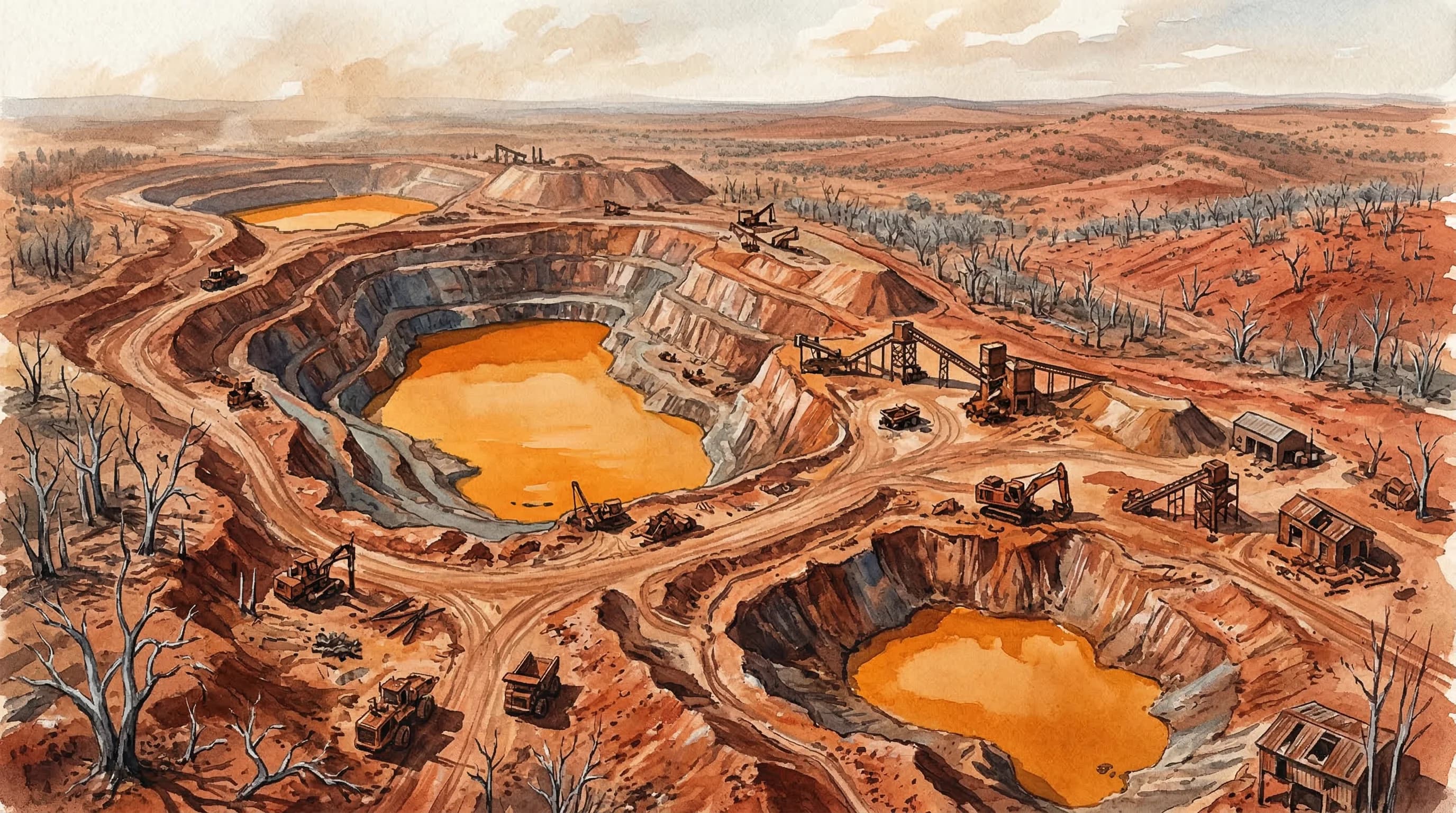
Argyle Diamond Mine
East Kimberley · Closed 2020
Rio Tinto is spending $2 billion to rehabilitate this site. PFAS “forever chemicals” from firefighting foam at the runway are migrating toward Smoke Creek, which flows into Lake Argyle (Ramsar-listed since 1990, 117,000 hectares). From there, the Ord River carries water downstream to Kununurra and over 15,000 hectares of irrigated farmland.
Downstream at risk:
- • Ord Valley: approximately 6,000 residents (including Kununurra)
- • Over 15,000 hectares of irrigated agriculture (Ord Irrigation Cooperative)
- • Lakes Argyle and Kununurra Ramsar site (117,000 hectares, listed 1990)
- • Ord River Floodplain Ramsar site (downstream, separate listing)
- • Miriwoong and Gija Traditional Owner country
- • 500 direct mine jobs lost, 1,200+ indirect roles affected
⏰ The clock is ticking
Over 60% of the Argyle closure project is already complete. The runway site remains flat and suitable for cultivation. But every month that passes without a trial is another month of PFAS migrating toward Smoke Creek.
Rio Tinto's contractor Liberty Industrial confirms PFAS is being treated on site using activated carbon and thermal treatment at 1,000°C. Cost: millions. Peer-reviewed alternative: 5 to 13 times cheaper.
Griffin Coal, Collie
South-West WA · Receivership since 2022
A failing coal mine propped up by more than $300 million of taxpayer money to keep Bluewaters Power Station running. The $220 million support fund was depleting nine months ahead of schedule, burning through $10.5 million every month. Heavy metals, hydrocarbons, and potential PFAS contamination across the site.
The taxpayer cost:
- • $300M+ in government subsidies (2022 to 2026)
- • $220M fund burning at $10.5M/month, depleted 9 months early
- • Benefits Sumitomo, Kansai Electric, South32, Newmont
- • Collie workers facing 43-70% pay cuts
🔬 Direct evidence for Collie
Gabriele et al. (2023) demonstrated that Cannabis sativa can remediate PAH (polycyclic aromatic hydrocarbon) and copper contaminated soil in laboratory trials. Coal mining produces exactly these contaminants. This is peer-reviewed evidence that hemp can clean Collie.
Collie needs a transition plan. Hemp offers remediation and a new industry for the town.
Argyle Rehabilitation
$2B
Rio Tinto's rehabilitation budget for Argyle alone. 1,200 hectares to restore. Conventional PFAS treatment at 1,000°C.
Hemp phytoremediation: 5 to 13 times cheaper.
Where Your Tax Money Goes
WA taxpayer money keeping coal alive
Sources: ABC News, WA Today, Jan 2026
What $300M could fund instead:
Generating fibre, energy, carbon credits, and jobs for Collie
What is PFAS?
Per- and polyfluoroalkyl substances are synthetic chemicals used in firefighting foam, non-stick coatings, and waterproofing. They are called “forever chemicals” because they never break down in the environment.
They accumulate in soil, water, and living organisms. PFOA has been classified as a human carcinogen. PFAS crosses the blood-placenta barrier. And according to peer-reviewed research, the safe planetary boundary for PFAS has already been exceeded.
The Solution
Hemp (Cannabis sativa) is ranked in the top 17 out of 450 species assessed for phytoremediation. It can pull PFAS, heavy metals, and hydrocarbons from contaminated soil through a deep root system while producing commercially valuable biomass. Published frameworks also support its use in stabilising asbestos-contaminated sites.
10/12
PFAS compounds hyperaccumulated
2,671
Peak bioconcentration factor
98%
PFOS removed from water by hemp protein
2m
Taproot depth
How Effectively Hemp Absorbs Each PFAS Compound
Hemp bioconcentration factor by PFAS compound (higher = more effective)
Source: Nassazzi et al. 2023. Short-chain PFAS (green) = most mobile, most dangerous to waterways, and most effectively removed by hemp. Crop-cycle estimates are from a controlled greenhouse study and should be tested under WA field conditions.
What the Nassazzi study means for a WA trial
Nassazzi et al. was a controlled greenhouse study, not a WA field trial. Its crop-cycle numbers are useful for planning, but any Argyle or Collie pilot would still need local soil, water, climate, and biomass-disposal testing.
Sunflower performed better on some PFAS measures. Hemp remains the stronger strategic crop where remediation needs a whole system: deep roots, fast biomass, fibre and construction use, biochar production, carbon value, and an existing WA hemp reform pathway.
Soil inputs matter. Inorganic fertiliser reduced PFAS concentration in plant tissue in the study, while the tested microbial supplement did not improve uptake. A serious WA trial should test growing conditions carefully instead of assuming more inputs mean better cleanup.
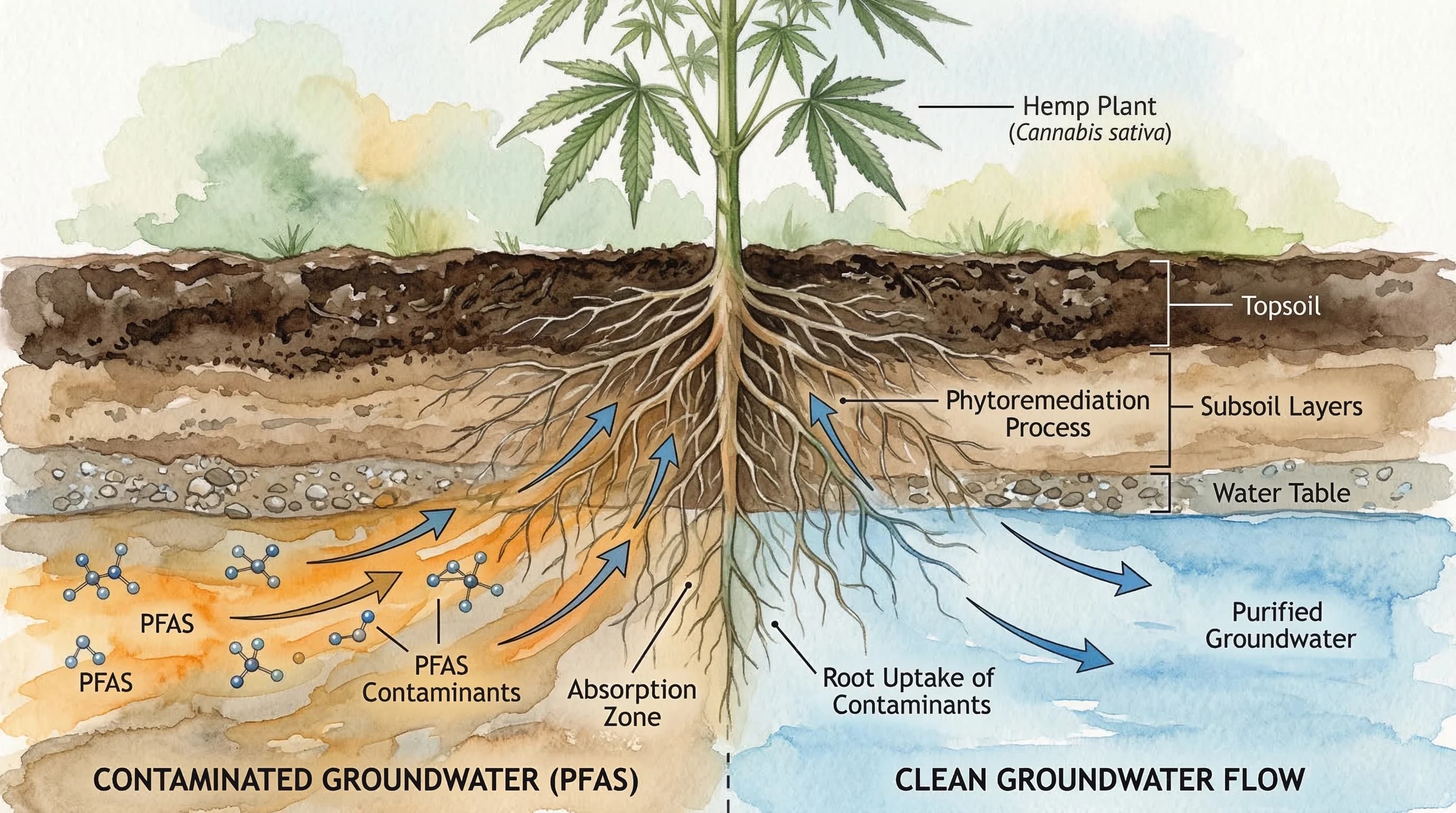
The Root Barrier
Hemp does more than absorb contaminants. It redirects them. Research by Tim Wright at the University of Newcastle (2025) found that hemp's deep taproot creates an evapotranspiration-driven water flow that can pull PFAS-contaminated groundwater toward the roots and away from waterways.
“Large crops of deep-rooted, high water use plants could be used as a form of interception barrier for PFAS.”Tim Wright, PhD Thesis, University of Newcastle, 2025
At Argyle, hemp planted between the runway and Smoke Creek could intercept PFAS before it reaches the waterway. Even without full soil remediation, the root barrier effect buys time and protects what matters.
The Virtuous Cycle
A closed-loop system where each step covers the other's weakness. Short-chain PFAS: plants handle them. Long-chain PFAS: biochar handles them.
Cornelissen et al., 2025
REPEAT
Full cycle
Plant
Harvest
Pyrolyze
Apply Biochar
Plant
Grow hemp on contaminated soil. Hemp absorbs the short-chain PFAS that move fastest toward waterways.
Harvest
Cut the biomass. Stems stay clean enough for industrial use. Leaves concentrate the contaminants.
Pyrolyze
Heat above 800°C in a closed system. This breaks the carbon-fluorine bonds and destroys the PFAS completely. Gases are combusted at 850°C+ so nothing escapes. The end product is clean biochar and energy.
Apply Biochar
Biochar is a stable, carbon-rich material (like industrial-grade charcoal). Return it to the soil, where it locks down the long-chain PFAS that hemp cannot pull up, cutting leaching by 92 to 99%. It also sequesters 1 to 2 tonnes of CO₂ per tonne.
Timeline: Full remediation within a decade using the complete cycle (Cornelissen et al. 2025)
What about the PFAS in the harvested hemp?
This is the critical question. If hemp absorbs PFAS from the soil, what happens to those chemicals when you process the biomass?
The answer is pyrolysis: heating the contaminated biomass above 800°C in a closed system. At this temperature, the carbon-fluorine bonds that make PFAS “forever chemicals” are broken and the PFAS is destroyed. The gases released during pyrolysis are captured and combusted at 850°C or higher, ensuring no PFAS escapes into the atmosphere.
The end product is biochar: a stable, porous, carbon-rich material similar to industrial charcoal. US EPA testing confirmed that all 38 PFAS compounds tested were at or below detection limits in biochar produced this way. It is clean, safe, and useful.
What biochar does:
- • Returns to soil as an amendment that locks down remaining long-chain PFAS
- • Reduces PFAS leaching by 92 to 99% (Cornelissen et al. 2025)
- • Sequesters 1 to 2 tonnes of CO₂ per tonne of biochar
- • Improves soil structure, water retention, and fertility
- • The pyrolysis process itself generates energy as a byproduct
Sources: Cornelissen et al. 2025 (J. Agric. Food Chem.), US EPA Office of Research and Development 2021, Kundu et al. 2021, PYREG GmbH
Long-Term Economic Benefits
The cleanup phase comes first: the mining company funds the growth and safe disposal of contaminated crops until PFAS levels drop below safe thresholds. Then the land transitions to commercial hemp production, and the community that manages it inherits a long-term industry. The global hemp market was valued at US$17.7 billion in 2019 and is projected to grow 250%.
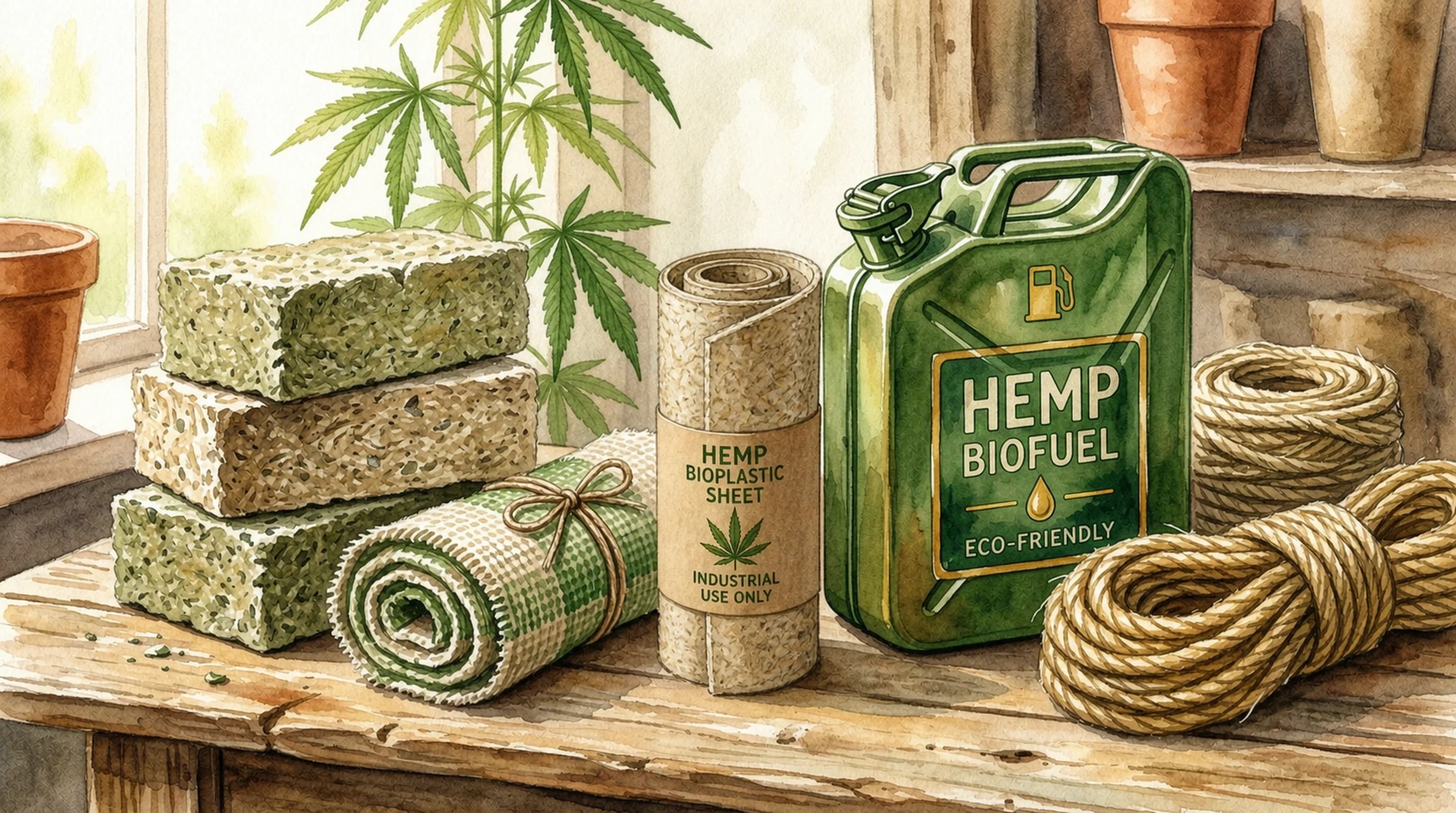
Construction
Hempcrete, fiberboard, insulation. Carbon-negative building materials.
Textiles
Three times more fibre than cotton at 77% lower cost.
Energy
Biodiesel, biogas, bioethanol. 25-37 GJ per hectare.
Industrial
Paper, bioplastics, composites. One acre replaces four of trees.
Carbon Credits
0.67 tonnes CO₂ sequestered per hectare per year.
Hemp Revenue Per Hectare
Annual revenue per hectare (AUD)
Source: Aryal et al. 2024. EUR converted at ~A$1.63
3.64×
Revenue-to-cost ratio
A$15,300
Per hectare per year (biomass)
25,000+
Hemp products globally
The Cost of Doing Nothing
Conventional remediation costs 5 to 13 times more than phytoremediation. And it doesn't produce a single saleable product.
Remediation Costs
Source: Kafle et al. 2022, Gupta et al. 2026
Phytoremediation vs Chemical
Phytoremediation is 5 to 13 times cheaper
Hemp phytoremediation costs approximately A$57 per cubic metre. Off-site disposal costs A$730 to A$1,240 per cubic metre.
Gupta et al. 2026. USD converted at ~A$1.52
Annual Australian Deaths by Substance
Hemp is blocked by laws designed to control cannabis. Cannabis has caused zero recorded deaths. Alcohol, tobacco, and opioids kill thousands of Australians every year.
Hemp cannot get you high. But it can clean contaminated soil, build houses, feed families, and generate energy. Zero recorded deaths. Ever.
Beyond Argyle and Collie
This is not about a couple of mines. Australia has a contamination problem the size of a continent.
80,000+
Disused mine sites across Australia
Monash University, 2020
56
Airports where PFAS firefighting foam was used
Airservices Australia / APH, 2024
0
Sites currently using hemp phytoremediation
As of March 2026
Every contaminated mine, airport, and Defence base in Australia is a potential site for hemp phytoremediation. The science is published. The economics are clear. What is missing is a single successful Australian trial to prove the model works here. Argyle could be that trial. And the organisation best placed to lead it already exists: a Traditional Owner land management corporation with board-level interest, operational staff, and a vision to build a remediation business that serves communities across the country.
Wittenoom: Australia's Asbestos Legacy
Western Australia is also home to Wittenoom, site of the worst industrial disaster in Australian history. Thousands of tonnes of asbestos tailings remain in the landscape. The town was formally degazetted in 2007, but the contamination persists.
Published research by Gonneau et al. (2017) provides a peer-reviewed framework for phytoremediation of asbestos-contaminated sites. Their findings show that soil conditions, not asbestos concentration, are the critical factor for plant survival. This opens the door to phytoremediation as a long-term stabilisation strategy for sites like Wittenoom, where conventional cleanup is impractical at scale.
Peer-reviewed, published science shows hemp phytoremediation is
5-13×
cheaper than conventional treatment
A$57
per m³ hemp phytoremediation
A$730+
per m³ off-site disposal
A$1M+
pump-and-treat over 5 years
And phytoremediation generates revenue. Conventional methods generate nothing but invoices.
Sources: Kafle et al. 2022, Gupta et al. 2026. USD/EUR converted to AUD.

“Western Australia has some of the most contaminated former mining land in the Southern Hemisphere. It also grows one of the most effective phytoremediators known to science. The fact that these two realities have not yet been connected is not a failure of science. It is a failure of political will.”
Hon Dr Brian Walker MLC
Member for Western Australia
The Evidence Base
27 peer-reviewed studies, PhD theses, and field trials. This is not speculation. This is published science.
A virtuous cycle of phytoremediation, pyrolysis and biochar applications toward safe PFAS levels
Cornelissen et al. (2025) · Journal of Agricultural and Food Chemistry
PhD Thesis: Hemp and PFAS Phytoremediation
Wright, T. (2025) · Doctoral thesis - peer reviewed.
Phytoremediation evaluation of forever chemicals using hemp: Pollen bioaccumulation and risk to bees
Wright, T. et al. (2025) · Chemosphere
Hemp protein for PFAS adsorption from contaminated water
Turner, Sloan & Correll (2019) · Peer-reviewed
Phytoextraction of per- and polyfluoroalkyl substances (PFAS) and the influence of supplements on the performance of short-rotation crops
Nassazzi, W. et al. (2023) · Environmental Pollution 333, 122038
Field-scale hemp PFAS remediation and hydrothermal liquefaction treatment
Nason, S. et al. (2024) · Peer-reviewed
Knowledge mapping for a sustainable hemp industry
Aryal, N. et al. (2024) · Peer-reviewed
Phytoremediation review and applications
Kafle, S. et al. (2022) · Peer-reviewed
Common Questions
This Has to Change
The science is published. The economics are clear. The only thing standing in the way is fear of a plant that has never killed anyone.
Stay Updated
Subscribe to my newsletter for updates on hemp reform and parliamentary action.
Subscribe to My NewsletterGet in Touch
Have expertise, data, or a contaminated site? Brian wants to hear from you.
Contact Brian