Question Time is broken.Fix it.
Question Time is how Parliament puts the Government's answers on the public record. It only works if the questions get answered.
The problem
Questions get asked. Answers don't get given.
“We are being treated with disdain with the government giving answers that are not answers, absent answers, or, indeed, answers that only partially answer the question and confuse the picture.”

Answers that are not answers
A reply is read out and goes on the record, but it doesn't respond to what was asked.
Absent answers
The information isn't provided, and there is no clear statement of whether it exists, when it will come, or why it can't be given.
Partial answers
Part of a question is answered and the rest quietly dropped, leaving a picture that is less clear than before the question was asked.
How it works
What is Question Time for?
Members of Parliament can't open a department's files or summon a minister to explain a decision. Asking a question in Parliament is one of the main ways they can find out what the Government is doing, and make the answer public.
- 1
A member asks
Each sitting day the Legislative Council sets aside about half an hour for questions without notice. Members can also lodge written questions on notice.
- 2
The Government answers
A minister, or a member representing a minister from the other house, gives the Government's answer. Departments prepare most of them.
- 3
It goes on the public record
Questions and answers are published in Hansard, the official record of Parliament, where anyone can read them.
The Legislative Council's rules ask only that an answer be “concise and relevant”. Nothing requires every part of a question to be answered, or a plain statement when the information isn't held.
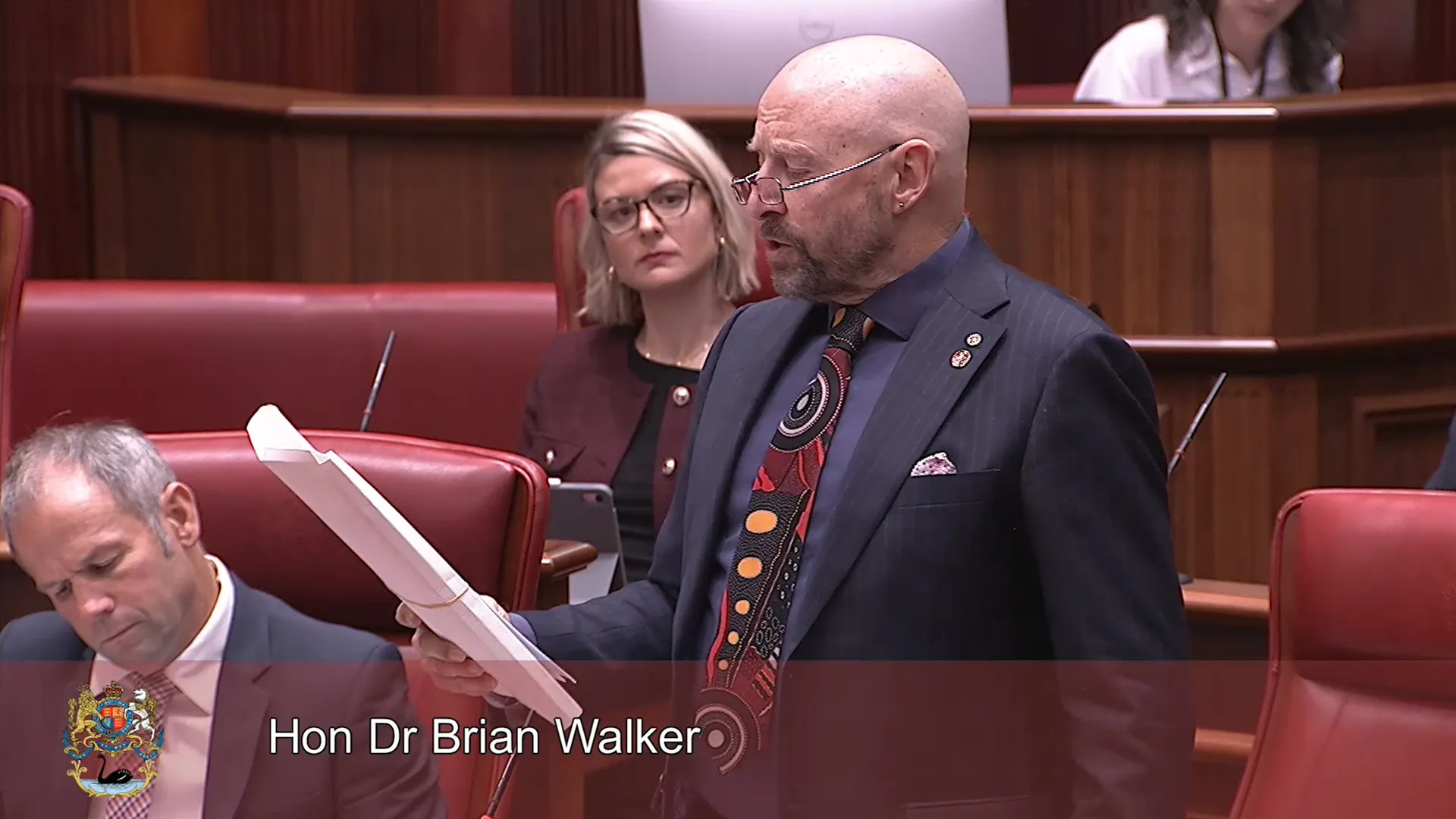
“If a question has been asked, the member is entitled to a reasonable answer or for the government to say, “This cannot be answered yet, we will answer it later.””
Why it matters
It's about trust
When answers don't answer, the public loses one of its few windows into how decisions are made, and how their money is spent.
This isn't one party's problem. Governments of every colour find it easier to say less. That's why the fix has to be in the rules, not in promises.

“If we cannot get transparency of what is going on, the public is not going to trust politicians, which is exactly what we are seeing.”
The Legislative Council agrees
2026 was meant to be the year answers improved
On 10 June 2026 the Legislative Council passed a motion moved by Hon Neil Thomson MLC, over the Government's objection. The House:
…calls on government representatives to do much better by providing frank, transparent and accountable answers to opposition and crossbench members in 2026;
…foreshadows that if there is no improvement, the Legislative Council will consider holding a special inquiry into their failure to respect the role of the Parliament;
Hansard, Legislative Council, 10 June 2026
The fix
Change what counts as an answer
Brian wants the Legislative Council to follow through on its own resolution and look at practical changes like these:
Answer every part
When a question has several parts, each part gets its own answer, or a plain statement that the information isn't held.
Say when, and why
If an answer can't be given yet, say so and say when. If a written answer is overdue, explain the delay rather than just naming a new date.
Time to test answers
Give members a short, regular opportunity to put on the record where an answer fell short, so a weak answer has a cost.
Better questions too
Clear, focused questions get clearer answers. As Brian told the Council, “the people asking the questions need to ensure that a sensible question is asked.”
“All of us, as a body, must fight for democracy, truth and transparency such that we can regain the trust of the people who vote for us because our honourable existence is to serve the people. If we fail in this, we fail in everything.”
See for yourself
Search every answer Brian has received
Brian's questions on notice and the Government's answers, translated into plain English. Search by keyword or question number, filter by topic and by whether the Government actually gave the information, and open the original record for each one.
70
answered questions
54
gave the numbers or an answer
16
data not provided or report kept back
8
topics, 2021–2026
Latest answers
- QON 2759Police did not say how many people got Land Forces banning letters.Data not provided
- QON 26162,744 submissions were made on the Hall Park excision. The next step is waiting on a heritage survey.Gave the numbers
- QON 2614Main Roads knows about WorkSafe's medicinal cannabis guidance, but did not say how many staff were stood down.Gave an answer
Get updates from Brian
The questions Brian asks, the answers he gets, and what happens next in the Legislative Council.
- Hansard, Legislative Council, 12 November 2025: motion on the Gender Diversity Service Model of Care (Hon Dr Brian Walker MLC)
- Hansard, Legislative Council, 22 May 2025: motion on Cook government transparency (Hon Dr Brian Walker MLC)
- Hansard, Legislative Council, 10 June 2026: “Standard of answers to questions without notice”, moved by Hon Neil Thomson MLC, passed; contribution by Hon Dr Brian Walker MLC
- Standing Orders of the Legislative Council of Western Australia, reprint as of 22 May 2025 (SO 15, 106, 107)