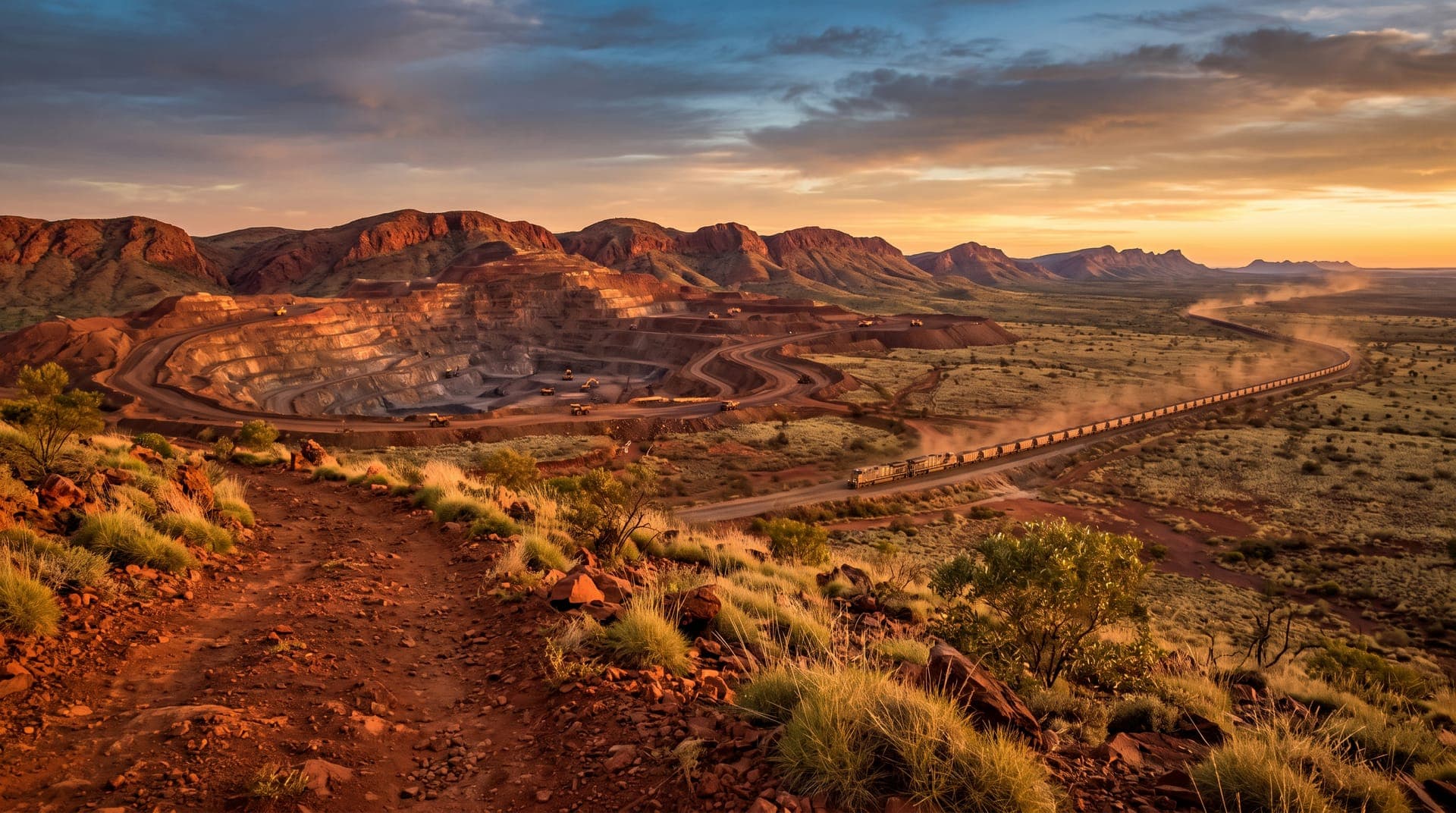
Pilbara iron ore mine and ore train at sunset
WA's Sovereign Fund

Only 1%saved for the future

We live in one of the richest resource states on Earth. Every tonne of ore we ship can only be dug up once. Yet only 1% of forecast royalties goes into the fund meant for future generations.

Last updated: October 2026

The saving rate

1%

of forecast annual royalty income is credited to the fund

FHRI Fund Act 2012 s.7

In dollars, 2026-27

$94M

what that 1% is worth in 2026-27 (1% of the $9.44B royalty forecast)

FHRI Fund Act s.7; 2026-27 Budget Paper 3, p.83

Royalties forecast

−30%

royalty income forecast to fall by 2029-30 ($10.6B → $7.4B)

2025-26 State Finances report; 2026-27 Budget Paper 3, p.83

The boom won't last

Royalties are forecast to fall by almost a third

Treasury expects WA's royalty income to drop from $10.6 billion last year to $7.4 billion by 2029-30, mostly because iron ore prices are expected to come down. The best time to save is while the money is still coming in.

$9.8B
2024-25
$10.6B
2025-26
$9.4B
2026-27
$8.1B
2027-28
$7.8B
2028-29
$7.4B
2029-30
Iron ore royalties All other royalties Faded bars are Treasury forecasts

Source: 2026-27 Budget Paper 3, Table 3, p.83, and the 2025-26 Annual Report on State Finances. 2024-25 and 2025-26 are actuals.

The Government's own words

Yes, WA has a sovereign wealth fund

People will tell you WA doesn't have one. The Government says it does.

“The Future Health Research and Innovation Fund is the state's $1.8 billion sovereign wealth fund…”
Mrs Lisa O'Malley MLA, Parliamentary Secretary to the Minister for Medical Research, Legislative Assembly Estimates Committee, 20 May 2026 · Hansard

A sovereign wealth fund is a simple idea. When a community sells something it can never get back, like iron ore, gas or oil, it saves part of the money and invests it. The earnings keep paying long after the mine has closed. Today's wealth becomes tomorrow's income.

So if this is our sovereign wealth fund, let's judge it like one. How much do we put in? What does it own? Who checks it? And will it be there for our grandchildren when the ore runs out, and when the jobs change?
How we got here

From a Future Fund for our grandchildren to a research fund for today

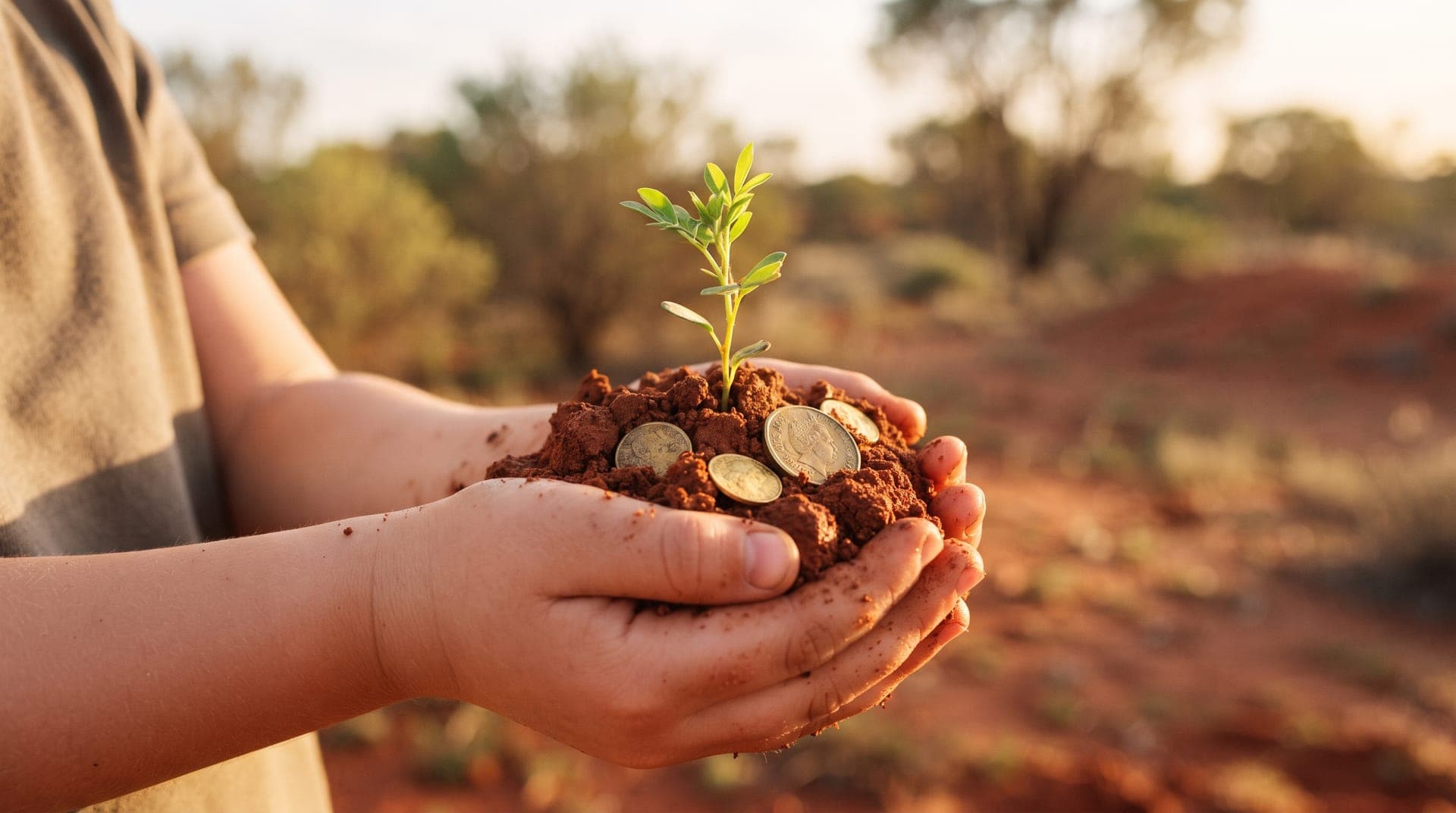
A child's hands holding red earth with a seedling growing among coins
  1. 2012

    The WA Future Fund is born

    Parliament passes the Western Australian Future Fund Act 2012. The fund starts on 30 November 2012 with $932.6 million paid in from Royalties for Regions over its first four years, then 1% of forecast royalties every year from 2016-17. Its earnings were locked away until 2032, after which they could fund public infrastructure. Its stated purpose: the benefit of future generations.

  2. 2020

    Repurposed for health research

    On 24 June 2020, the fund becomes the Future Health Research and Innovation Fund. The $1.4 billion of capital stays invested, but the earnings now pay for health and medical research grants instead of waiting for the next generation.

  3. 2020–26

    Grants flow, capital creeps

    More than $282 million has been awarded to researchers and innovators since 2020. The capital has grown slowly, from $1.40 billion in 2020 to $1.96 billion today.

  4. 2026-27

    Still 1%, while royalties fall

    The Budget still credits just 1% of forecast royalties, about $94 million this year, while Treasury forecasts royalty income to fall by almost a third by 2029-30.

Health research is worthwhile. I've been a doctor for more than 45 years and I will always back good science. But a fund that spends its earnings every year is not the same as a fund that builds wealth for the next generation. In 2020 WA swapped one for the other.

Where the money sits

What's actually in it?

$1.96 billion, as at 30 September 2026. Every dollar is in cash or bonds.

Corporate bonds$879.7M · 44.9%
Other government bonds$671M · 34.2%
Corporate floating-rate notes$337.3M · 17.2%
WATC bonds (the State's own debt)$56.3M · 2.9%
Cash$15.3M · 0.8%

Source: WA Treasury quarterly holdings report. Managed by the WA Treasury Corporation (WATC).

No shares

By law it can only invest the way the State's own bank account is invested, or in gold. It owns no shares in any company.

A modest target

Its goal is to beat the State's own cost of borrowing. Last year interest was $52.1M, roughly 2.8%.

A vague promise

The Budget says it will 'transition to asset classes with higher forecast returns' from 2027-28. It doesn't say which.

2.8% is our calculation: $52.1M interest (2025-26 Annual Report on State Finances, p.218) against the fund's balance. Transition wording: 2026-27 Budget Paper 3, p.310.

The principle

Every tonne of ore can only be dug up once. The wealth it creates should last forever, not for one budget cycle.

How others did it

Other resource economies built wealth that lasts

They turned finite resources into permanent public wealth. WA is the odd one out.

Flag of Norway

Norway

Government Pension Fund Global

About US$2.3 trillion

NOK 22,683 billion at 30 June 2026

Funded by: Oil and gas revenue

What people get: Owns about 1.5% of all the world's listed shares, in around 7,000 companies, for current and future generations

Source
Flag of Alaska

Alaska

Alaska Permanent Fund (1976)

A dividend for every resident

2026: US$1,000 plus a US$200 energy relief payment to nearly 600,000 Alaskans

Funded by: A constitutional share of oil and mineral royalties

What people get: Every eligible resident gets a cheque every year

Source
Flag of Australia

Australia

Future Fund (Commonwealth, 2006)

A$289.7 billion

30 June 2026, after a 14.8% annual return it publishes openly

Funded by: Budget surpluses and asset sales, not resources

What people get: Funds future public liabilities

Source
Flag of Western Australia

Western Australia

Future Health Research and Innovation Fund

Only A$1.96 billion

30 September 2026

Funded by: 1% of forecast royalties

What people get: Research grants. No dividend. No published return rate or benchmark results.

Source
Hon Dr Brian Walker MLC
“In Norway, the government taxed the North Sea resource of oil and put it into a sovereign fund. There is now over a trillion dollars in that fund, which every person in Norway can benefit from. What have we done with that in our resource-rich state? Has anyone given that any serious thought at all?”
Hon Dr Brian Walker MLC, Legislative Council, 12 August 2025 · Hansard

Why it matters now

Why this matters more in the age of AI

For a century the deal was simple. Machines did the heavy lifting and people did the work that machines couldn't. Artificial intelligence is changing that deal. Some of the world's first driverless trains and haul trucks already run in the Pilbara. Office work, call centres, driving and design are next.

When fewer people earn a wage, the question becomes: who owns the machines, and who shares in what they produce? A community that owns a large, well-run fund keeps a share of that wealth. A community that spent its windfall every year has nothing to fall back on.

“Are we not as good as the Norwegians? Are we not as clever as the Norwegians?”
Hon Dr Brian Walker MLC, Legislative Council, 10 June 2026 · Hansard
“Money does not buy happiness, but it does buy better food, better housing, better medical care, better education and better recreation options.”
Hon Dr Brian Walker MLC, Legislative Council, 26 October 2022 · Hansard
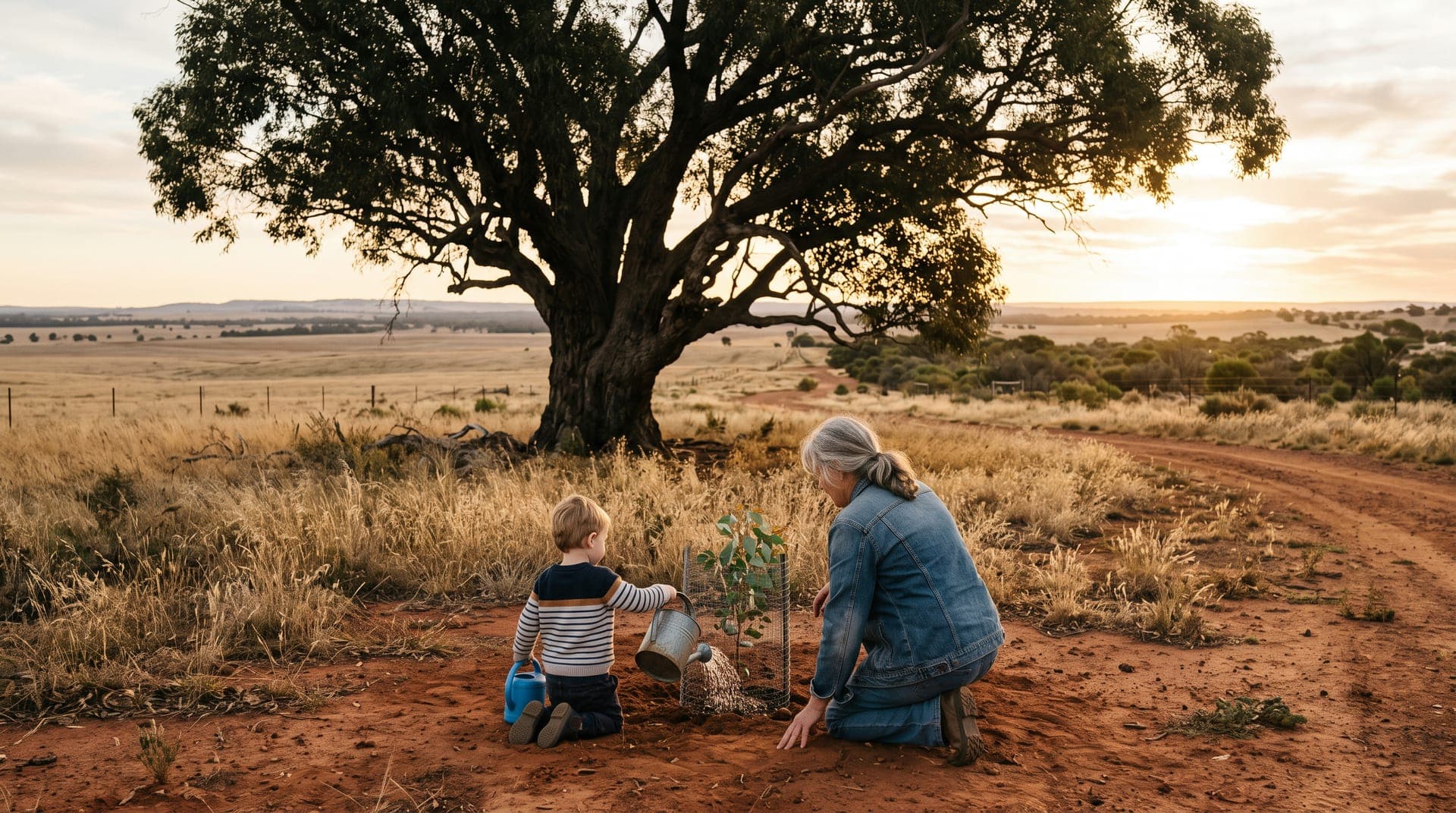
A grandmother and child watering a young tree beneath a large old gum tree

The plan

What I'm asking for

This is not anti-mining. It's pro-grandchildren. We plant the tree now so our kids can sit in its shade.

Royalties credited to the fund each year

Today: 1%$94.4M a year
Brian's proposal: 5%$472.2M a year

1% and 5% of the $9.44B royalty forecast for 2026-27 (Budget Paper 3, p.83). Budget Paper 3's text puts this year's 1% at $85.8M, but its own fund table matches about $94M.

Lift the share from 1% to 5%

Five per cent of forecast royalties would put roughly $470 million a year into the fund instead of about $94 million. WA controls this setting through its own law (until 2032, changing it needs an absolute majority in both Houses). Alaska banks at least 25% of its mineral royalties.

Bank the next windfall

When iron ore prices spike, put a large one-off injection from the surplus into the fund, instead of treating a boom as permanent spending money.

Publish the scorecard

Annual investment returns, benchmarks, fees, a fund-level audit and a yearly check against international best practice. Australia's Future Fund already does this.

A dividend for the AI age

Alaska has paid every resident a share of its resource fund since 1982. As AI reshapes work, a WA dividend should be the long-term goal: our resources, our share.

The global rulebook

How WA scores on the Santiago Principles

The Santiago Principles are 24 voluntary standards for sovereign wealth funds. Here is how WA's fund measures up against what it publicly discloses.

6

Met

Public documents clearly show it

14

Partial

Some evidence, but key details unpublished

3

Not shown

No public evidence found

1

N/A

Doesn't apply: the fund owns no shares

  • No investment returns are published, not even against the fund's own target.
  • A fund of nearly $2 billion has no annual report of its own. Treasury gives it four lines.
  • It holds only cash and bonds, under tight legal limits, and its only target is to beat the government's own cost of borrowing.
  • Oversight is an internal Treasury committee, and the manager's agreement and investment rules are unpublished.
See all 24 principles
  1. Met1. Sound legal framework. Set up in its own Act as a Treasurer's special purpose account (s.5).
  2. Met2. Clear public purpose. The Act's object is public (s.4).
  3. Met3. Fits with fiscal policy. Run by Treasury; every flow is set in the Budget.
  4. Met4. Rules for money in and out. 1% of forecast royalties in; only forecast income out; capital held in perpetuity (ss.7, 9, 10).
  5. Met5. Timely statistical reporting. Balances appear in the Budget, state finances report and Treasury annual report.
  6. Partial6. Clear governance roles. Roles are split, but oversight is an internal Treasury sub-committee with no operational independence.
  7. Partial7. Owner sets objectives, appoints governors. Objectives are public; who sits on the oversight committee is not.
  8. Partial8. Governing body has mandate and skills. The oversight committee's mandate, members and expertise are not disclosed.
  9. Partial9. Independent operational management. WATC manages it under a Treasury agreement that is not published.
  10. Met10. Accountability defined in law. The Act, Financial Management Act and framework set the chain.
  11. Partial11. Annual report and financial statements. No standalone annual report. Treasury gives the fund four lines.
  12. Partial12. Annual independent audit. Audited only as part of Treasury's accounts; no fund-level audit opinion.
  13. Partial13. Professional and ethical standards. Conflict rules cover the grants side only, not the investment side.
  14. Partial14. Fair dealings with third parties. Credit and investment policies are referenced but not published.
  15. Not shown15. Obeys laws where it invests. Holdings listed as 'Various' or 'Other'; no issuer or country detail.
  16. Partial16. Public governance framework. The framework is public, and shows the manager is not independent.
  17. Partial17. Public financial information. Balances and asset classes published quarterly; no returns, fees or issuers.
  18. Partial18. Clear investment policy. Objectives are public; the operational rules and asset allocation are not.
  19. Partial19. Invests for risk-adjusted returns. Legally limited to investments allowed for the State's own bank account, or gold; target is only to beat WATC's cost of funds.
  20. Not shown20. No privileged government advantage. No policy found; it holds $56.3M of the State's own WATC bonds.
  21. N/A21. Responsible shareholder voting. It holds no shares.
  22. Partial22. Risk management framework. A 'no negative five-year return' objective exists; the full framework is unpublished.
  23. Partial23. Performance measured and reported. Benchmarks are defined; the results are not public.
  24. Not shown24. Regular Santiago self-review. No review found. The four-year evaluation covered the grants only.

Office assessment from public documents, October 2026. Not an official IFSWF assessment. WA is not an IFSWF member. Sources include the FHRI Fund Act, the investment framework, the Treasury annual report and the 2026-27 Budget.

Watch

Watch my WA Sovereign Fund YouTube Explainer

Stay in the loop

Join my newsletter

I'll keep putting these questions to the Government. Sign up and you'll get the answers, and the non-answers, straight to your inbox.