
Mental Health Reform
By Dr Brian Walker MLC, Member for Western Australia, WA Legislative Council, Leader of the Legalise Cannabis Party WA
I have buried a son.
I have sat with patients in the last hour of their lives. I have held the hand of a young man who was threatening to kill me, and I have talked him down from it. I have watched, across 45 years of general practice, as Australia's mental health system dispensed medication, ticked boxes, and called it care.
I am not satisfied with that. I have never been satisfied with that.
What I am fighting for is simple to state and hard to achieve: a mental health system that treats causes, not symptoms. A system that recognises we are not bags of chemicals walking through this earth - we are complex beings whose behaviour is shaped by every experience we have ever had, beginning before we could speak.
We are nowhere near that system yet.
This commitment underpins everything I do in parliament - from my Cannabis Legalisation Bill to my campaign against TGA overreach. Patients deserve better tools, and they deserve a system that is honest about why they are suffering.
How Trauma Actually Works
The way most people understand PTSD is backwards.
PTSD is not about the event. It is about how the event was processed - or, more precisely, how it was not.
When you experience something traumatic, your brain links that memory to the emotion associated with it at the level of the amygdala. The memory and the feeling become fused. A car backfire does not just remind a veteran of an explosion - it is the explosion, felt in full, in an instant, without warning. The memory and the terror are inseparable.
What neuroplasticity research - and psychedelic-assisted therapy - has shown us is that this processing can be undone. The memory can be moved into the frontal lobe. The emotion can be addressed separately. The link that causes suffering can be dissolved.
This is not theoretical. It is happening now in clinical trials. It has already happened, with extraordinary results, in other countries. Australia is still catching up.
The same principle applies more broadly. So much of what we diagnose as mental illness is, at its foundation, unaddressed trauma - patterns of protection installed in childhood, operating decades later in adult bodies that do not need them anymore. A child who learned to go very quiet when the adults around them became volatile does not forget that lesson. They carry it into every workplace, every relationship, every conflict, for the rest of their life.
Telling that person to “change their behaviour” is not medicine. It is asking them to repaint the walls while ignoring the rot in the foundations.
Why I Came to Parliament
I did not intend to be a politician.
I spent 45 years trying to help people heal - one at a time, in a consulting room, with the tools available to me. What I kept finding was that the tools available to me were inadequate. Medications that masked symptoms without addressing causes. Regulations that prevented me from prescribing things that worked. A government that had decided, for reasons I still find difficult to understand, that a healing herb used safely for thousands of years was too dangerous for my patients.
My patients were suffering. They were suffering financially because they could not access affordable cannabis treatment. They were suffering physically because they were on medications that were doing them harm. They were suffering mentally because the system had no interest in finding out why they were unwell - only in managing the fact that they were.
That made me angry. That anger brought me to parliament.
I did not come into politics to be comfortable. I came here because sitting in that consulting room and doing what I could was no longer sufficient. When you realise the problem is systemic, you go to where the system is made. More about my background and parliamentary record.
Psilocybin, MDMA, and the Letter That Had to Be Written
In 2022, I wrote to John Skerritt at the Therapeutic Goods Administration. I was pushing for access to psilocybin and MDMA for the treatment of PTSD.
I had just buried my son.
The TGA's position at the time was that psychedelic-assisted therapy was dangerous, unproven, and without medical merit. This was not true. It had been proven, repeatedly, in other countries. Veterans with treatment-resistant PTSD were achieving outcomes in weeks that decades of conventional therapy had not produced. People who had tried everything were, in some cases, trying these therapies and surviving.
My son had not had access to them.
I do not accept the position that we must wait for domestic clinical trials before allowing our own people to benefit from what has already been demonstrated overseas. I suggested in my letter that for every single suicide, a cross be placed at the door of the TGA - to make visible the cost of institutional reluctance. You can read more about my ongoing accountability campaign against the TGA here.
Australia subsequently became among the first countries to reschedule psilocybin and MDMA for therapeutic use. The work is not finished.
Today, in Western Australia, a patient cannot simply access psilocybin-assisted therapy. It is still moving through clinical validation - the usual Australian approach of proving things we already know in conditions we control. Once that process is complete, access will flow through authorised psychiatrists working with trained psychologists. The training is happening. The framework is forming.
I look forward to the day when a WA doctor can prescribe psilocybin-assisted therapy as readily as they can prescribe cannabis. We are not there yet. We will be.
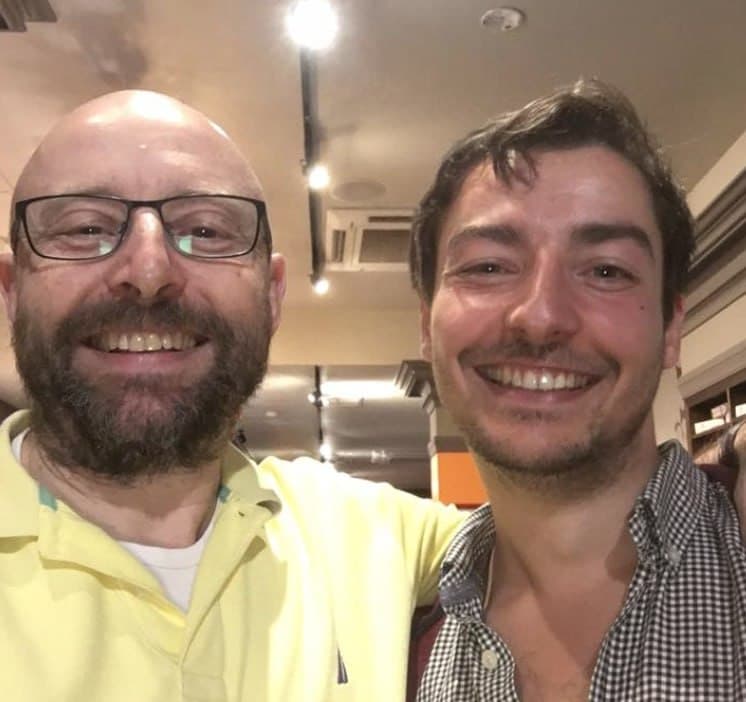
Hug your loved ones tightly.
What the System Is Getting Wrong
If I could change one thing immediately, I would stop the over-prescription of antipsychotic medication to patients who do not need it.
Antipsychotics, when appropriately prescribed, serve a vital function. But we are giving them to people whose fundamental problem is not biochemical - it is psychosocial. They are stressed because they are poor. They are anxious because they are overworked. They are depressed because they are isolated. We are medicating the downstream effects of circumstances that medication cannot fix, and in the process we are causing metabolic syndrome, hypertension, heart disease, and early death.
This is not a failure of individual doctors. It is a structural failure of a system designed around throughput rather than healing.
If I could pass one bill this term on mental health alone, it would address the psychosocial foundations of mental illness - the conditions of life that make people unwell before they ever see a doctor. Work. Income. Time. Pressure. The ability to exist without voluntary slavery to a system that extracts more than it gives back.
Tax reform is mental health reform. Economic justice is mental health reform. Giving people one job that pays them enough to live, enough time to rest, enough space to be present with the people they love - that is mental health reform.
The pills come later. The system that makes them necessary is where we need to start. You can see my parliamentary questions and speeches on this topic in the parliamentary record.
Frequently Asked Questions
A Final Word
I am fighting for free people to live in a free state and a free country - where we can be who we are supposed to be, and settle in the knowledge that all is well.
That is not a political slogan. It is what I have wanted for every patient I have ever seen. It is what I wanted for my son. It is what I am in parliament to work toward.
Mental health is not a niche policy area. It is the shape of how people are able to live their lives. When we get it right, everything else follows. When we get it wrong, the cost is paid in quiet rooms, by people who feel they have nowhere left to turn.
We can do better.
We must do better.
I am here to make sure we do.
Dr Brian Walker MLC
Member for Western Australia, WA Legislative Council
Leader of the Legalise Cannabis Party WA
Practising GP, Next Practice Health, Claremont WA
If you or someone you know needs support - Lifeline 13 11 14 | Beyond Blue 1300 22 4636
More from Dr Brian Walker MLC
TGA - War on Wellness
How the TGA misrepresented 700,000 Australians
Cannabis Bill 2026
Brian's bill to legalise cannabis in WA
THC Driving Laws
Why WA's drug driving laws need to change
About Brian
45 years as a GP. Twice elected to Parliament.
Latest News
Media releases and parliamentary updates
Parliamentary Speeches
Brian's full record in the WA Legislative Council