Artificial intelligence in WA
When machines do more of the work,
who pays the bills?
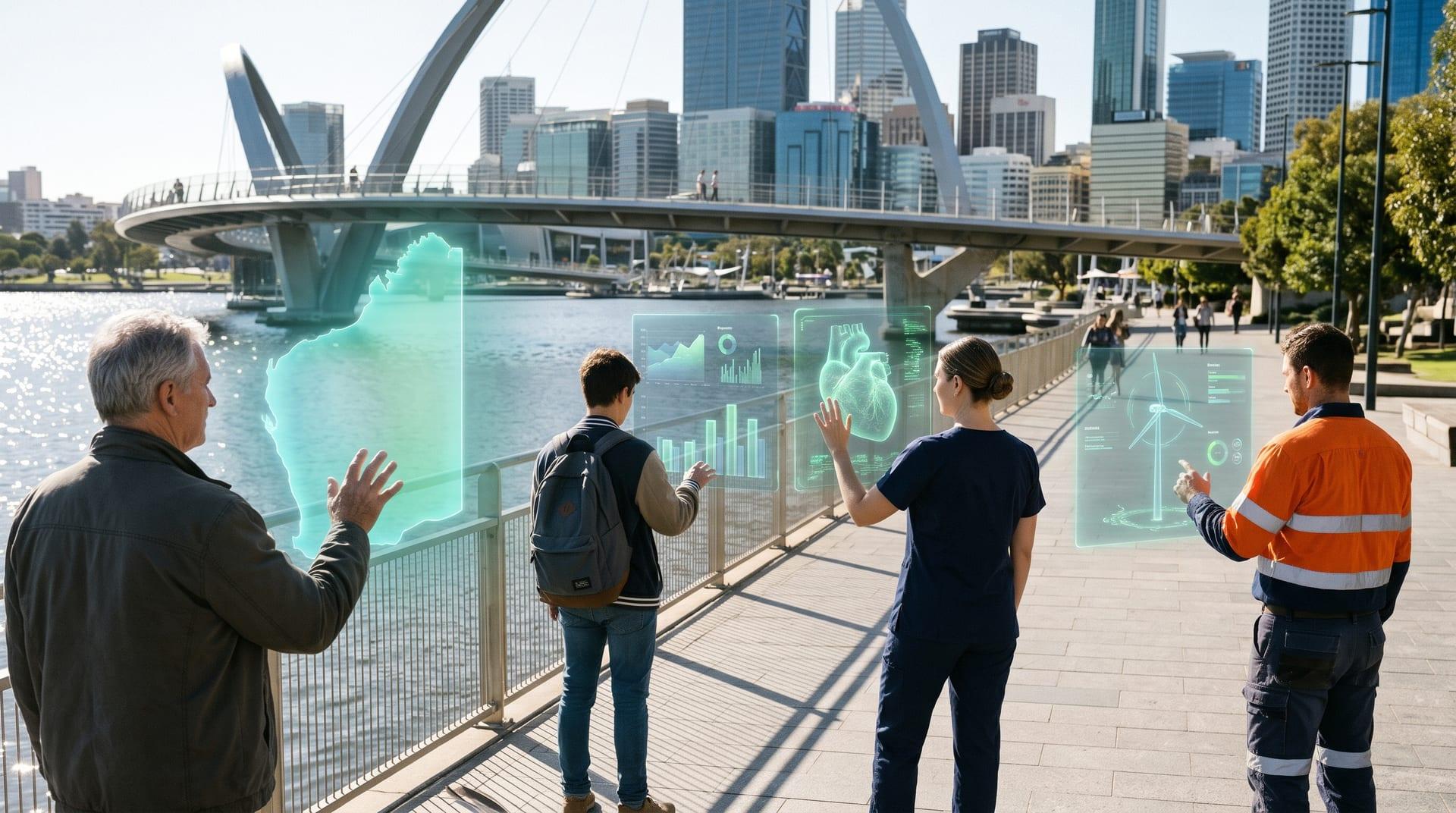
AI is already in WA's hospitals, schools, government offices, police vans and roadside cameras. Nobody knows how many jobs it will change or replace. A smart state gets ready anyway, so the people of WA share in the gains.
46%
of the taxes Treasury collects come from payroll tax, a tax on wages. If AI replaces wages, that money has to come from somewhere.
2026-27 Budget Paper 2: $6.54b of $14.11b
0
AI projects paused, changed or stopped by the Government's AI Advisory Board, out of 22 it reviewed.
Legislative Council QON 2464, Sep 2026
1.38m
faces scanned by WA Police live facial recognition in five months, for 122 arrests.
WA Police, Nov 2026

Prepare, don't panic
I have seen AI do remarkable things in medicine, and after 47 years as a GP I welcome any tool that helps a patient. I don't know how many jobs AI will take, and neither does anyone else. But I do know WA runs on taxes from wages, and the government hasn't told us what happens if those wages shrink. This page puts the evidence in one place, with every source linked, so you can check it yourself.
Dr Brian Walker MLC
The big question
If AI does more of the work, who pays the tax?
Payroll tax is a tax on wages, and it is the biggest tax the State collects: about 46% of the taxes Treasury and Finance brings in. Treasury expects it to keep growing every year to 2029-30. That forecast quietly assumes the wages keep coming. Brian has asked whether Treasury has modelled what AI does to jobs, wages or payroll tax. The answer is due by Christmas.
WA payroll tax, $ million
2024-25’24
2025-26’25
2026-27’26
2027-28’27
2028-29’28
2029-30’29
2026-27 Budget Paper 2, Treasury and Finance administered transactions: 2024-25 actual, 2025-26 estimated actual, then budget and forward estimates. Total taxation in 2026-27: $14,111m.
Two questions nobody in government has answered
- If machines earn more of the income, how does the State raise the money for hospitals, schools and police?
- If fewer people earn a wage, how do they afford to live?
Where is AI on this chart? Nobody knows.
WA doesn't count jobs lost or changed because of AI, and Treasury hasn't said whether its payroll forecast allows for it. The best national signal so far comes from federal researchers: jobs most exposed to AI are still growing, but more slowly than the rest. The change is gradual. That is exactly when a government should plan, not after the wages have gone.
Job growth, Nov 2022 to Feb 2026
Least exposed to AI
+9.5%
Most exposed to AI
+5.6%
Department of Employment and Workplace Relations, AI and employment in Australia, July 2026 (reported). National figures; no WA breakdown exists.
The answer starts with ownership
WA saves just 1%
Only 1% of forecast royalties goes into WA's future fund. A forward-thinking state would build a fund big enough to own a real share of the companies, including AI and automation companies, that will earn the profits of the next 50 years. Then the gains from AI flow back to the people of WA, not only to shareholders overseas.
See the sovereign fund plan
65%
of Australians say AI's risks outweigh its benefits
Up from 52% in 2024. Only a third now say the benefits win.
Source: Lowy Institute, Oct 2026 (reported by SBS)77%
want AI to be regulated
Only 36% say they are willing to trust AI.
Source: KPMG and University of Melbourne, 2025What is being asked in Parliament
Before ChatGPT, almost nobody asked. Now everyone is.
We searched WA parliamentary questions and debates back to 2017 for AI, facial recognition, drones, number plate cameras, AI road cameras, deepfakes and data centres. Before ChatGPT arrived in November 2022, AI barely came up. In 2026 alone there have been 138 questions. Almost all of them came from the crossbench and the Opposition. Labor members asked two.
Questions on AI and surveillance, by year
2017’17
2018’18
2019’19
2020’20
2021’21
2022’22
2023’23
2024’24
2025’25
2026’26
Questions on notice and without notice, both Houses, 2017 to 27 November 2026. The 2017 spike is questions about police drones. Source: GovScanner index of WA Parliament questions, our keyword match.
AI mentioned in debates, by year
2017’17
2018’18
2019’19
2020’20
2021’21
2022’22
2023’23
2024’24
2025’25
2026’26
Mentions of AI, artificial intelligence, machine learning, generative AI or ChatGPT in WA Hansard, 2017 to 27 November 2026. Source: GovScanner Hansard index, our count (a minimum).
Who is asking the most
Anthony SpagnoloLiberal
56
Wilson TuckerIndependent
20
Brian WalkerLegalise Cannabis
15
Sophie McNeillGreens
7
Basil ZempilasLiberal
7
Liam StaltariLiberal
7
Steve MartinLiberal
6
Since 1 January 2024, both Houses.
What they are asking about
AI rules and government use
66
Facial recognition
50
Data centres, power and water
26
Deepfakes and chatbots
17
Phone and seatbelt cameras
16
Police drones
6
Number plate cameras
4
Since 1 January 2024. A question can cover more than one topic.
By party
Liberal
98
Independent
22
Greens
18
Legalise Cannabis
15
Nationals
12
One Nation
4
Labor
2
The same 173 questions since 2024.
48%
of answered questions got a non-answer.
61 of 127 answers said “refer to another answer”, “cannot provide”, “make a Freedom of Information request” or “that's a federal matter”. About 40 detailed facial recognition questions all got the same reply: see question 2344.
See why Question Time is brokenThe safety rules, explained
WA has AI rules. They have not stopped a single project.
WA does not have an AI law. It has a policy for government agencies, a self-assessment they fill in themselves, and an advisory board that gives advice nobody sees. Here is how it works, step by step.
How we got here
Nov 2022
ChatGPT is released to the public.
Mar 2024
WA Government AI Policy and AI Assurance Framework published.
Aug 2024
Legislative Council debates AI misinformation (Hon Wilson Tucker's motion; Brian speaks).
Jan 2025
Seven members appointed to the new WA AI Advisory Board, for two-year terms.
Jun 2025
AI Policy updated: every agency must name an AI Accountable Officer.
Jun 2026
$10 million AI Investment Fund announced.
Jul 2026
WA's first public-sector privacy law (PRIS Act) takes effect.
Aug 2026
Upper House committee opens an inquiry into AI in WA.
Nov 2026
Commonwealth announces a new AI safety regulator.
Jan 2027
The Board's first two-year terms run out (our reading of the January 2025 announcement).
How an AI project gets checked
1. The agency checks itself
For any AI or automated decision system, the project lead fills in the AI Assurance Framework self-assessment, an online form, at every phase of the project.
2. Its own executive signs off
Each agency names an AI Accountable Officer, one of its own executives, who approves the self-assessment.
3. Only some go further
It goes to the AI Advisory Board only if the risk left after fixes is medium or higher, if it uses Digital Capability Fund money, or if it costs more than $5 million.
4. Advice, kept internal
The Board gives advice. The Government says it is “internal government advice”. It is not published, and it is advice, not a veto.
Source: WA Government AI Policy and Assurance Framework. The policy binds the public sector, WA Police and government trading enterprises. Universities and local governments are only “encouraged” to comply.
What the checks have produced, to 31 August 2026
208
AI self-assessments submitted
25
rated medium (6) or high (19) risk
22
sent to the Board (16 already in testing or pilot)
0
deferred, changed or stopped by the Board
25 projects were rated medium or high risk, but only 22 reached the Board. Brian has asked why. Figures: LC Question on Notice 2464 · Brian's follow-up, QON 3062
The policy's eight principles
Good words. The policy even says staff “must also consider whether a non-AI solution could be used to achieve the same result”. But there is no penalty for getting it wrong, and no public list of which AI systems government uses.
Source: WA Government AI Policy, updated June 2025Human review, the Government says
Asked to rule out AI in drafting laws, answering Parliament or writing media, and to hold an AI inquiry, the Premier's answer was that “decisions must be subject to human review or intervention”. Neither was ruled out or committed to.
Source: LC Question Without Notice 651, Aug 2026So the Upper House started its own inquiry
In August 2026 the Estimates and Financial Operations Committee opened an inquiry into AI in WA: value for money, governance, procurement, risk, jobs, the State's finances and AI infrastructure.
Source: Committee Report 95, tabled 20 Aug 2026Who sits on the AI Advisory Board
Appointed on 24 January 2025 by Innovation Minister Stephen Dawson: seven members on two-year terms. The Government's page now lists eight; two of the original members are gone and three have joined.
Natalia Kacperek (Chair)
WA Chief Data Officer, Office of Digital Government
A/Prof Wei Liu
Computer Science, University of Western Australia
Alex Jenkins
Director, WA Data Science Innovation Hub, Curtin University
Gohar Rind
Managing Director, Yira Yarkiny Group (Indigenous cyber security)
Janie Plant
Technology contracts lawyer, Capgemini Australia
Aurélie Jacquet
Director, Ethical AI Consulting; chair, national AI standards committee
Dr Theresa Anderson
Independent consultant, data ethics and responsible AI
Jonathon Thorpe
Deputy CEO, Services Australia
These are qualified people, and nothing here suggests otherwise. But members also come from organisations that do business with government: Capgemini, for example, holds a WA Government contract for Microsoft Copilot adoption. That is why the Board's advice, and how it handles conflicts, should be public. Board members · January 2025 appointments
Privacy law, only from July 2026
WA's first public-sector privacy law took effect on 1 July 2026. Mandatory data-breach reporting starts on 1 January 2027.
Source: WA GovernmentA federal regulator is coming
On 10 November 2026 the Commonwealth announced a new AI safety regulator. Brian has asked who in WA is its contact.
Source: Brian's QON 3208$4.35m
on an AI tool for teachers
WA ClassmAIte: 78 schools, 497 staff, an 8.6-person team, extended to 2027. Students can't use it.
Source: LA QONs 2617, 2618, 3119Deepfakes: sharing is a crime, making is not
WA law covers sharing intimate deepfakes. Creating one is not an offence; the Government will consider it in a review.
Source: LC QWN 1226, Nov 2026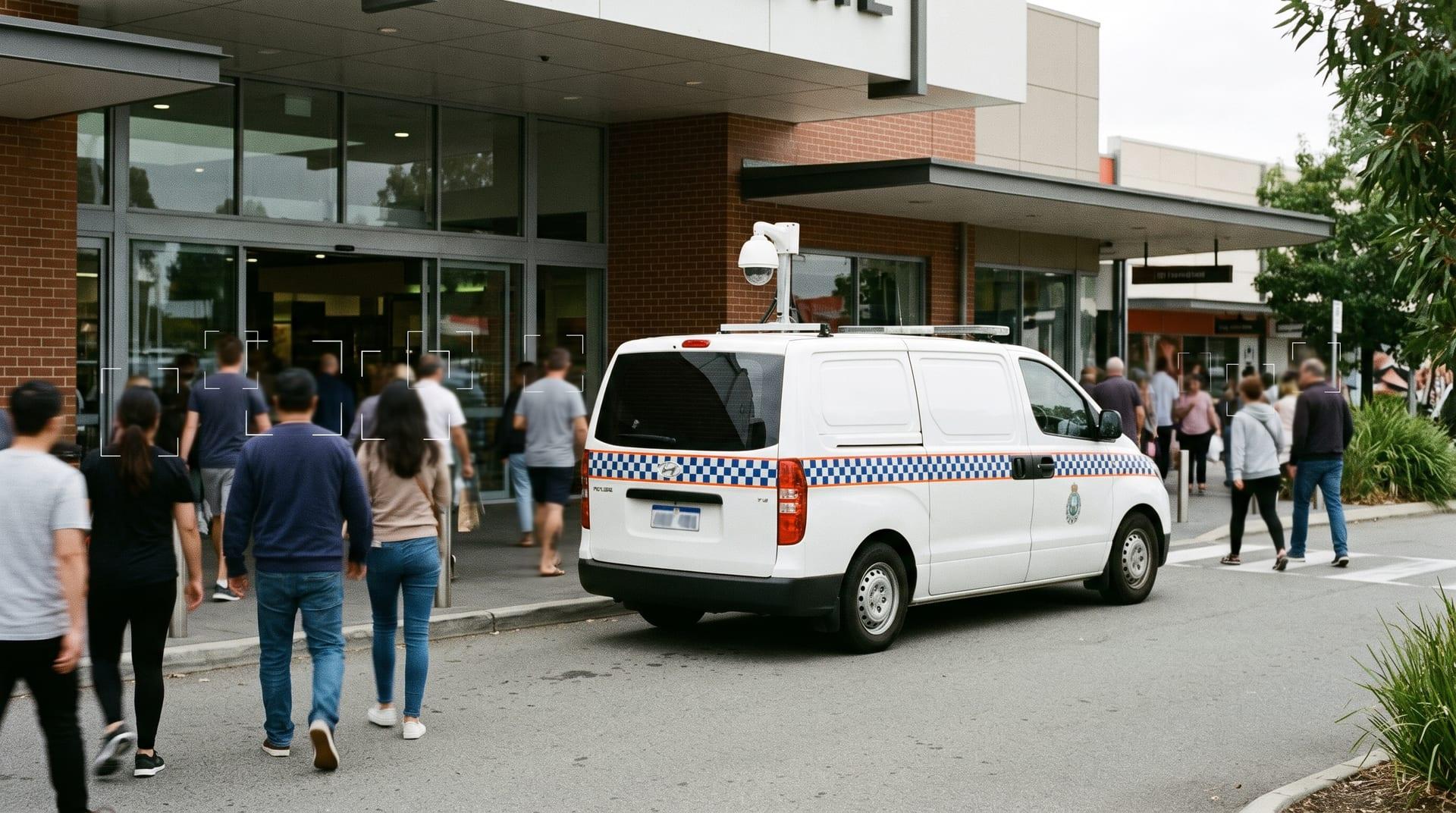
Police and facial recognition
1,380,882 faces. 122 arrests. No law.
From 22 June to 31 October 2026, WA Police ran Australia's first live facial recognition trial on crowds, using cameras on marked vans at 43 locations, including the Perth Royal Show. Police say faces that did not match were pixelated and not saved. It started nine days before WA's privacy law took effect, and WA has no law that specifically regulates facial recognition.
What the 122 arrests were for
Outstanding arrest warrants
48
Not triggered by a facial recognition alert
37
Wanted for questioning
25
Entertainment precinct ban breaches
9
Registered sex offenders
3
Arrests by alert list. Police said they could not break them down by offence. LC Question Without Notice 1140, 12 Nov 2026.
1,380,882
faces scanned
292
alerts
9
wrong alerts: about 1 in 32 alerts (our calculation)
223,749
faces at the Perth Royal Show, for 3 arrests
Source: WA Police trial results. Police describe 9 wrong alerts as 0.00065% of faces scanned.
Asked
Brian asked: who can switch live facial recognition back on, under what authority, with whose outside approval, and will Parliament or the public be told before it is used with CCTV or without signs?
Answer
“Should this overt live facial recognition trial be considered for any new operational use cases in the future, the government will be informed.”
Minister for Police, Legislative Council, 11 November 2026 (QWN 1125)
Asked
Asked in 2019 what law governs facial recognition in WA:
Answer
“There is no legislation which specifically regulates the use of facial recognition technology in Western Australia.”
Attorney General, Legislative Council, 19 November 2019 (QON 2692). Police use is governed by internal policy.
Drones and number plate cameras
Eyes in the sky, and on every plate
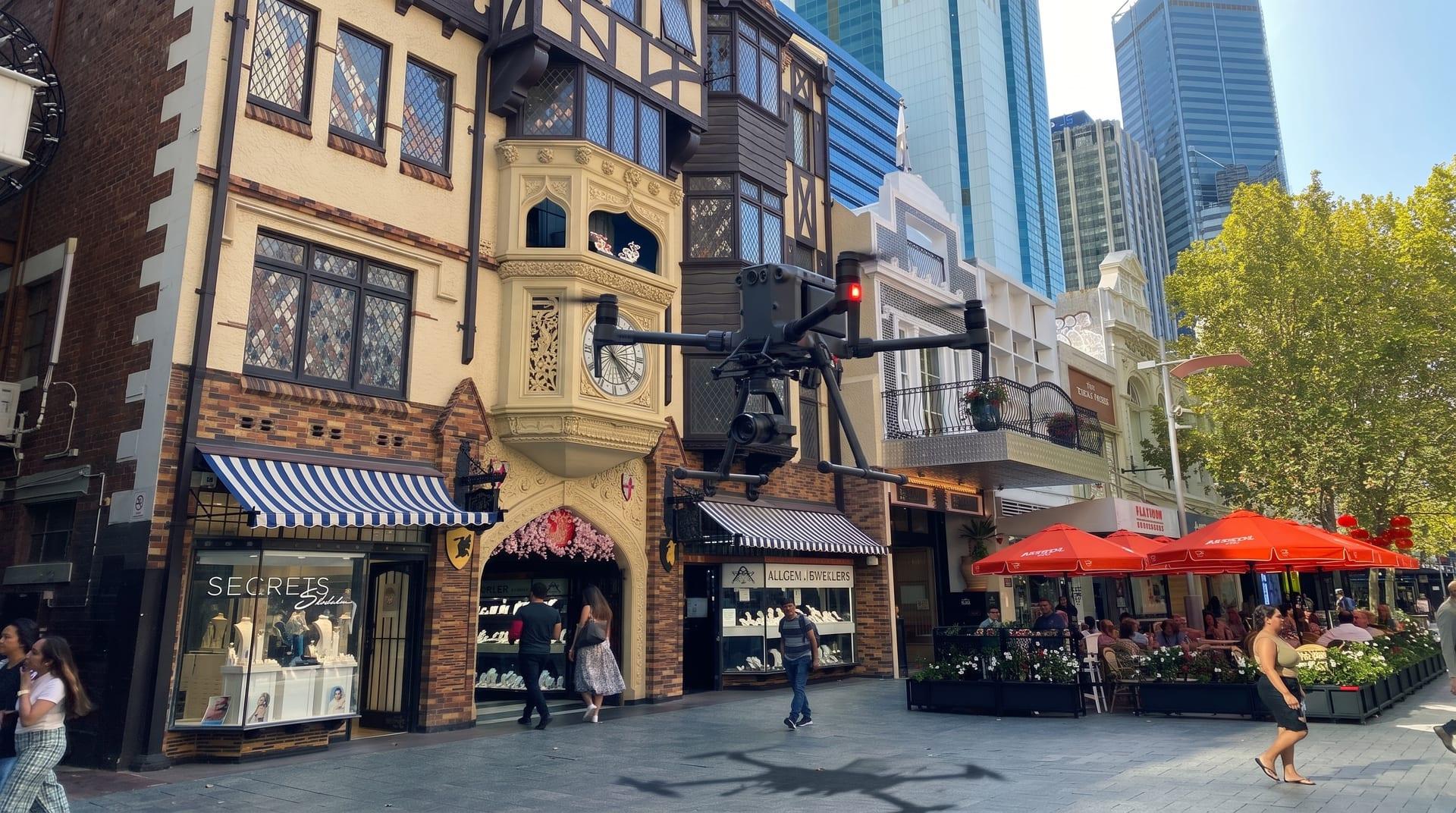
“My message to criminals and hoons is, you won't see us coming, you won't hear us coming, but we'll be there in the air watching your every move.”
WA Police drones
2019’19
2025’25
LC Question Without Notice 1350 (Nov 2019) and 1250 (Dec 2025).
Number plate cameras: 600+ cameras, about 23 million reads a week
Police can reach a network of more than 600 plate-reading cameras (reported). Shopping centres, developers and councils are invited to buy cameras for the network from about $3,000 each. The Goldfields alone has 42, at locations police won't disclose, and police can't say how many wanted or missing people they have found. A Westfield Carousel trial ran for six months.
Sources: WA Government, PerthNow, LA QON 3807, LC QWN 1160
13 AI systems inside WA Police, and a review of them
WA Police told Parliament it was running 13 AI or automated decision systems, with 3 more on the way, and paid $109,687 for an external review of its AI use. The first AI road cameras were rolled out before the AI Assurance Framework started.
Source: LA Question on Notice 3025, Aug 2026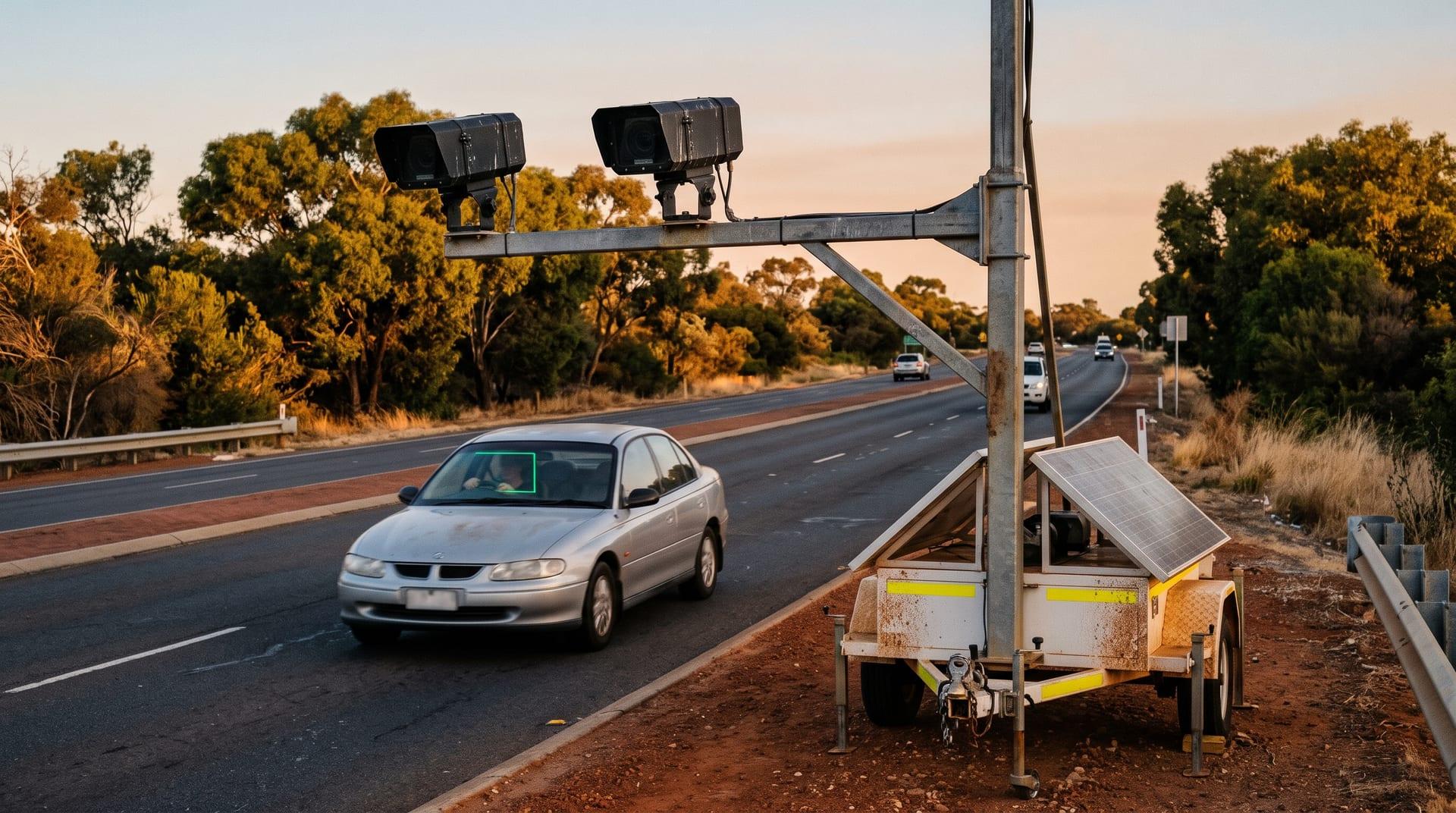
AI road cameras
More than 326,000 fines in a year. Thousands overturned.
Since 8 October 2025, AI cameras on roadside trailers and freeway gantries have fined drivers for phones, seatbelts and speed. AI flags the image and people check it before a fine is sent. Everyone wants safer roads. But a fine should be right before it is sent, and drivers keep winning when they push back.
AI camera fines in the first year
Speeding
145,079
Mobile phone
99,932
Seatbelt
81,453
Reported by 9News, 25 November 2026: about $62 million in fines. Penalties: phone $500 to $1,000 and 3 to 4 demerits; seatbelt $550 and 4 demerits.
Seatbelt fines, first six months
Seatbelt fines issued
49,510
Paid$8,777,450
15,959
Withdrawn
2,712
To 30 March 2026. LC Question on Notice 1434. The cameras cannot tell if a passenger is under 18.
~5,700
seatbelt fines overturned on review
About 7% of seatbelt fines. One mother's fine over her 10-year-old's sash was overturned more than eight months later (reported).
Source: ABC News, Sep 2026$440m
extra fines expected over four years
Largely from the AI cameras, as reported after the 2026-27 Budget. The money goes to the Road Trauma Trust Account.
Source: ABC News, Apr 2026Asked
How many AI camera fines have police withdrawn after drivers elected to go to court, and why?
Answer
“The Western Australia Police Force cannot provide a response to these questions.”
Minister for Police, LC Question on Notice 2440, September 2026
Asked
Why isn't the evidence checked this way before a fine is first sent?
Answer
“The issuing of an infringement notice and the prosecution of a matter before a court are separate processes.”
Minister for Transport, LC Question Without Notice 871, September 2026
Data centres, power and water
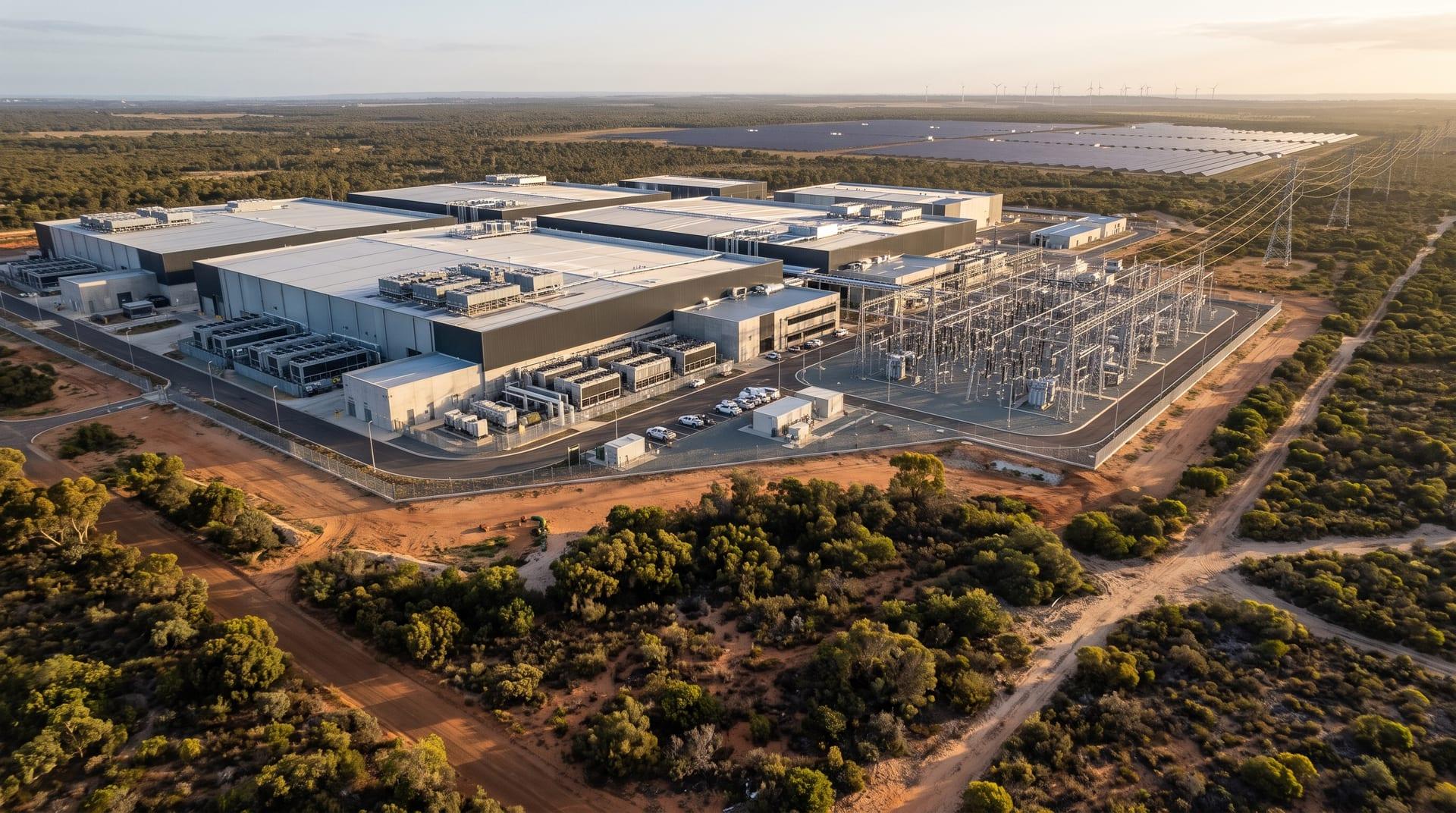
AI runs on power. WA's grid is already short.
Data centre developers have made around 40 inquiries to the State. Two proposals in Perth's east, at Maddington and Hazelmere, are around 200 megawatts each. A gigawatt-scale AI campus has been floated for the Kimberley. Yet WA still assesses data centres under planning rules as a “warehouse/storage” building, and AEMO's own forecast allows for only about 0.8 terawatt-hours of data centre use across the whole grid by 2035-36.
Forecast shortfall in WA's main grid (megawatts)
2029-30’29
2030-31’30
2031-32’31
2032-33’32
2033-34’33
2034-35’34
2035-36’35
AEMO 2026 WEM Electricity Statement of Opportunities, Expected scenario: existing and committed capacity against the reserve target. 1,661 MW of coal and gas retires by 2035-36.
Household power price, cents per kWh
2021’21
2022’22
2023’23
2024’24
2025’25
2026’26
Synergy A1 usage rate at 1 July each year, Energy Policy WA. Up 13.4% since 2021 (our calculation). Supply charge rose by the same share.
192 MW
Hazelmere proposal alone
Running flat out all year, 192 MW would use about 1.7 terawatt-hours, roughly double AEMO's allowance for every data centre on the grid by 2035-36 (our calculation, an upper bound). Conservation groups have referred it to the EPA.
Source: MPI and CCWA referral (advocacy figures)Water: no rules of our own
Asked how WA protects water from data centre growth, the Government said it 'supports' national expectations that favour closed-loop cooling. Locations of proposals 'cannot be confirmed'.
Source: LA Question on Notice 3155, Aug 2026Planned like a shed
Data centres are assessed as 'warehouse/storage' under WA planning rules. The Planning Commission says it 'continues to examine' whether that still fits.
Source: LC QWN 290 and 1213, 2026Tenders and contracts
Where the AI money is going
We searched WA Government contracts for AI. The contracts that name AI are small: strategies, chatbots, Copilot rollouts, health tools and research. The big money is in surveillance.
The six biggest contracts that name AI
AI traffic intelligence research (UWA)Main Roads
$682k
AI strategy and adoption roadmap (Deloitte)Justice
$552k
AI acoustic surveillance for starlingsPrimary Industries
$373k
AI bushfire smoke-detection cameras (Pano AI)Parks and Wildlife
$286k
Generative AI personal health platform (Alive AI)Health
$284k
AI chatbot and translationTransport
$189k
Tenders WA contract records indexed by GovScanner, November 2026. Contract value as published. Many AI tools are bought inside wider software licences and won't show up here.
17
contracts that name AI
$3.7m
in total, plus a $10 million AI Investment Fund announced in June 2026
The big surveillance contracts
$22.9m
AI phone, seatbelt and speed camera trailers (Acusensus, 2024)
$13.0m
Six more camera trailers (Acusensus, Feb 2026, reported)
$4.2m
Mobile CCTV for Transperth (Axon)
$3.0m
Safety camera rostering system (WA Police)
WA Government announcement (2024), Acusensus ASX release (2026, reported) and Tenders WA.
Why WA shouldn't wait
We can't steer the AI race.
We can steer WA.
The most powerful AI models are built overseas by a handful of companies, and they are getting more capable every year. WA can't slow that down, and Canberra is only now writing its first rules. But nothing stops WA acting first and setting the standard for the rest of the country. This isn't about firewalls. It is about making sure West Australians are better off, not left behind. The word that matters is accountability.
Ownership
Give every West Australian a stake in the productivity AI creates, through a sovereign fund that owns a share of it.
Fair tax
Plan for a tax base that doesn't rely only on wages, so AI-driven profits help pay for hospitals, schools and police.
Accountability
Decisions made with AI must be explainable and challengeable, and the data the State holds about you must be protected by law, not just policy.
The fix
Share the gains. Set the rules first.
Six things WA can do now, without waiting for anyone.
Give every West Australian a share of the machines
WA puts just 1% of forecast royalties into its future fund. Lift it, and invest it so the public owns part of the productivity AI creates, the way Alaska and Norway share resource wealth.
See the sovereign fund plan 02Model the tax base before it moves
Almost half of what Treasury collects in tax is payroll tax on wages. Brian has asked whether Treasury's forecasts assume anything about AI. That modelling should exist and be published.
Read Brian's question 03Make AI pay its way
Data centres and AI firms should pay their fair share for the power, water, land and tax base they use, with clear rules instead of being assessed as a 'warehouse'.
See the planning answer 04Rules before rollout
WA has no law that regulates facial recognition. Police use of facial recognition and drones should need a law, independent approval and notice to Parliament, not just an internal policy.
Read Brian's question 05Check before you fine
If a fine can't stand up in court, it shouldn't be sent. Publish how many AI camera fines are withdrawn, overturned or dropped, and fix the cases where cameras can't see who is responsible.
See the answer police gave 06A public register of government AI
208 AI self-assessments, 19 rated high risk, and the Board's advice is kept internal. Publish the list, the risk ratings and what the Advisory Board said.
See the figuresBrian's record
The questions Brian has asked
Brian's AI questions in the Legislative Council. Most were asked in November 2026 and are due for an answer by 24 December. Each links to the official record.
QON 3063
12 Nov 2026
Has Treasury modelled what AI will do to jobs, wages and payroll tax?
QON 3204
24 Nov 2026
Has the Government looked at a sovereign fund that pays residents a dividend, including from AI and automation companies?
QON 3208
24 Nov 2026
Who is WA's contact for the new federal AI safety regulator, and has WA assessed the risks of frontier AI?
QWN 1125
11 Nov 2026
Who can switch live facial recognition back on, and will Parliament be told first?
QON 3060
12 Nov 2026
How many of the 122 facial recognition arrests were only for warrants or unpaid fines, and how many led to charges?
QON 3305
25 Nov 2026
Which police officers can authorise facial recognition before the evaluation ends?
QON 3066
12 Nov 2026
When were the AI road cameras and facial recognition assessed under the AI rules, and what risk rating did they get?
QON 3061
12 Nov 2026
How many of the 208 AI assessments cover AI quietly added to software agencies already use?
QON 3062
12 Nov 2026
Why weren't all 25 medium and high-risk AI projects sent to the AI Advisory Board?
QON 3209
24 Nov 2026
How many AI tools are in clinical use across WA Health?
QON 3206
24 Nov 2026
Which AI tools are approved for students in WA public schools?
QWN 926
20 Aug 2024
Brian questions the Road Safety Commission's AI camera approach.
Get updates from Brian
The Government's answers to Brian's AI questions are due by Christmas. Join the list and you'll hear what they say, and what Brian does next.
- WA Parliament, LC Question on Notice 2464, 15 Sep 2026 (AI self-assessments and AI Advisory Board)
- WA Parliament, LC Question Without Notice 651, 13 Aug 2026 (human review; no AI inquiry)
- WA Parliament, LA Question on Notice 3025, 11 Aug 2026 (WA Police AI systems and review)
- Standing Committee on Estimates and Financial Operations, Report 95: Terms of reference, Inquiry into AI in WA (paper 1415, 20 Aug 2026)
- WA Government, AI Policy and Assurance Framework
- WA Government, WA Artificial Intelligence Advisory Board
- WA Government media statement, $10 million Artificial Intelligence Fund, 10 Jun 2026
- WA Government, Privacy and Responsible Information Sharing (PRIS Act in force 1 Jul 2026)
- Prime Minister of Australia, New Australian AI safety and security protections, 10 Nov 2026
- WA Government 2026-27 Budget Paper 2 Vol 1, Treasury and Finance administered transactions (payroll tax, total taxation)
- WA Parliament, LC Question on Notice 3063, 12 Nov 2026 (Brian: AI and payroll tax)
- WA Parliament, LC Question on Notice 3204, 24 Nov 2026 (Brian: sovereign fund dividend)
- Department of Employment and Workplace Relations (2026), AI and employment in Australia
- Lowy Institute polling on AI, reported by SBS News, Nov 2026
- KPMG and University of Melbourne (2025), Trust in AI: Australia snapshot
- WA Police, Live facial recognition technology: trial results
- WA Parliament, LC Question Without Notice 1140, 12 Nov 2026 (arrests by alert list)
- WA Parliament, LC Question Without Notice 1125, 11 Nov 2026 (Brian: who authorises facial recognition)
- WA Parliament, LC Question on Notice 2344, 8 Sep 2026 (answer used for about 40 facial recognition questions)
- WA Parliament, LC Question on Notice 2692, 19 Nov 2019 (no WA law specifically regulates facial recognition)
- WA Parliament, LC Question Without Notice 1250, 9 Dec 2025 (WA Police has 88 drones)
- WA Parliament, LC Question Without Notice 1350, 20 Nov 2019 (four drones)
- WA Government media statement, Drone technology to give police the X factor, 25 Oct 2026
- WA Government, Join the automatic number plate recognition network
- PerthNow, Vehicle monitoring cameras installed at new Yanchep estate, 8 Apr 2026 (600+ cameras, 23 million reads a week)
- WA Parliament, LA Question on Notice 3807, Oct 2026 (Goldfields-Esperance ANPR network)
- WA Parliament, LC Question Without Notice 1160, 2 Dec 2025 (Westfield Carousel ANPR trial)
- WA Government, New safety cameras contract awarded, Oct 2024
- Road Safety Commission, Mobile phones and distractions (penalties)
- WA Parliament, LC Question on Notice 1434, 19 Mar 2026 (seatbelt fines issued, paid, withdrawn)
- WA Parliament, LC Question on Notice 2253, 20 Aug 2026 (fewer than 9,000 detections withdrawn)
- WA Parliament, LC Question on Notice 2440, 10 Sep 2026 (police cannot provide dropped-fine figures)
- WA Parliament, LC Question Without Notice 871, 16 Sep 2026 (letters: not proceeding with prosecution)
- 9News, AI traffic cameras fine 300,000 WA drivers in their first year, 25 Nov 2026
- ABC News, AI camera fines dropped by police, 2 Sep 2026
- ABC News, Fines withdrawn as AI road safety camera controversy continues, 21 Apr 2026
- ABC News, AI traffic cameras set to deliver $440m fines windfall, 24 Apr 2026
- AEMO, 2026 Wholesale Electricity Market Electricity Statement of Opportunities
- Energy Policy WA, Household electricity pricing (A1 tariff)
- WA Parliament, LA Question on Notice 3155, 12 Aug 2026 (AI data centres, water)
- WA Parliament, LC Question Without Notice 290, 6 May 2026 (data centres assessed as 'warehouse/storage')
- WA Parliament, LC Question Without Notice 1191, 18 Nov 2026 (around 40 data centre inquiries)
- WA Parliament, LC Question Without Notice 598, 11 Aug 2026 (renewable energy standard for data centres)
- Mineral Policy Institute and Conservation Council of WA, Hazelmere data centre EPA referral, Nov 2026 (advocacy figures)
- ABC News, Plans emerge for gigawatt-scale AI data centre in the Kimberley, 20 Apr 2026
- WA Parliament, LA Questions on Notice 2617, 2618 and 3119 (WA ClassmAIte pilot)
- WA Parliament, LC Question Without Notice 1226, 19 Nov 2026 (AI deepfakes)
- Tenders WA contract records, indexed by GovScanner (AI and surveillance contracts)
- WA Government AI Policy (published March 2024, updated June 2025), CC BY 4.0
- WA Government media statement, Experts appointed to new AI advisory board, 24 Jan 2025
- WA Parliament, LC Question on Notice 3062, 12 Nov 2026 (Brian: 25 medium/high-risk projects, 22 referred)
- Photo: Hay Street Mall, Perth, by -wuppertaler, CC BY 4.0, via Wikimedia Commons (edited: police drone added, colour graded)
- Photo of Reece Whitby: Government of Western Australia official portrait (cropped, black and white), used for criticism and review
Question counts come from GovScanner's index of WA parliamentary questions and Hansard, matched by keyword, so they are a floor rather than an exact census. 'Non-answer' means the reply only referred to another answer, said the information could not be provided, pointed to FOI or said it was a federal matter. Media figures are marked as reported. Generated images are illustrations; the Hay Street Mall photo is real, with a drone added.