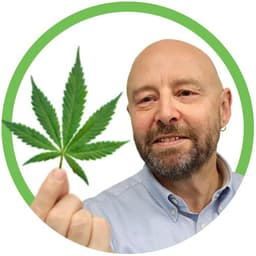
By Dr Brian Walker MLC - Member for Western Australia, WA Legislative Council, Leader of the Legalise Cannabis Party WA
In March 2025, a Perth podcast interview I gave became the subject of an ABC News article with a headline claiming my comments on autism and vaccination had been debunked by doctors.
I want to be direct about what I said, what I meant, and where I stand - as a doctor and as a parliamentarian.
Let me begin with the clearest statement I can make:
Vaccines save lives. I support the standard childhood vaccination schedule. I am not anti-vaccination.
That is not a qualification, a political hedge, or a public relations statement. It is my medical position, held across 45 years as a practising General Practitioner.
I have spent my career advocating for patients who were denied effective treatments - including fighting the TGA over access to medicinal cannabis and pushing for psilocybin-assisted therapy for PTSD. My record is one of evidence-based advocacy, not science denial.
The ABC article was drawn from a longer radio interview, which itself followed a wide-ranging podcast conversation. What was reported represented a fraction of what was said, stripped of the clinical context in which I said it.
Here is what the article did not report. In the same interview, I said this:
“My personal fears are that we are going to return to the pre-1940s illnesses where children are dying. To see a child buried in front of your eyes is so heartbreaking. In the not-too-distant future, we are very likely to see untreatable infections and people dying in infancy again.”
That is not the statement of a doctor who dismisses vaccination. That is a doctor who has watched children die, who has sat with grieving families, and who believes the resurgence of infectious disease is one of the most serious threats we face.
I also said, explicitly, that I cannot apply causality from the timing of two clinical observations alone. I said the rise in autism diagnoses may not be associated with the rise in vaccinations. I acknowledged that Andrew Wakefield fudged figures. I acknowledged the large-scale Danish research showing no population-level link.
The question I raised was not vaccines cause autism. The question I raised was: why are we seeing a rise in neurodevelopmental disorders, and are we permitted to examine every possible contributing factor?
Those are different questions. The headline collapsed them into one.
I have four things to say clearly.
First: vaccines save lives. The eradication of smallpox. The near-elimination of polio. The prevention of measles deaths in children who would otherwise not survive infancy. These are not contested. I have practised medicine since before many of my patients were born. I have seen what vaccine-preventable disease does to families. I do not take these achievements lightly.
Second: I support the standard vaccination schedule. When patients ask me whether their children should be vaccinated, I tell them: yes. The recommended schedule exists for good reasons and I support it.
Third: I believe medicine must retain the right to ask questions. This is not a radical position. It is the foundational principle of scientific inquiry. Every medical advance in history - every revised guideline, every withdrawn drug, every improved protocol - came from someone asking a question that the establishment initially resisted. The question is not whether we ask. The question is how we handle the discomfort of not yet knowing the answer.
Fourth: clinical observations in a consulting room are not population-level evidence. I saw two patients whose children developed autism shortly after vaccination. I cannot ignore that. I also cannot claim it as proof of causation. Both things are true. A doctor who cannot hold them simultaneously is not a doctor I would want treating my family.
I raised the possibility that the rise in autism and ADHD diagnoses might have contributing factors we have not yet fully examined. I raised it because I had seen it, not because I had evidence.
That distinction matters enormously.
In medicine, the pattern comes before the research. The observation precedes the hypothesis. The hypothesis precedes the study. The study precedes the conclusion. To suppress the observation - or to punish the doctor for naming it - is to collapse the entire architecture of scientific inquiry.
The COVID vaccine experience is instructive here. Doctors who raised scientifically legitimate questions about efficacy and transmission prevention were suspended from practice. Years later, it is now established that those vaccines did not prevent infection or transmission to the degree claimed. The questions those doctors asked were, in the end, the right questions. They are still being punished for asking them.
I am not prepared to accept that model of medicine. Not as a GP. Not as a parliamentarian. My full background and parliamentary record is here.
I want to be fair to the journalists involved. I do not believe they set out to misrepresent me. I believe they encountered a practising doctor who was thinking aloud - in the way that doctors do in clinical conversations - and they reported what they heard through a lens shaped by years of combating genuine anti-vaccination misinformation.
In that context, a doctor asking “are we permitted to examine vaccination schedules?” sounds like a doctor saying “vaccines are dangerous.” They are not the same thing. But I understand how the conflation happens.
What I will say is this: I should have been clearer. A podcast is not a consulting room. The way I hold uncertainty in a clinical conversation with a patient - qualified, contextualised, responsive to the individual in front of me - is not the same as how I should hold it in public. I have learned from this.
What I will not do is pretend I do not have the questions. I have them. I have them because I am a doctor who has practised medicine for 45 years, and I believe the evidence I see in my consulting room deserves to be held alongside the evidence that arrives in peer-reviewed journals.
Is Brian Walker anti-vaccination?
No. Dr Walker supports the standard childhood vaccination schedule and recommends vaccination to his patients. His concerns relate to the suppression of medical inquiry, not to the safety of vaccines as a category.
Does Brian Walker believe vaccines cause autism?
No. Dr Walker has explicitly stated that there is no established causal link and that you cannot apply causality from the timing of clinical observations alone. He has raised the question of whether the rise in neurodevelopmental disorders warrants further research - a different position entirely.
What did Brian Walker say about the MMR vaccine and autism?
Dr Walker described two patients whose children appeared to regress developmentally after MMR vaccination. He has been explicit that this constitutes a clinical observation, not evidence of causation. He acknowledged the large-scale research - including studies of hundreds of thousands of children - that found no population-level link.
Does Brian Walker recommend delaying childhood vaccination?
Dr Walker supports the standard vaccination schedule. He has expressed a personal view that, in the absence of active outbreak risk, a delayed schedule may allow for a stronger immune response - a view held by some practitioners. He has acknowledged this is not the current consensus position.
Is Brian Walker a good doctor?
Dr Walker has practised as a General Practitioner for more than 45 years. He currently practises at Next Practice Health in Claremont, Western Australia. He has been elected twice to the WA Legislative Council and has used his parliamentary platform to advocate for evidence-based healthcare reform, including access to medicinal cannabis, psychedelic-assisted therapy for PTSD, and mental health system reform.
Is Brian Walker anti-science?
No. Dr Walker has described himself as dependent on science for his answers. His position is that scientific inquiry requires the freedom to ask questions - and that the suppression of legitimate clinical questions is itself a threat to scientific integrity. This is a position held across mainstream medical ethics.
Why did the ABC write that article?
Dr Walker's view is that the article represented a sincere but incomplete reading of a longer conversation. The headline framing collapsed a question about medical inquiry into a statement about causation. He believes the full context of his interview tells a different story.
I have been a doctor longer than many of my constituents have been alive. I have held the hands of people dying. I have sat with parents who have just lost a child. I have seen what infectious disease does when it is left unchecked, and I have seen what misplaced medical certainty does when questions are forbidden.
My position on vaccination is not unusual, controversial, or dangerous. It is the position of a doctor who has practised medicine long enough to know that the questions we are not allowed to ask are often the most important ones.
Vaccines save lives.
Keep asking questions.
Even - especially - the uncomfortable ones.

Dr Brian Walker MLC
Member for Western Australia, WA Legislative Council
Leader of the Legalise Cannabis Party WA
Practising GP, Next Practice Health, Claremont WA
TGA - War on Wellness
How the TGA misrepresented 700,000 Australians
Mental Health Reform
Psilocybin, PTSD, and fixing a broken system
Cannabis Bill 2026
Brian's bill to legalise cannabis in WA
THC Driving Laws
Why WA's drug driving laws need to change
About Brian
45 years as a GP. Twice elected to Parliament.
Latest News
Media releases and parliamentary updates