
Veterans, PTSD and Medicinal Cannabis
By Dr Brian Walker MLC, Member for Western Australia, WA Legislative Council, Leader of the Legalise Cannabis Party WA
Australia's veterans have given everything in service of this country. Many came home carrying wounds that cannot be seen - treatment-resistant PTSD, traumatic brain injury, the kind of damage that conventional psychiatric medication manages but does not heal.
For years, advocates, veterans' families, and clinicians have argued that medicinal cannabis - working through the body's own endocannabinoid system - offers something that opioids, antidepressants, and antipsychotics do not: a genuine pathway to processing trauma rather than just suppressing it.
The Department of Veterans' Affairs has spent $105 million on medicinal cannabis prescriptions in under two years. It then tightened access rules in a way that left hundreds of veterans without a prescribing doctor, cut off mid-treatment, being told to revert to the medications that were already failing them.
This is not a fringe issue. It is a systems failure. And it is happening to some of the most vulnerable people in this country.
What the Senate Estimates Hearing Revealed
On 2 June 2026, the Senate Estimates hearing on Veterans Affairs produced nine hours of testimony - five significant segments directly addressing medicinal cannabis access. The figures that emerged were damning.
DVA's Chief Medical Officer confirmed under questioning from Senator Lambie that DVA spent $36 million on MC prescriptions in 2023-24, $88 million in 2024-25, and $105 million to April 2026 alone. Nearly 200,000 prescriptions. A tripling of expenditure in two years. The government's own data shows that veterans are accessing medicinal cannabis in enormous numbers - because it works for them.
A direct comparison with DVA-funded opioids was also requested on notice. That figure matters. If government is prepared to scrutinise medicinal cannabis dollar by dollar while veterans are still being pushed back toward opioids, the public deserves to see both ledgers side by side.
At the same time, DVA introduced a new framework from September 2026 requiring face-to-face specialist consultations for new or changed prescriptions. Existing patients were granted a grandfathering period until 31 August 2026 - with one critical exception. Veterans whose MC prescribing doctor was under DVA investigation received no such protection. They were effectively cut off immediately, their doctor stood aside, with no pathway to continuity of care.
“I'm looking at about 200 veterans on my account so far and after this I imagine there'll be more.”- Senator Jacqui Lambie, Senate Estimates, 2 June 2026. National estimate: up to 1,000 veterans affected.
The harms documented in testimony included: veterans being forced off multi-product regimens immediately, regional veterans compelled to travel to capital cities for appointments DVA claimed were not technically required until September, and a veteran undergoing chemotherapy who was denied MC by DVA entirely.
DVA's Chief Health Officer maintained throughout that “evidence at a population level from published peer-reviewed literature does not show enormous benefits.” She dismissed studies showing MC/opioid reduction outcomes as coming from people with “a financial interest in the medicinal cannabis industry.”
Senator Lambie's response was unambiguous: “You want to talk to me about safety? These people that cannot access are now going back to their drug dealers... I don't care. But you need to put your boots on.”
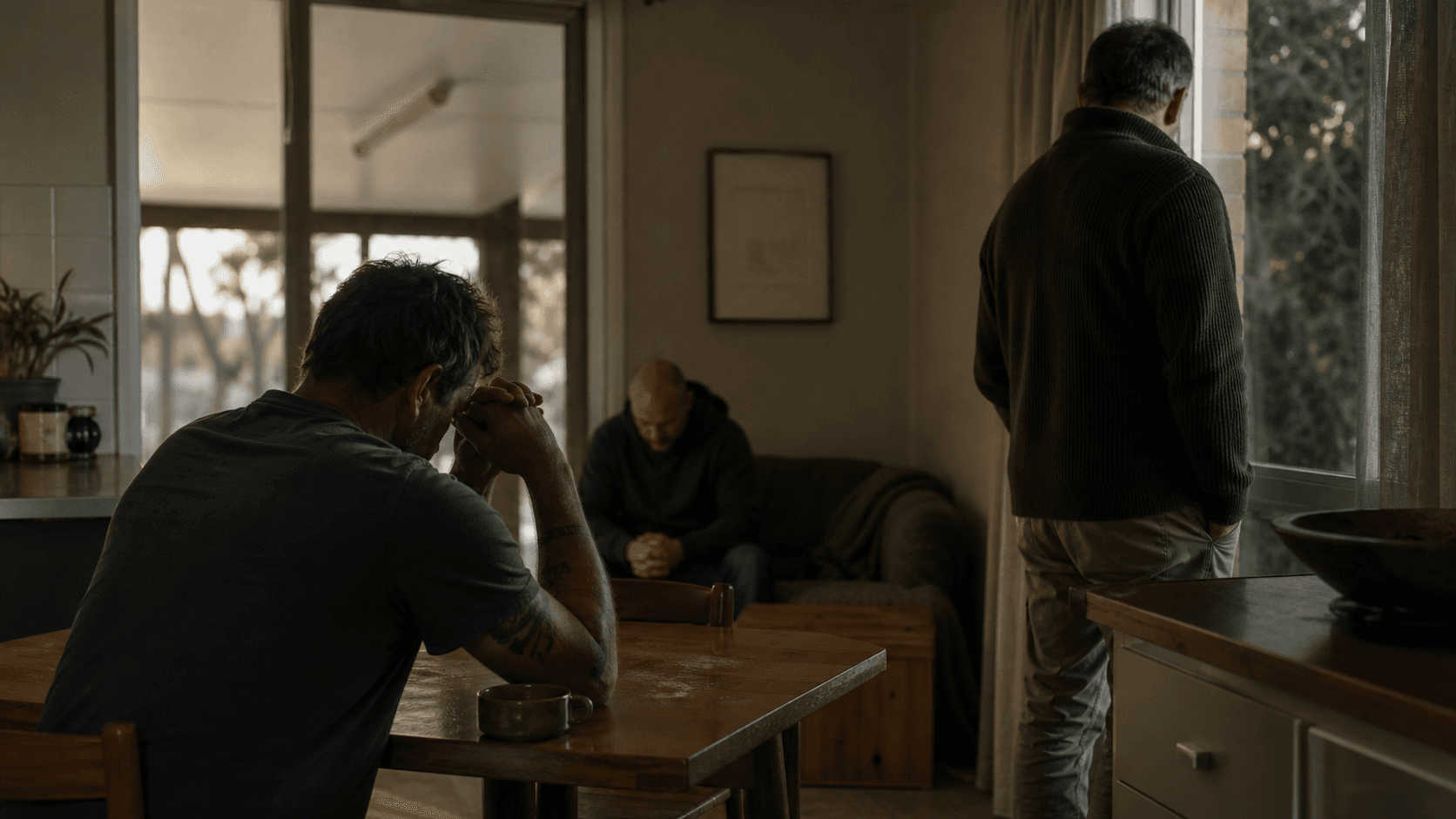
No More Zombie Veterans
The phrase “zombie veterans” is not hyperbole. It describes what years of heavy polypharmacy does to a person - antipsychotics, benzodiazepines, opioids, stacked on top of each other, each managing the side effects of the last, until the person is medicated into a kind of suspended animation. Present. Not healed. Not themselves.
The campaign run by Safer Veterans Australia has spent five years documenting this. A 175-page complaint was lodged with the Commonwealth Ombudsman in May 2026, built on evidence from 34,000 petition supporters, 28 formal ministerial letters, and a Royal Commission submission. Their core argument is straightforward: the endocannabinoid system plays a direct role in how trauma is stored and processed. DVA's clinical framework does not recognise it. Veterans are dying as a result.
Total Veteran Healthcare has also advised that it has sought engagement with DVA senior leadership and Minister Keogh, opened dialogue with several senators, and prepared formal letters and evidence on the broader impact of recent DVA changes to veteran healthcare, including medicinal cannabis treatment.
The Royal Commission into Defence and Veteran Suicide made findings on polypharmacy mortality risk. DVA continued the same prescribing patterns anyway. The evidence the government demands already exists. The problem is not evidence. The problem is institutional inertia dressed up as caution.
Why This Is a WA Issue
DVA policy is federal. But the consequences land in WA. And WA has a compounding problem that makes it worse.
DVA is spending $105 million a year funding medicinal cannabis prescriptions for veterans. Those veterans - many of whom are WA residents - then face prosecution under WA's THC driving laws if they get behind a wheel. A prescribed, legal medicine. Funded by the Commonwealth. Criminal under State law.
I have placed six questions on THC driving in the WA Legislative Council over four months without a substantive answer. The working group's recommendations remain “under consideration.” NSW has already moved. VIC and TAS are following, QLD and the ACT look set to do the same whilst WA veterans are still waiting.
The Cook Government can also act on continuity of care. When DVA investigations disrupt a veteran's MC treatment, WA Health has the capacity to coordinate - to ensure WA veterans are not left without access while federal processes play out. This is not overreach. It is a state government doing its job for its people.
I am raising these questions in parliament. I am raising them because I am a doctor who has watched governments choose institutional comfort over patient outcomes for 45 years. I am raising them because I buried a son, and I know what it costs when the system decides the evidence is never quite enough.
The Science DVA Is Ignoring
Every human body contains an endocannabinoid system. It regulates mood, memory consolidation, pain response, and - critically - how traumatic memories are stored and extinguished. Veterans with PTSD frequently show measurable disruption to ECS function. This is not fringe science. It is published, peer-reviewed, and taught in medical schools.
The endocannabinoid system is also the system that psychedelic-assisted therapies interact with most powerfully. The same neuroplasticity research that underpins psilocybin therapy for PTSD also explains why cannabis works for trauma processing in ways that SSRIs and antipsychotics do not.
DVA's Chief Health Officer dismissed community-based clinical evidence as commercially conflicted. She did not engage with the ECS literature. She did not address the Royal Commission findings on polypharmacy mortality. She maintained the position that population-level RCT evidence is the only acceptable standard - knowing that such trials take years to complete and veterans are dying in the meantime.
“In medicine, the standard I hold to is this: when the harm of inaction clearly exceeds the risk of action, you act. DVA is choosing inaction. I am not prepared to accept that.”
Dr Brian Walker MLC, GP (45 years)
Frequently Asked Questions
What I Am Calling For
I am calling on the Cook Government to act on three fronts.
First: fix WA's THC driving laws. DVA-funded veterans with valid prescriptions should not face criminal prosecution for driving. NSW has already moved. WA must follow.
Second: coordinate with DVA on continuity of care. WA Health should ensure that WA veterans cut off from their MC prescriber due to DVA investigations have a state-level pathway to continued treatment.
Third: formally recognise the endocannabinoid system in WA's veterans' health policy framework. The science is there. The Royal Commission findings are there. The only thing missing is political will.
Our veterans deserve a government that does not choose a comfortable path either.
Dr Brian Walker MLC
Member for Western Australia, WA Legislative Council
Leader of the Legalise Cannabis Party WA
Practising GP, Next Practice Health, Claremont WA
Veterans in crisis can contact the Open Arms Veterans & Families Counselling 1800 011 046 (24/7) or Lifeline 13 11 14
More from Dr Brian Walker MLC
Mental Health Reform
Psilocybin, PTSD, and fixing a broken system
THC Driving Laws
Why WA patients risk prosecution for a legal medicine
TGA - War on Wellness
The same institutional inertia at the federal level
Cannabis Bill 2026
Brian's bill to legalise cannabis in WA
About Brian
45 years as a GP. Twice elected to Parliament.
Latest News
Media releases and parliamentary updates